Accra, Ghana, October 24, 2026: Look at what happens when girls report sexual abuse. Before the facts are established, we begin investigating the girls. How do they dress? Are they respectful? Do they have boyfriends? Have they given birth? Who raised them?
Everybody suddenly has questions about the girls. Far fewer people ask about the adults. What about the people entrusted with their education and safety? What about the institutions that should have acted when concerns were first raised?
The allegations against the headmaster of Obuasi Senior High Technical School (SHTS), Zakaria Abdulai, have forced those questions into the open. Investigative journalist Manasseh Azure Awuni’s documentary, Inside the Dreaded Headmaster’s Bungalow, brought the accounts of several female students to national attention.
The allegations have not been tested in court. Mr Abdulai is entitled to a fair hearing, and every complaint must be investigated impartially. But due process cannot become an excuse for institutional inertia. The rights of the accused do not erase the rights of the girls.
This is bigger than one headmaster. It is about how we raise boys, how we protect girls and why the burden of preventing abuse so often lands on the people most vulnerable to it.
One complaint before the police. What about the others?
Nineteen girls have been named in public conversation. The police, however, have explained that the docket sent to the Attorney-General covers one complaint, filed on 4 August 2026. They say other allegations need to be formally reported before they can be investigated.
That distinction matters. Nineteen girls are not the same as nineteen investigated complaints. But one recorded complaint does not make the other accounts untrue.
So how will every credible allegation be examined when students may be afraid, parents may feel pressured and the accused held authority over them? Gender Lens Africa’s timeline of who knew, who acted and who must answer shows why this cannot wait. Reports of concern reached school and education officials months before the story became national news.
The Interior Minister told Parliament’s Public Accounts Committee (PAC) on 20 October that the headmaster had been arrested and had given a statement, and that police were seeking court permission for a DNA sample. Questions about his custody status have still circulated. Clear public communication from the police would help.
A child should not have to become a national headline before an institution takes her seriously.
Self-recognisance bail is not a verdict
Mr Abdulai has said publicly that he was cautioned and granted self-recognisance bail. This is a form of release where a person promises to return when required, without paying money or providing a surety. It is not a conviction, and it is not a finding of innocence.
What troubles me is how quickly the conversation moved to the complainant. He referred to her age and to the fact that she has a child. Why is that relevant? Does motherhood make a woman less deserving of belief? Does having given birth tell us whether a particular sexual act was consensual?
It does not. If evidence contradicts a complainant’s account, the courts will weigh it. If evidence supports her, it deserves the same seriousness. Character assassination is not an investigation.
The girl is on trial. The man is being explained.
One widely shared post by Selorm Abotsi condemned rape and sexual harassment in one breath. In the next, it described a woman’s body as the greatest temptation to a “normal” man, questioned what women wear and asked who was raising “these girls”.
You cannot condemn sexual violence while building an argument that makes girls responsible for managing men’s desire. The idea that desire strips a man of agency is not a defence of men. It is an insult to them.
Men are not machines. A man can feel attraction without acting on it. He can be rejected without becoming entitled to someone’s body. That is what adulthood requires, and it matters even more when the man holds authority over a student.
Desire is not consent. Attraction is not permission. A girl’s uniform, dress or dancing is not an invitation to assault her.
We can talk about safety and age-appropriate behaviour. But those conversations must not move responsibility from the person who commits the abuse to the person who survives it.
We are infantilising men and calling it respect
To infantilise someone is to treat them as a child who cannot be held responsible for their actions. That is exactly what we do when we say a grown man could not help himself around a teenage girl.
We expect girls to mature early. We police their clothes, friendships, movements and reputations. Yet when a man is accused, some of the same adults begin explaining how hard it is for him to resist.
That is not protection. It is an abdication of adult responsibility. Gender Lens Africa made this argument in why Ghana’s reporting on sexual abuse still blames the child, not the crime. Obuasi shows it is still urgent.
We must raise boys who understand that consent is necessary, that authority carries duty and that rejection does not diminish them. And we must raise girls who know their bodies belong to them and that they deserve help when those boundaries are violated.
The numbers say this is bigger than Obuasi
If this were one school, we might call it an isolated scandal. The evidence says otherwise.
A 2023 study by UNICEF and the Girls Excellent Movement, _Sheltered yet Exposed_, found that 51.9 per cent of female senior high school students surveyed had experienced sexual assault between 2019 and 2021. Teachers accounted for 10 per cent of the perpetrators identified. These figures describe that study’s sample and period, not a national prevalence rate. They are still alarming.
Ghana’s 2025 Voluntary National Review recorded 316 rape cases and 1,296 defilement cases in 2024. Defilement is the legal term for sexual contact with a child under 16. These are reported cases only. Many are never reported.
The 2022 Ghana Demographic and Health Survey shows why. As Gender Lens Africa found in its analysis of what happens after survivors report, 14 per cent of women aged 15 to 49 had experienced sexual violence, and 51 per cent of women who had experienced physical or sexual violence had neither sought help nor told anyone. These are different measures and should not be merged. Together they show how much stays hidden.
Safeguarding means the systems an institution uses to prevent harm, spot warning signs, receive complaints, protect children who speak up and refer concerns to the right authorities. It is not a training module or a policy in a filing cabinet. It is what a school does when a child says something is wrong.
The adults who knew must answer too
SOS Children’s Villages Ghana has asked why earlier complaints reportedly went unaddressed for months. The Ghana Education Service (GES) has directed the Ashanti Regional and Obuasi Municipal Directors of Education to step aside while investigations continue.
If an official received a credible complaint and did nothing, that must be established. If anyone silenced a child or obstructed an investigation, the law must deal with them. An allegation that someone knew is not a finding that they concealed abuse. But neither should stop investigators from asking.
This is also why the Association of Women Lawyers, Ghana (AWLA), has called for a national sexual offenders register and background checks for school staff. Gender Lens Africa has examined what such a register can and cannot do. It is no substitute for competent investigations or fair trials. But children need protection that does not depend on the goodness of one individual.
The Vice-President is a woman. Is that enough?
Calls have been made for the Vice-President and the Minister for Gender, Children and Social Protection to speak and act. Where a ministry responsible for children has not responded, we should say so plainly.
But I want to ask something uncomfortable. When we demand that a woman in high office speak because she is a woman, what exactly are we asking her to do? Show solidarity? Direct institutions to act? Or become the voice of every girl who has been abused?
A woman can hold the highest office and still fail girls. A man can hold office and champion them. Gender alone guarantees nothing. The test is action.
Is there a clear plan to protect students who report abuse? Are schools required to document and refer complaints? Are there consequences when officials fail? We should hold women in power to account for how they use their offices. We should not turn institutional failure into a gender chore for women to perform while those directly responsible escape scrutiny.
Where are the women who are usually first to speak?
The politics here is unavoidable. The headmaster was an NDC member who had sought a constituency chairmanship. The party directed him to step aside, and he has reportedly withdrawn and resigned as constituency secretary.
Abuse allegations must never be a weapon used only when the accused belongs to the other side. I have watched the statements and the arguments. I have wondered why some women who are usually loud on gender and politics have been quieter this time.
That is not a claim that every NDC woman has been silent. The Minority Women’s Caucus called for an independent inquiry, and other women across party lines have spoken. The question is for every party: would our response be the same if the accused wore a different colour?
Feminism cannot be a position we adopt when the accused is our opponent and abandon when he is one of us. If our commitment to girls depends on party colours, we are not defending a principle. We are defending an interest.
Red Wednesday: solidarity must become something more
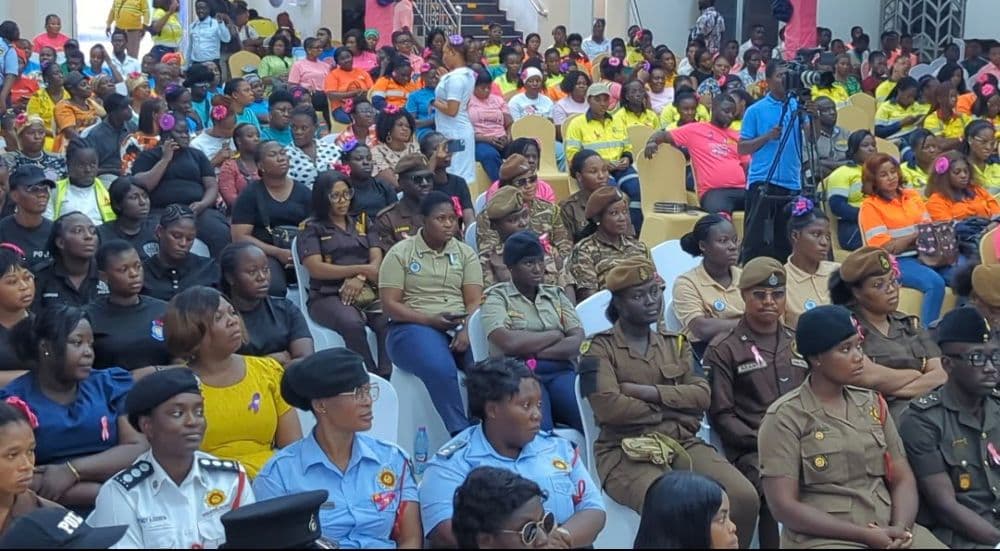
On 21 October, women and allies wore red under the #HandsOffOurGirls campaign. Broadcasters such as Oheneyere Gifty Anti joined in, calling for everyone who failed to report the case to be prosecuted. Female Voices in the Media issued a statement demanding impartial investigations and protection for the students. Gender Lens Africa documented the campaign.
Such solidarity matters. It tells girls they are not alone. But a red dress cannot investigate a complaint. A hashtag cannot shield a witness from intimidation. A post cannot provide trauma-informed counselling.
Solidarity must mean asking the police what has happened to every complaint. It must mean asking education authorities what safeguards exist. It must mean protecting the girls’ identities and their right to stay in school.
Ghana has a familiar relationship with outrage. A story breaks, the panels fill, politicians condemn, citizens demand justice. Then another story arrives, and the system that allowed the harm stays exactly as it was.
When rape becomes a media spectacle
Journalism exposed this case. Without Manasseh Azure Awuni’s investigation, we might still know nothing. But journalism must also resist turning sexual violence into entertainment.
A panel that debates whether rape is “normal” or whether girls provoke men is not public education. It is another stage on which people who have already been harmed are humiliated. Editors should ask whether their panellists understand consent, power, child protection and the legal difference between an allegation and a conviction.
Trauma-aware reporting means protecting the dignity, privacy and choices of people who have experienced harm. It means not pressing survivors for sensational detail. Gender Lens Africa has set this out in its trauma-aware reporting guide for Ghana and in why we should stop sharing abuse videos.
The public has a right to know what institutions did. It has no right to every intimate detail of a complainant’s life.
From Obuasi to Somaliland: who decides what happens to a girl’s body?
Obuasi is Ghanaian. The question it raises is African and global.
I recently came across footage circulating as a debate in Somaliland’s House of Representatives on female genital mutilation (FGM). In the English subtitles, a male speaker argues that the clitoris should be cut, partly because it makes intercourse harder for a man. Women in the chamber push back. One tells him he has no right to speak about their bodies this way.
I have not been able to confirm the date or full context of the clip, so I treat it as an illustration and not an official record. But the exchange, as translated, exposes an assumption worth naming: that male sexual expectations can decide what is done to a female body.
FGM means the partial or total removal of the external female genitalia, or other injury to them, for non-medical reasons. It has no health benefits and causes serious physical and psychological harm. UNICEF estimates that more than 230 million girls and women alive today have undergone FGM, including more than 144 million in Africa.
FGM is not the same as sexual abuse in a school. The motives, contexts and laws differ. But the thread is the same. In Somaliland, a woman’s anatomy is argued over for a man’s convenience. In Ghana, a girl is told to manage a man’s response through what she wears. Both place male desire above female autonomy.
The fight is also live much closer to home. Read Gender Lens Africa’s coverage of The Gambia’s fight to protect its FGM ban, where children’s rights and bodily autonomy are at stake.
Culture deserves examination, not automatic obedience. Tradition is not beyond criticism. African women are not short of voices. The challenge is making sure those voices are heard when they question practices others would prefer to leave alone.
What change actually looks like
If the outrage over Obuasi is to mean anything, it must move beyond condemnation.
Document every credible allegation. Authorities must establish which complaints exist, what has been done and where institutions failed.
Build real safeguarding in schools. Students must know where to report, who receives the complaint and how they will be protected. No child should depend on the goodwill of the adult she is reporting.
Support survivors. Medical care, counselling, legal information and continued schooling must not depend on whether a case becomes famous.
Stop treating withdrawn complaints as reputation management. Families need advice and support, not pressure to stay silent.
Change the media conversation. Explain consent, power and the law. Do not turn girls’ clothes and sexual histories into content.
Change how we raise boys. Teach them to respect boundaries and accept rejection. Teach them that authority is a duty, not an opportunity. And teach girls that safety and justice are theirs regardless of how others judge their behaviour.
The questions we should be asking ourselves
What are we teaching our boys about power? Why do we scrutinise girls’ behaviour faster than grown men’s decisions? Why do some institutions guard their reputations more fiercely than children? Why does party colour decide the volume of our outrage?
And if the girls at Obuasi had never become the subject of a documentary, how much would we know today? We may never fully answer that. But it should make us examine a system where exposure comes before attention.
None of this abandons due process. It makes due process meaningful, so that complainants are not left to prove that their safety matters.
Girls should not have to be perfect to deserve protection. Boys should not be raised to believe they cannot control themselves. And powerful people should not have to be publicly exposed before anyone takes a complaint seriously.
Because if our anger ends when the hashtags fade, the next girl inherits the system we failed to change. That would be our failure too.
Musings of a Feminist is a recurring Gender Lens Africa commentary on power, gender, culture and the questions societies would rather avoid.