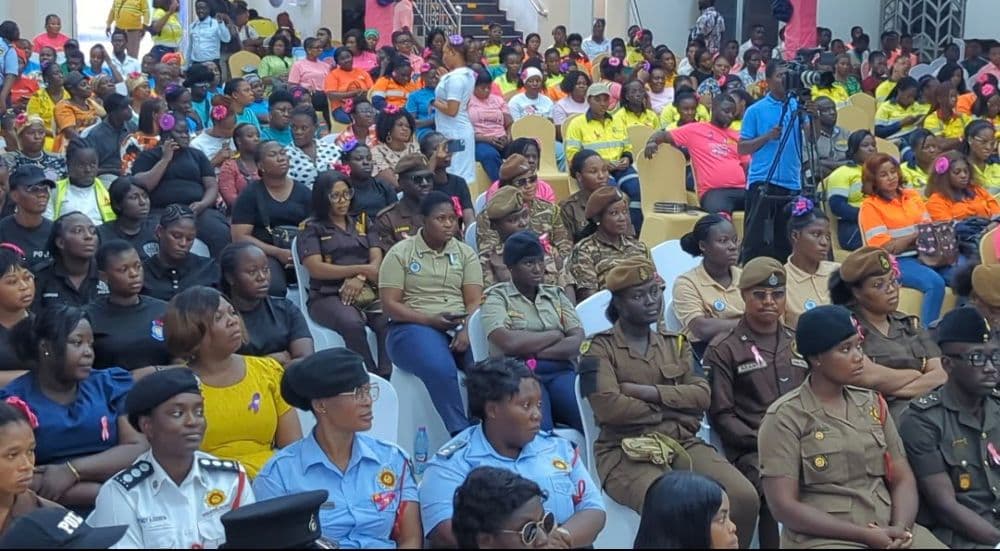
Accra, Ghana, November 2, 2026: More than one in four new HIV infections recorded in Ghana in 2025 was among young people aged 15 to 24, according to the Ghana AIDS Commission (GAC).
The Commission recorded 3,835 new infections in this age group, representing 27.5 per cent of the national total. The national estimate for 2025 is 13,951 new infections. Youth Coordinator Dorcas Nyarko presented the youth figures at the launch of the Commission's Youth Desk.
Officials round the figure differently. At the same launch, Director-General Dr Prosper Kharmacelle Akanbong described young people as about one-third of new infections. In September, the Western Region's acting technical coordinator, Francis Antonio, put the national share at 30 per cent. The 2024 estimates gave a share of 31 per cent. The official picture is a range of roughly 27 to 31 per cent.
Young women carry most of the burden
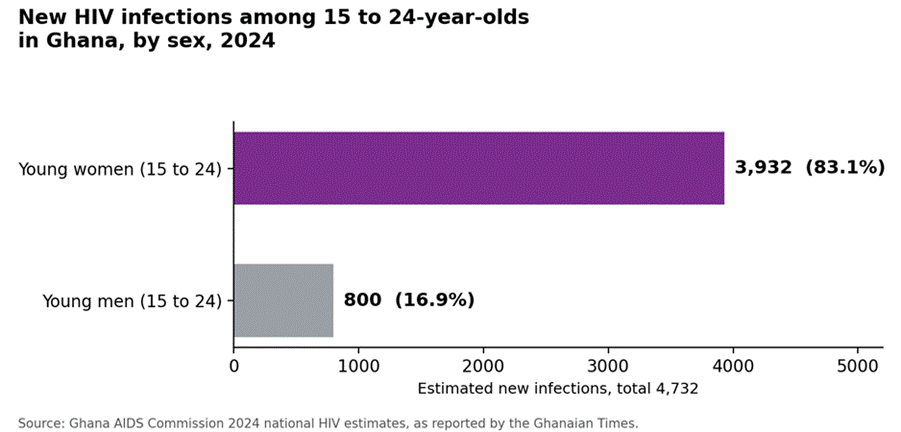
The figures reveal an even more striking gender imbalance. In 2024, an estimated 4,732 people aged 15 to 24 acquired HIV. Females accounted for 3,932 of them, or 83.1 per cent, against 800 males.
The same estimates show 37,283 people aged 15 to 24 living with HIV in 2024, up 12.1 per cent from 33,245 a year earlier. Young females made up 74.1 per cent of that group.
The pattern is not unique to Ghana. UNAIDS reported that roughly 210,000 adolescent girls and young women aged 15 to 24 acquired HIV worldwide in 2024, about 570 every day.
The 83.1 per cent figure is from 2024, not 2025. The public reports on the 2025 figures give the age share and the total, but not the split by sex. That breakdown is the number to ask the Commission for next.
The data show who is affected. They do not show why. Unequal negotiating power in relationships, economic vulnerability, age gaps between partners and limited access to confidential sexual and reproductive health services are all factors that need investigation. None is a proven explanation for the 83.1 per cent figure, and the Commission should be asked what its own data say about each.
Prevention reaches only selected regions
The GAC's Adolescent Girls and Young Women (AGYW) HIV Prevention Project provides HIV education, sexually transmitted infection screening, condoms, self-test kits and referrals for pre-exposure prophylaxis (PrEP). It is run by Hope for Future Generations with the National AIDS/STI Control Programme and Global Fund support.
But the project currently operates only in selected high-burden districts in the Greater Accra, Eastern and Ashanti regions. That limited coverage raises questions about access for young women elsewhere in the country.
At an August review meeting, GAC Director of Technical Services Dr Fred Nana Poku called for the project to be expanded to all regions. He warned that areas recording low infections today can become new hotspots if prevention stays concentrated in a few places. Expansion would need more funding, and the project is due to end on December 31, 2026.
Officials say new infections have fallen in the targeted areas. The Commission also reports a drop among young people nationally, from 4,278 in 2024 to 3,835 in 2025.
That 2024 figure is lower than the 4,732 in the original 2024 estimates. The 2025 estimates revised the 2024 national total from 15,290 to 16,189, so the 4,278 figure appears to come from the revised release. The Commission has not confirmed this, and the 83.1 per cent split comes from the earlier release.
Testing, stigma and access
Testing is a second gap. A 2024 study in BMC Public Health, drawing on the 2022 Ghana Demographic and Health Survey, found that 27.8 per cent of females and 8.3 per cent of males aged 15 to 24 had ever tested for HIV and received their results.
Knowing your status is the route to treatment for those who test positive and to the right prevention services for those who test negative. Prevention does not depend on a positive result, but it does depend on access.
The Commission has said young people cite stigma and embarrassment as barriers to using condoms. It plans discreet access points, including modern condom vending machines, and is considering a long-acting injectable option. Dr Akanbong said it is also working with the Ghana Network of People Living with HIV (GANET) to widen access to self-test kits and cut stigma.
The Ghanaian Times has urged policymakers to target the social and economic drivers of infection among young women, including poverty, gender inequality and limited access to education and reproductive health services.
Questions the Youth Desk must answer
The Youth Desk is meant to give young people a platform to raise concerns, spot gaps in existing programmes and shape solutions. Nyarko asked for "a seat at the table, not merely a seat in the audience". Four questions will show whether it delivers:
• Will the GAC publish age and sex-disaggregated data for 2025?
• How will prevention services reach young women outside the three regions covered by the AGYW project?
• What funding will sustain and expand the project beyond December 2026?
• How will the Youth Desk measure whether young people are shaping HIV policy and services?
The fall from 4,278 infections to 3,835 in the Commission's reported comparison offers some encouragement. But a national decline does not tell us whether young women in underserved communities are receiving the same protection as those reached by existing programmes.
The Youth Desk has an opportunity to move beyond consultation and demonstrate measurable change. That will take more than awareness campaigns. It means publishing data that show who is acquiring HIV, expanding prevention services beyond selected regions, making testing and prevention accessible without stigma, and giving young people a real role in shaping the country's response.
For the young women who accounted for 83.1 per cent of new HIV infections among 15 to 24-year-olds in 2024, the measure of Ghana's HIV response will not be how many campaigns are launched or how many young people attend consultations. It will be whether they have the information, services and power to protect their health.