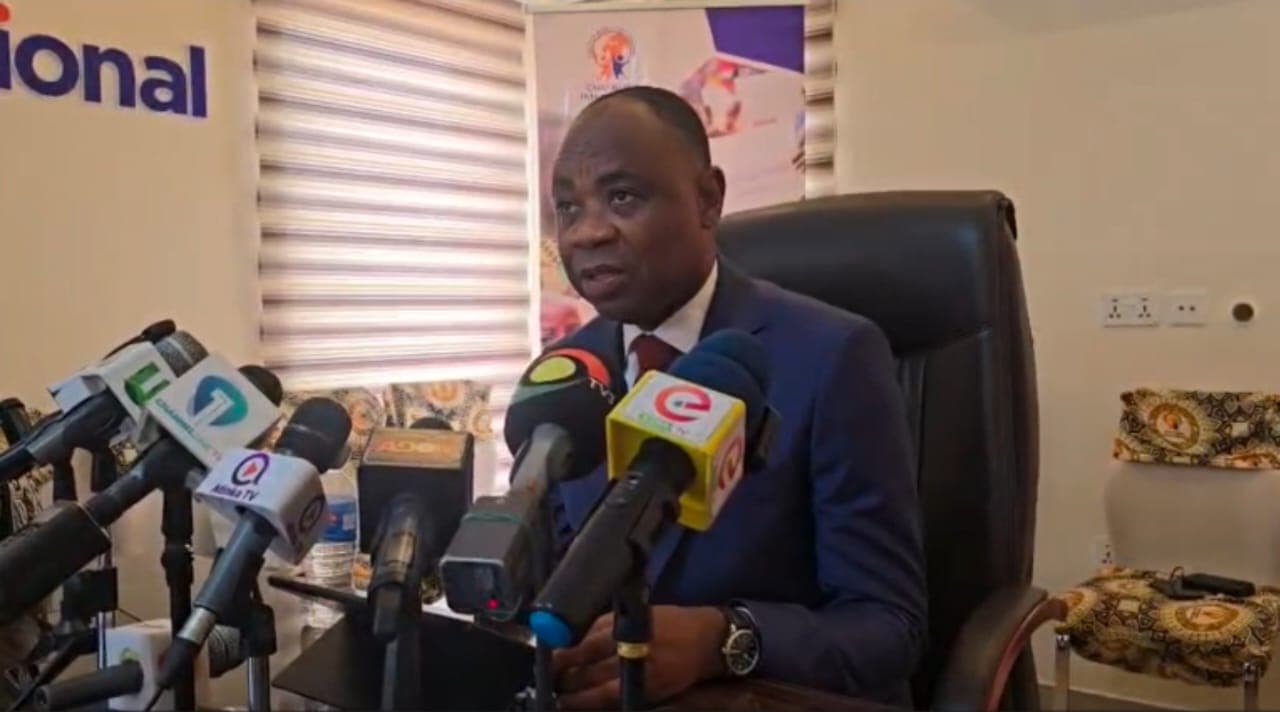
Accra, Ghana, October 21, 2026: On 4 August, a 20-year-old student walked into the Domestic Violence and Victim Support Unit (DOVVSU) office in Obuasi with her father and reported that her headmaster had raped her. Police say she told them it happened on 25 July at his official residence on the school compound. On 20 October, 77 days later, the Interior Minister told Parliament the man had been arrested.
In between, the school was shut after a riot, a committee recommended moving him to another school, and his political party decided not to disqualify him from an internal election. By then, 19 girls had reportedly come forward. Only one complaint had formally reached the police.
On Wednesday, activists asked Ghanaians to wear red for the girls of Obuasi Senior High Technical School (SHTS). Red is easy to wear. This analysis does the slower work: what happened, in order, with sources, and where responsibility belongs.
One rule before we start. Everything said here about Zakaria Abdulai is an allegation. He declined to comment to JoyNews, saying GES and the police were investigating, and his resignation letter says he will pursue lawful means to clear his name. No court has heard the case.
What the girls allege, and how many there are
The allegations come from JoyNews investigative journalist Manasseh Azure Awuni and his documentary, Inside the Dreaded Headmaster's Bungalow. It examines claims of sexual harassment, assault and rape involving female students.
The count has moved. It was 14, then 16. On Sunday 18 October Manasseh said it had risen to 19, and that more names would likely follow because some students did not report.
A caution on language. Not every complainant is a child, and the ages of most have not been published. The only complaint in a police docket is from a 20-year-old. This analysis says girls and young women where it can, and does not stretch the facts to match the anger.
Eight months of warnings
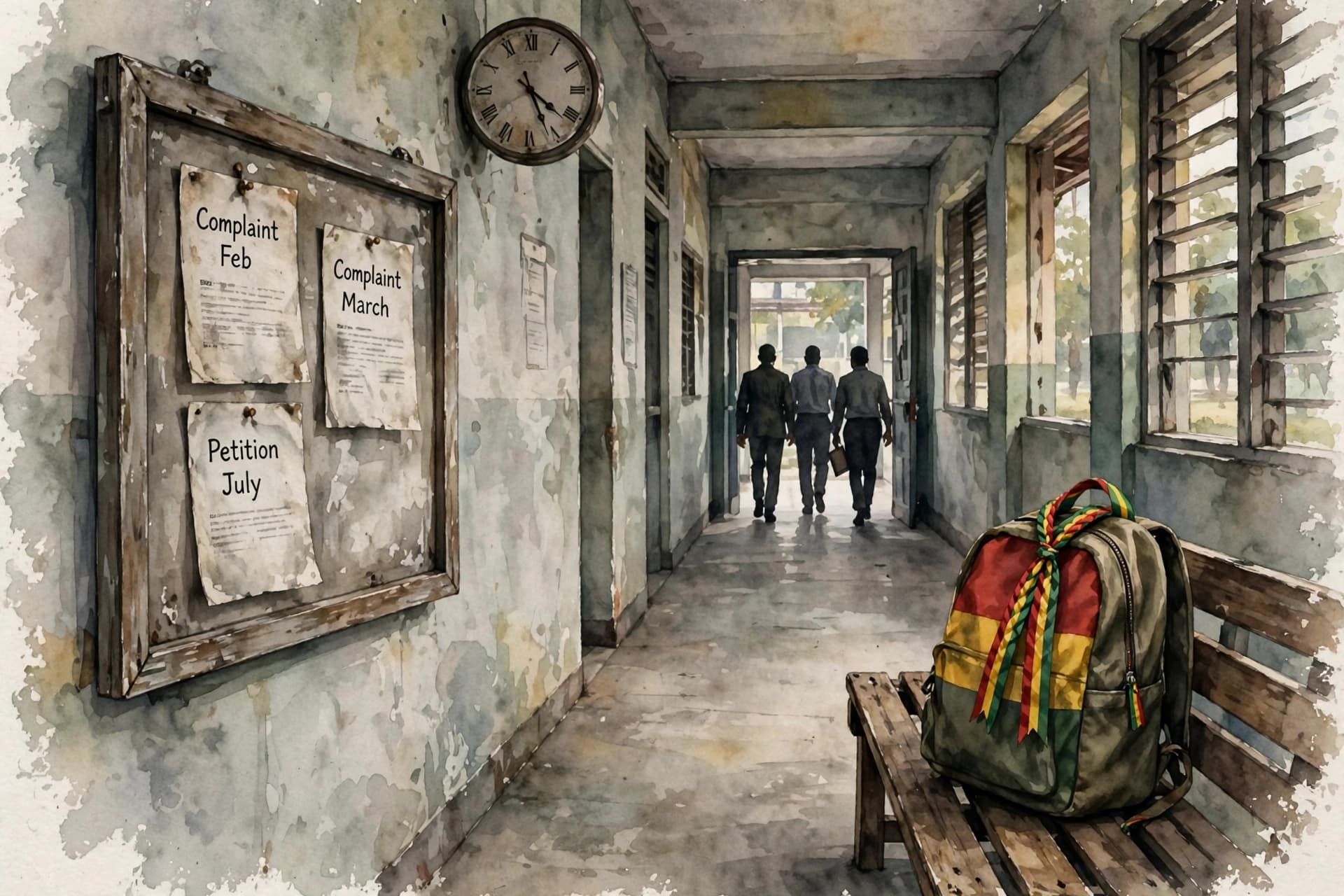
The reporting says officials were told long before a camera arrived. Obuasi Municipal Chief Executive Faustilove Appiah Kannin recalled being told in early 2025 by the school's former sports master that the headmaster had slept with a student. She invited the parents. They came without their daughter, and neither returned, according to the JoyNews investigation.
In February 2026, the school's Girl Child Coordinator and a teacher petitioned management over a growing number of sexual assault complaints. The investigation reported that nothing came of it.
In March, the municipal director of education, George Alfred Koomson, confirmed that five girls reported to his office. Three put their complaints in writing. They were not investigated before another alleged rape in July. He said he fell seriously ill soon after receiving them.
In July, the old students' association petitioned for an inquiry. The JoyNews investigation also reported that some parents withdrew their complaints after pressure from opinion leaders who intervened for the headmaster. Those named dispute parts of that account, and one father has separately alleged that parents are being threatened. That claim has not been tested.
The gender lens matters here. A headmaster holds power over a girl's marks, her recommendation and her place in school, and the girls who reported had the most to lose by speaking. The alleged pressure on parents, and the alleged transfers aimed at teachers who raised concerns, show how far that cost spreads.
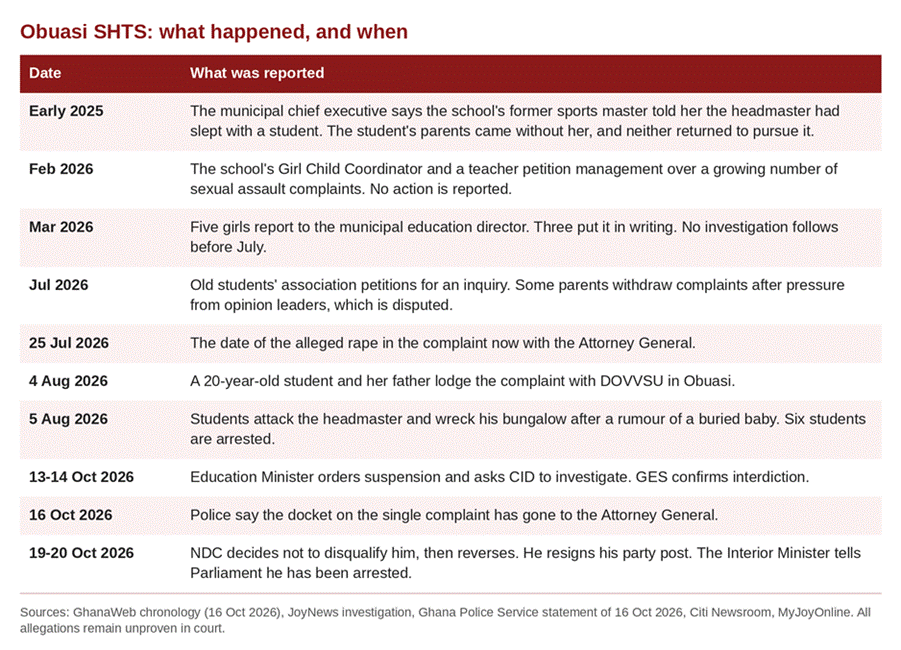
Many people knew something. On the reporting so far, none of it became a formal investigation until a complaint reached the police on 4 August.
The riot that muddied the story
On 5 August, students attacked the headmaster and wrecked his bungalow after a rumour that he had buried a baby on the school compound. He was admitted to Komfo Anokye Teaching Hospital in Kumasi. Six students were arrested.
A GES committee, set up to look into the August disturbances, found that the sexual harassment allegations were not substantiated by the evidence before it, blamed a sports master for inciting students, and described political divisions among teachers. It recommended that the headmaster and other staff be reposted. A separate investigative report found that no witness saw him bury a foetus.
Some people read that as the end of the matter. It is not. The Gender Centre for Empowering Development (GenCED) warned against presenting the riot findings as a ruling on the abuse allegations. GES's own deputy director-general said he had not seen explicit findings on culpability in the parts of the report he read, and added that this did not mean none exist.
The riot happened. The baby rumour, on that report, was not supported. Neither fact tells us whether 19 girls are telling the truth. A Facebook post this week argued that GES should not blame the headmaster alone because “sometimes the school kids are the problem.” A student mob attacking a teacher is a crime and deserves its own inquiry. It is not evidence about what happened inside a bungalow.
Under another post, a commenter wrote that teachers are always blamed and that some students are a danger to teachers. A teacher who suffers harassment from a student deserves a hearing. But a headmaster controls a student's marks, her recommendation and her place in school. That gap in power is why a safeguarding officer told JoyNews that even food errands to staff homes are a red flag.
Suspension, arrest and one docket
Three separate actions are easy to confuse. On 13 October, Education Minister Haruna Iddrisu directed the headmaster's suspension and asked the Criminal Investigations Department (CID) to investigate. GES confirmed his interdiction on 14 October, and says he remains interdicted. On 20 October, GES directed the Ashanti regional director and the Obuasi municipal director of education to step aside so the investigation proceeds without interference or the perception of it.
Police sent the docket on the 4 August rape complaint to the Attorney General for advice. As I write, I have seen no report of that advice or of charges. Interior Minister Mubarak Muntaka told Parliament's Public Accounts Committee that the case reached him on 7 September, that he ordered it moved to Police Headquarters, and that investigators are pursuing DNA evidence.
Police spokesman ASP Lloyd Baidoo explained that police investigate what is reported to them. Other girls, he said, can make an official complaint at the nearest station, and police will then investigate.
Read that again. The other girls, in a community where some parents are reportedly pressured, are told they can walk into a police station on their own. Whether that is a fair burden is a question for the police, the Attorney General and the Gender Ministry.
The party that cleared him, then changed its mind
The headmaster was the National Democratic Congress (NDC) constituency secretary for Juaben and had picked forms to run for chairman. On Monday 19 October, after hearing him, the party's Functional Executive Committee decided not to disqualify him at that stage, citing fairness, natural justice and the presumption of innocence. That was a ruling on his eligibility to run. It was not a finding on the allegations.
Criticism came fast. Dr Angela Dwamena-Aboagye of the Ark Foundation said he should step aside to protect the process and give survivors confidence. On 20 October the party reversed itself, and Mr Abdulai resigned as secretary and withdrew from the race. He said he hopes to return to active politics once the matters are resolved.
The party deserves a fair hearing on two points. The presumption of innocence is real, and it applies to him. And the party changed course within about a day. But that principle shields a man from punishment before trial. It does not oblige a party to give him a platform while girls decide whether to testify.
Institutions that cannot grade their own work
On Tuesday, Child Rights International's Executive Director, Bright Appiah, said GES cannot be trusted to handle child protection. The organisation wants the GES counselling unit turned into an independent authority, social welfare officers placed in schools and the GES code of conduct reviewed.
The National Association of Graduate Teachers (NAGRAT) alleges that 38 teachers who criticised the headmaster were targeted for transfer. Women's groups, including NOPSWECO-Ghana and the Working Group on Women, Youth, Peace and Security, want to know why the warnings triggered nothing.
GES says proven sexual misconduct means dismissal. Its deputy director-general said the GES Council approved about 15 dismissals this month in sexual harassment cases going back to 2021. Then there are the surveys.
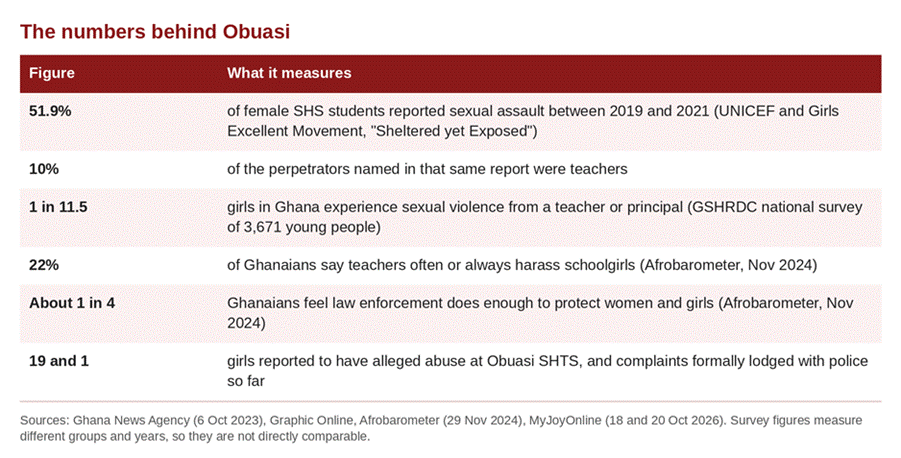
One UNICEF and Girls Excellent Movement report found that 51.9 per cent of female SHS students reported sexual assault between 2019 and 2021, with teachers named in 10 per cent of the perpetrators. The studies use different groups, years and definitions, so I do not compare them with each other. Together they show a problem much larger than one school.
Which ministry owes the girls an answer
The Ministry of Gender, Children and Social Protection issued a statement on 19 October, six days after the suspension order, promising stronger child protection in schools, helplines displayed on campuses nationwide, and work with GES and CID. Minister Dr Agnes Naa Momo Lartey met Manasseh Azure Awuni on 20 October and said she had asked the GES Director-General for a meeting.
Those are a statement and a meeting. Whether they amount to effective help for the girls is a separate question, and the first formal complaint reached a municipal education office in March. The questions still open are the ones gender advocate Akosua Manu put to the Ministry: what support the girls and families receive, what stops intimidation, and how their privacy, schooling and access to justice are protected. A poster with a helpline number does not answer them.
When a ministry with a clear mandate has not answered a direct question, name the ministry and keep asking. That is accountability, and it is fair.
Should we demand that women in power speak?
Since the documentary, one question has dominated social media: where are the women in government? NPP National Women's Organiser Hawa Koomson urged the Vice President to condemn the allegations publicly, saying she has not heard her speak on any issue concerning women. Akosua Manu made a similar appeal.
Posts circulating on Facebook went further. They named Deputy Chief of Staff Nana Oye Bampoe Addo, Vice President Jane Naana Opoku-Agyemang and Deputy Presidential Spokesperson Shamima Muslim, and accused them of putting party above girls. In the coverage I reviewed up to Wednesday 21 October, I found no public statement on the case from the Vice President or Ms Bampoe Addo. That does not prove none exists, and their offices have not been asked.
There is a fair case for asking. These women hold office partly on the promise that women in leadership change what leadership does. Ghana passed the Affirmative Action (Gender Equity) Act in 2024 on that argument. Ms Bampoe Addo is a lawyer and rights advocate who once ran the gender ministry. A voice from the top of a party can move that party faster than a statement from outside. And the complaint about the Vice President's silence on women's issues predates Obuasi.
There is also a case against, and it is stronger than the angriest posts allow.
The duty to act sat elsewhere. The Education Ministry and GES run schools and safeguarding. The municipal and regional directors received the complaints. The police investigate, the Interior Minister oversees them, and the Attorney General advises on prosecution. Most of the people in those posts are men. Asking women in unrelated posts to speak first turns an institutional failure into a gender chore and lets the people with the files off the hook.
Women did speak. Presidential Staffer Beatrice Annan criticised men who rush to defend alleged predators. The Gender Minister issued a statement and met the journalist. CID Director-General COP Lydia Donkor leads an investigation the Interior Minister says he would vouch for with his life. One Facebook reply to Ms Annan called her post a “very stupid take” and told women in her party to shut up if they had nothing sensible to say. Demanding speech and then punishing it is not a strategy.
The standard is applied selectively. Most of the calls aimed at the Vice President came from the opposition, which is entitled to make them. The test of whether they are principled is whether the same voices would demand a statement from every woman in office when the accused belongs to their own side. They can answer that.
Public silence is not private inaction. We do not know what calls were made. We do know what was said in public, and for a Vice President that is the part voters can judge.
Here is the conclusion this analysis reaches. Ask them, but ask them as officeholders, not as women. Did they press the party, the Gender Ministry or the Education Ministry on support for the girls? Those are questions about power and access, and an officeholder with no direct legal duty can still be asked how she uses her influence. “Why has she not spoken?” is a question about expectation, and expectation falls on women first and hardest in every sector. A feminist test runs in both directions. We should not excuse women in power because they are women. We should not tax them extra for it either.
What red cannot do
Wearing red shows the girls they are not alone. It does not move a docket. Over the next few weeks, these are the tests of whether anyone is accountable.
The Attorney General's advice on the single docket, and whether charges follow. Police say they will act on it.
Whether police and the Gender Ministry go to the other girls, with social workers present and families shielded from pressure, instead of waiting for each one to arrive at a station.
Whether GES publishes the August committee's full report and the findings of the new committee, so the public can tell the riot inquiry from the abuse inquiry.
What happens to the 38 teachers NAGRAT says are being targeted. People who raised the alarm should not pay for it.
Whether the parties adopt one rule: a member under criminal investigation for sexual offences against students steps aside from party contests until cleared. It costs nothing, and it would have spared us a week of anger.
Whether anyone answers for the eight months. The two directors have stepped aside. A committee should say who knew what, and when.
Nineteen is the number of girls who have spoken. It is not the number who were hurt. Fairness to the accused is a legal duty and it is owed. Fairness to the girls was owed in February.