Accra, Ghana, October 22, 2026:When a mining company begins operations, the economic activity it brings can transform a community. Workers are employed, businesses emerge, demand for accommodation and transport grows, and local traders find new customers.
But what happens when the mine closes?
For communities whose livelihoods have become tied to mining, the end of extraction can mean the loss of jobs, reduced business activity and uncertainty about what comes next. If the land and water have also been degraded, residents may find it harder to return to farming and other traditional sources of income.
It is this prospect that Ghana's Minister of Environment, Science and Technology, Dr Zanetor Agyeman-Rawlings, has warned against.
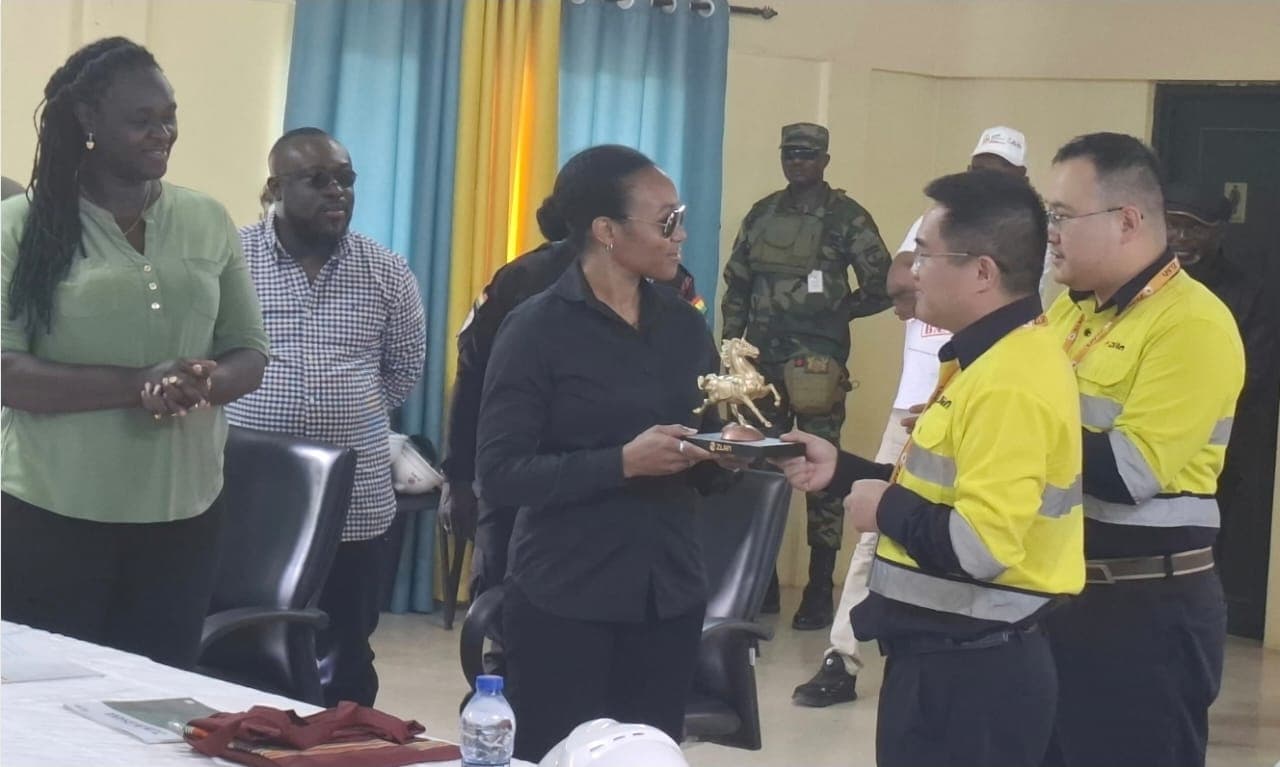
Speaking during a visit to Zijin Golden Ridge Limited's Akyem Gold Mine at Abirem in the Eastern Region on October 21, 2026, the minister said mining communities must benefit from sustainable development rather than be left with poverty and environmental degradation when operations end.
The visit, facilitated by the Environmental Protection Authority (EPA), examined the company's environmental management practices, land reclamation efforts and measures to minimise the effects of mining.
“What we should not be seeing is poverty and degradation at the end of the life cycle of any mine. That should be a thing of the past,” she said, according to the Ghana News Agency (GNA).
Her statement raises a question that Ghana's mining sector must confront: are plans to protect communities after mine closure being treated as an essential part of mining, or as a problem to address when extraction is nearly over?
Mine closure is an economic issue, not just an environmental one
Rehabilitating land after mining is essential, but the future of a mining community cannot be measured by the number of trees planted or hectares restored alone.
A community may have rehabilitated land and still face unemployment, declining business activity and inadequate alternative livelihoods. Environmental restoration and economic recovery must therefore be considered together.
The Minerals and Mining Policy of Ghana recognises the importance of planning for the period after extraction. It identifies post-mining economic viability and the long-term sustainability of affected communities as issues that must be addressed in mine development and closure planning.
This matters because preparing for closure takes time. Skills development, support for local businesses, investment in alternative industries and the restoration of agricultural land cannot necessarily be completed in the final months of a mine's operation.
If these measures begin only when production is about to end, communities may have too little time to prepare for the economic transition.
Government regulators and mining companies therefore need to assess not only how a mine will operate, but also how the surrounding economy can remain viable when the mine is gone.
Women must be part of the conversation about mining's future
The discussion about post-mining livelihoods also needs to consider women whose incomes depend on the wider local economy.
Women in mining communities may work in farming, food vending, trading, accommodation, transport-related businesses and other activities that depend on local demand. Some may also depend on land and water for household food production and other livelihood activities.
When mining activity declines, the effects can extend beyond workers directly employed by the company. Traders may lose customers, food vendors may see fewer sales and small businesses may struggle as household incomes fall.
Environmental damage can create additional pressures where farmland becomes unusable or water sources are affected. Women who undertake much of the work involved in securing food and water for their households may face increased demands on their time and income.
The scale of these effects will differ between communities and should be established through local research. However, they demonstrate why post-mining plans need to examine the economic lives of residents beyond the mine's payroll.
Women should be involved in decisions about community development priorities, livelihood support and the future use of restored land. Their participation must be meaningful, with opportunities to influence decisions rather than simply attend consultation meetings.
Without such participation, development plans risk overlooking the needs of people whose work sustains local households and businesses but may not be captured in the mine's employment figures.
Akyem's reclamation programme offers a test of delivery
During the visit, the mine's Environmental Manager, Kwame Obeng Dapaah, said the company had been required to restore 303 hectares of land but had committed to rehabilitating 370 hectares.
He said the company had been granted 101 hectares within a forest reserve for mining and was undertaking reforestation to compensate for vegetation loss. The 10-year reforestation project was scheduled to be handed over to the Forestry Commission in 2027.
The company also described its practice of concurrent reclamation, which involves restoring areas no longer required for mining through re-sloping, topsoil replacement and tree planting.
These commitments provide specific measures against which progress can be assessed. The important questions are whether the restored land is recovering as intended, whether the reforestation is successful and whether the rehabilitation will support long-term environmental and community needs.
The proposed handover to the Forestry Commission will also be an important point in the programme's implementation. Continued monitoring will be needed to establish whether the restored areas remain protected and whether the intended environmental benefits are sustained.
The company said illegal mining within and around its concession was affecting streams it monitored and undermining efforts to protect water quality. Dr Agyeman-Rawlings said she would engage the EPA's chief executive and the Ministry of Lands and Natural Resources on enforcement and the protection of legally acquired concessions.
These are important concerns, but they also underline the need for transparent monitoring of environmental conditions and clear responsibilities for responding to damage.
Reclamation commitments should be assessed through evidence of actual results, not solely through announced targets.
Planning for closure must begin before the last day
The minister's remarks also raise the question of what mining companies and public authorities should do now to ensure communities are not left economically vulnerable in the future.
One priority is to identify the economic activities that could sustain communities beyond mining. Depending on local conditions, these might include agriculture, agro-processing, other small businesses, tourism or services that can operate independently of mineral extraction.
This requires more than offering occasional training programmes. Skills development must be connected to real opportunities, while local businesses need access to markets, finance and infrastructure that will remain useful after the mine closes.
Mining companies and local authorities should also work with residents to identify which existing livelihoods are most vulnerable to changes in mining activity and which investments could help diversify the local economy.
Environmental restoration must be planned alongside these efforts. Land intended for future farming or other productive uses needs to be rehabilitated to an appropriate standard, while water quality and other environmental risks require continued monitoring.
The timing matters. Communities need the opportunity to develop alternative sources of income while mining activity is still supporting local demand, rather than being expected to rebuild their economies after that demand has disappeared.
Government agencies must also ensure that closure plans are monitored and that the responsibilities of companies, regulators and other parties are clear.
The real measure of responsible mining
Dr Agyeman-Rawlings said the government expected mining companies to reduce their environmental footprint while ensuring that host communities derived lasting benefits from their natural resources.
She also welcomed the company's efforts to introduce electric vehicles into its operations and discussions about establishing a battery recycling facility, noting that the safe disposal and recycling of batteries would need to be planned before they became a problem.
Her comments point to a broader challenge for environmental management: responsible mining requires anticipation. Governments and companies must identify risks early and put systems in place before environmental or economic problems become difficult to reverse.
The same principle must apply to the future of mining communities.
A successful mine closure should not be judged only by whether operations end safely or whether land restoration targets are met. It should also be assessed by whether residents have viable economic opportunities, whether environmental resources are protected and whether local businesses and public services can continue to function.
For women, men and young people living in these communities, the end of extraction should not mean the end of opportunity.
Ghana's mineral wealth is finite. The responsibility to protect the people and places that produce it extends beyond the years in which it generates revenue.
When a mine closes, the community must still have a future. Planning for that future must begin while the mine is still operating.