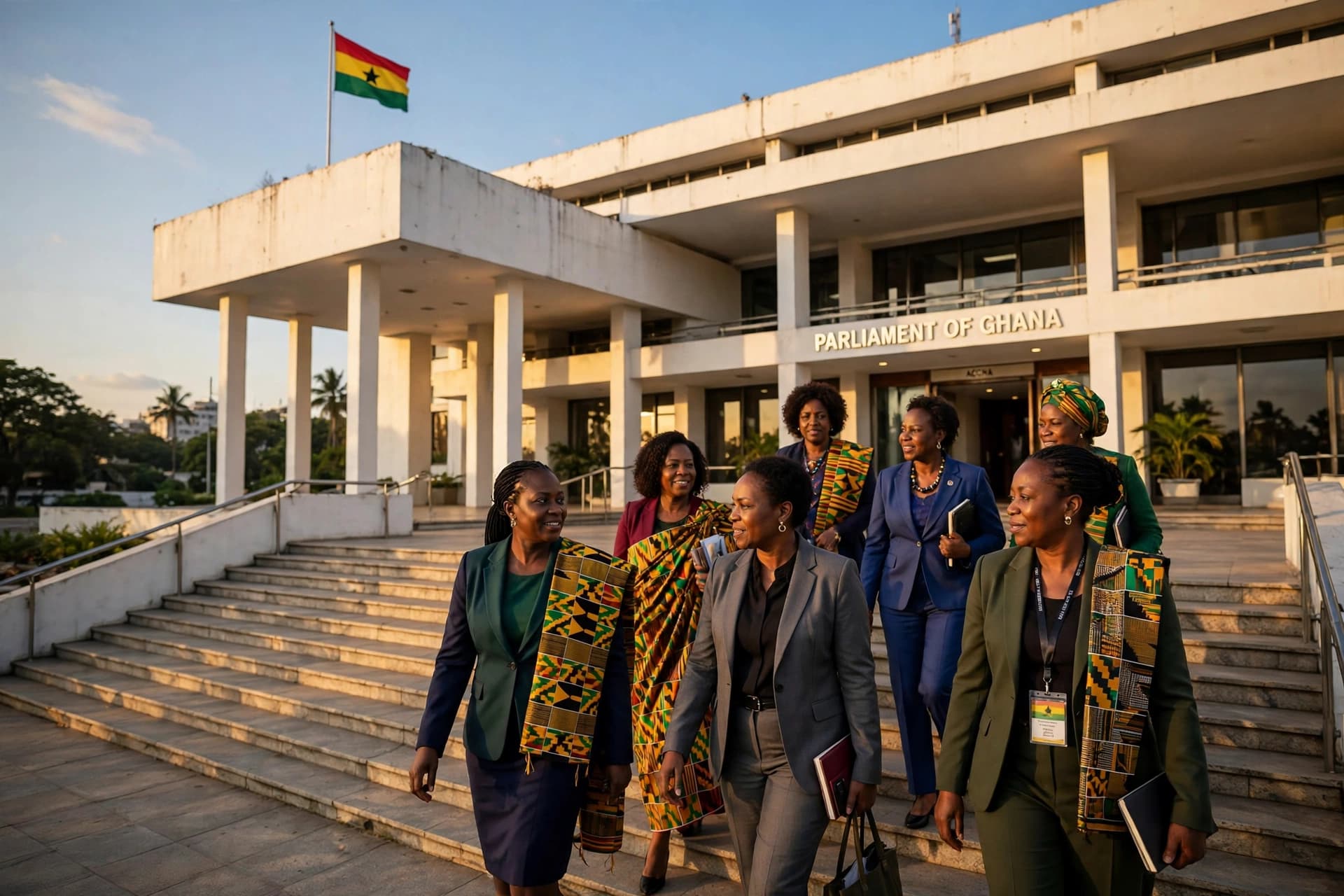
Accra, Ghana, October 11, 2026: Walk into any newsroom in Ghana today and you are likely to see women everywhere.
Women behind the microphones, on screens, producing programmes or reporting from the field.
You have women staying late to meet deadlines, tirelessly building audiences and carrying programmes on their backs. Yet the question remains
"If there are so many women in Ghanaian journalism, why are there still so few women at the very top?"
Where are the women running the newsrooms, deciding what becomes news or controlling editorial budgets?
Where are the women sitting in the boardrooms deciding the future of media organisations?
And perhaps the most uncomfortable question:
Who benefits from having women everywhere except where the real power is?
Yes, we celebrate the numbers. But for years, we have celebrated the increasing presence of women in journalism.
A young woman can now turn on the radio or television and hear women presenting major programmes, reporting breaking news and interviewing some of the most powerful people in the country.
That progress matters.
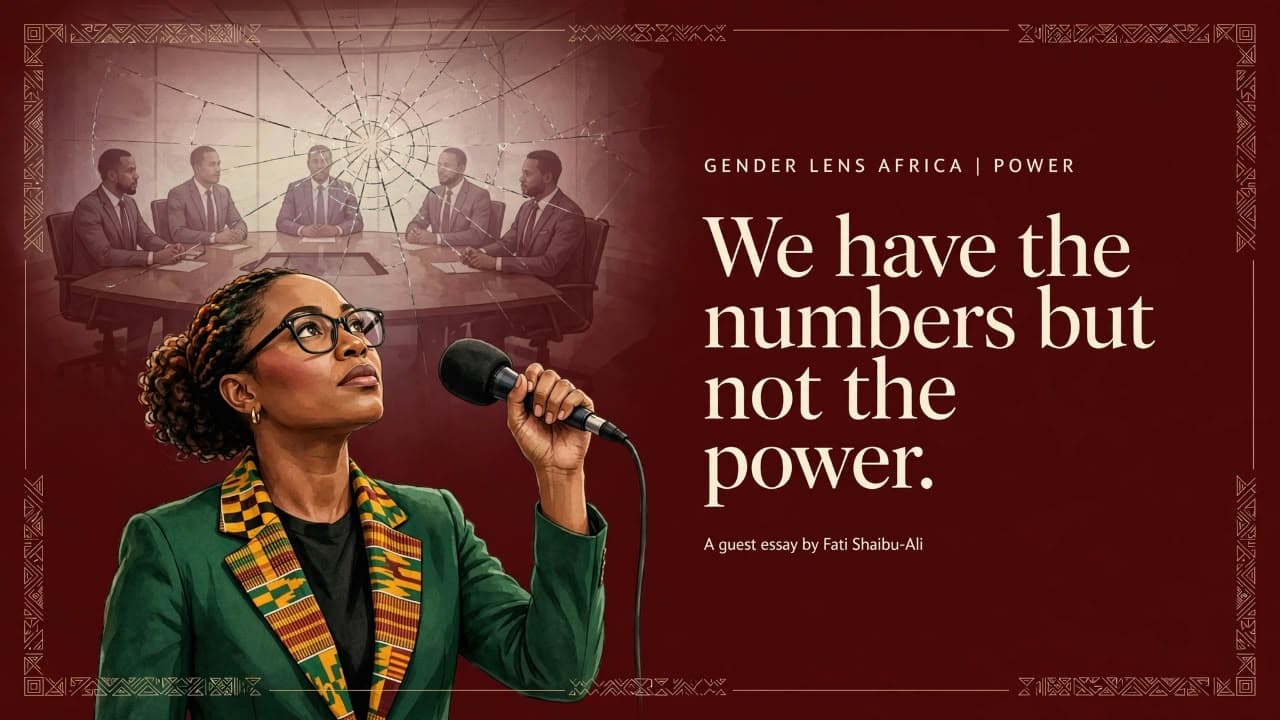
But representation at the microphone is not the same as representation in the boardroom.
Being the face of a programme is not necessarily having a say in who gets hired.
Being the voice audiences hear every morning is not the same as determining the editorial direction of the organisation and being good enough to carry the brand does not automatically mean being trusted enough to lead it.
That distinction is important.
The newsroom has a glass ceiling too.
We often talk about the glass ceiling in corporate Ghana as though journalism is somehow exempt.
It isn't.
A woman can spend years proving that she can do the job, survive newsroom politics, work weekends, report breaking news, handle difficult interviews and deliver under pressure.
Yet when the time comes to appoint someone to lead, somehow the conversation changes.
Suddenly, experience isn't enough
Leadership becomes the issue.
“Can she handle the pressure?”
“Can she manage the numbers?”
“Will she be too emotional?”
“What about her family?”
“Will she be able to travel?”
And sometimes the most revealing question is never spoken:
“Is she really leadership material?”
We rarely ask the same questions with the same intensity when the candidate is a man.
A man is often given the opportunity to prove that he can lead.
A woman is sometimes expected to prove that she already is a leader.
Getting women into journalism is one thing.
Keeping them ambitious enough to fight for leadership is another.
Imagine spending fifteen years in an industry where you repeatedly watch men get promoted ahead of you.
Imagine watching younger men arrive and quickly move into management positions while experienced women remain presenters and reporters.
Imagine being told repeatedly that you are “valuable” but never being given authority.
Eventually, some women stop asking.
They leave.
They start businesses.
They move into public relations.
They move into communications.
They change careers.
Or they remain in journalism but stop believing that the top is meant for them.
And then the industry looks around and asks:
“Where are the women?”
They were here.
Some of them simply got tired of knocking.
The industry must also ask itself a harder question
Do we actually want women in power?
Or do we simply like the optics of having women in the newsroom?
Because there is a difference.
It is easy to put a woman on television.
It is harder to give her the budget.
It is harder to give her authority.
It is harder to allow her to make unpopular editorial decisions.
It is harder to let her supervise people who may be older than her.
It is harder to let her fail and learn without concluding that “women cannot handle leadership.”
And it is hardest of all to give her power and not constantly remind her that she is a woman exercising it.
We cannot keep celebrating presence while ignoring power
The next conversation about women in Ghanaian journalism should therefore not simply be:
“How many women do we have?”
It should be:
“How many women make the decisions?”
How many women sit at the editorial table?
How many control budgets?
How many run newsrooms?
How many own media organisations?
How many are station managers?
How many are executive directors?
How many are trusted with the biggest political and investigative assignments?
How many are being deliberately mentored and sponsored for leadership?
Because numbers can deceive us.
A newsroom can be 70 percent female and still be controlled by men.
And if that is the case, then we have achieved representation without redistribution of power.
To the women coming behind us
Do not be satisfied simply because they gave you a microphone.
Ask for a seat at the table.
Do not only ask to be promoted.
Ask what qualifies someone for promotion.
Do not compete only with other women for airtime.
Build each other.
Mentor younger women.
Recommend them for opportunities.
Share information, share contacts, knowledge and when you get into the room, remember the woman who is still outside, because the goal should not be to become the only woman in the room.
The goal should be to make sure there are so many women in that room that nobody finds their presence unusual anymore and to the men who run our newsrooms
This is not an attack on you.
It is an invitation to examine the system, look at your promotions, look at your senior management, look at who gets the biggest assignments and who gets mentored.
Look at who gets second chances, look at who is described as “leadership material.”
Look at who is expected to sacrifice family for the job.
Then ask yourself an uncomfortable question:
Are you promoting the best person or the person who looks most familiar to you?
Because sometimes discrimination does not arrive wearing a hostile face.
Sometimes it looks like tradition.
Sometimes it looks like “this is how we have always done things” and sometimes it looks like a perfectly reasonable appointment repeated so many times that we stop noticing who is always being left out.
The future of Ghanaian journalism cannot be half-built.
Women have already demonstrated that they can report the news.
They can break the story, hold powerful people accountable, build audiences, lead conversations and survive the chaos of the newsroom.
The question is no longer whether women belong in journalism.
They are already here.
The question is whether the industry is prepared to trust them with power because if women are good enough to carry the microphone, they should be good enough to carry the organisation.
If they are trusted to interview the powerful, they should be trusted to make decisions.
If they are trusted to manage crises on air, they should be trusted to manage people behind the scenes and if we continue to see women everywhere in Ghanaian journalism except at the top, perhaps we should stop asking whether women are ready for leadership.
Perhaps we should finally ask whether the industry is ready to let them lead.