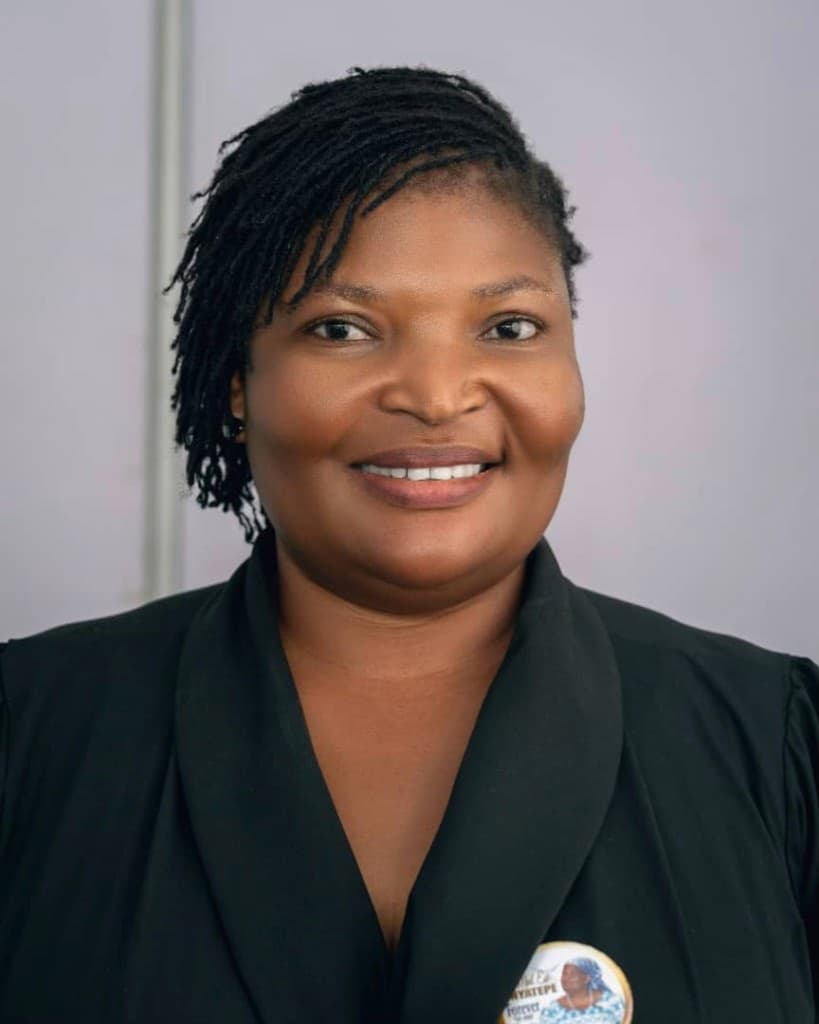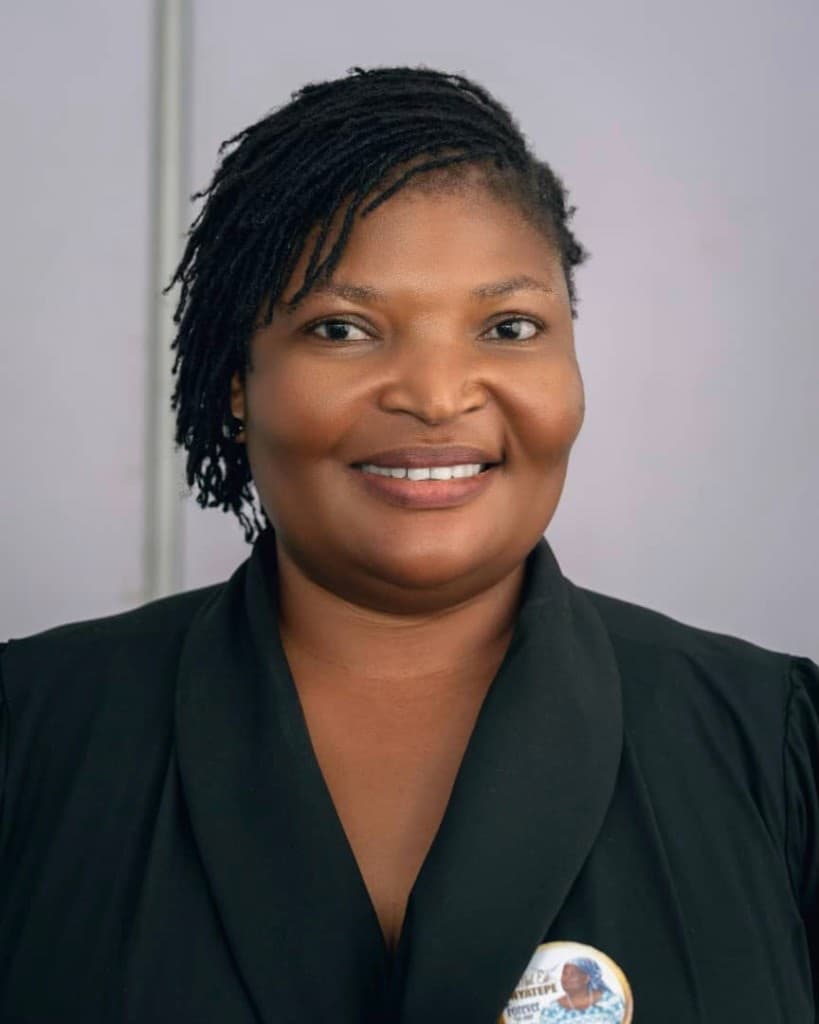
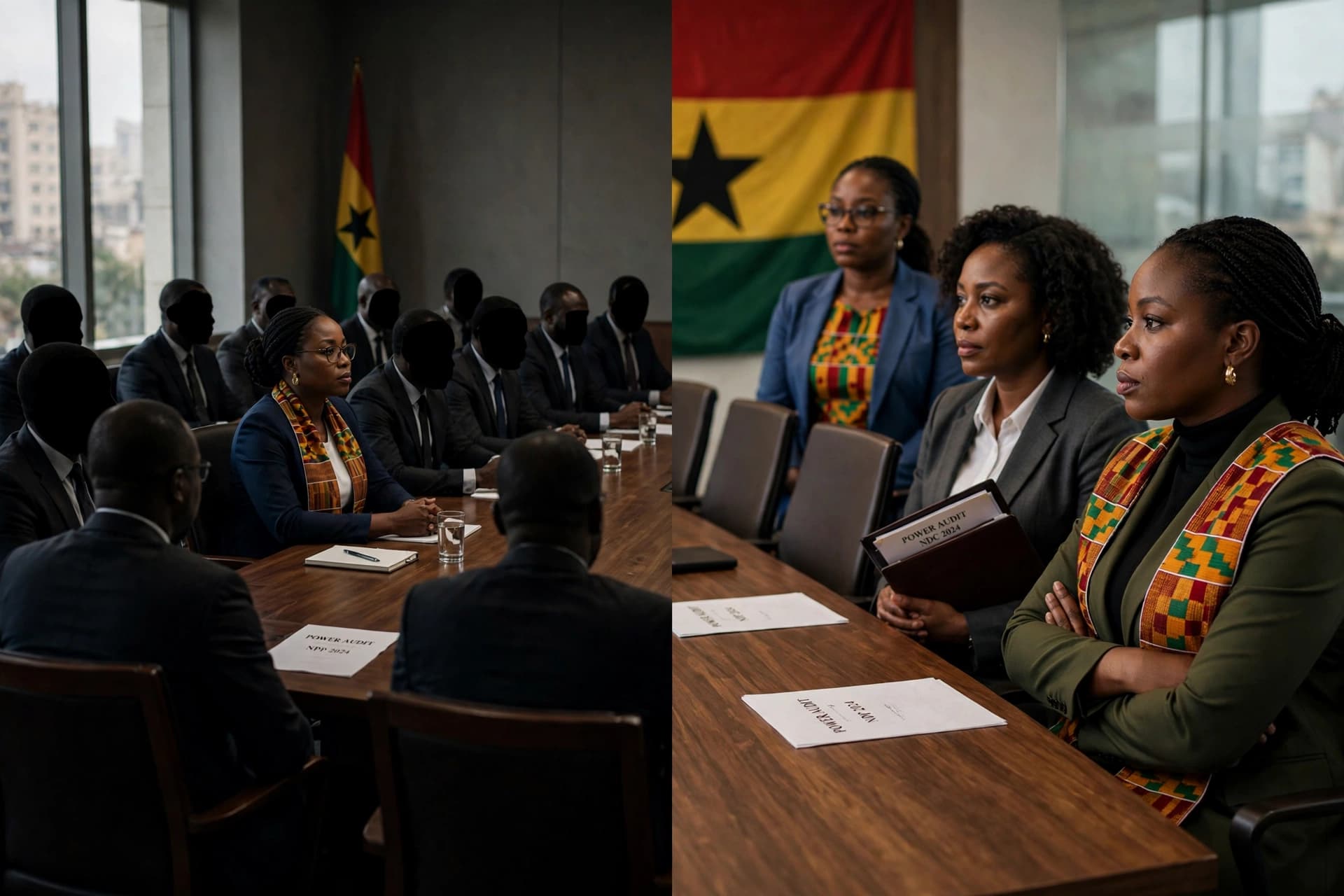
Accra, Ghana, October 29, 2026: Eleven national posts. One woman. That is the result of the New Patriotic Party (NPP) national executive election on 3 October, and the woman, Mavis Hawa Koomson, won the post reserved for women.
Which party gives women more power in Ghana? Nobody can say yet. The National Democratic Congress (NDC) held its constituency elections on 24 and 25 October, and its results are incomplete. Neither party publishes results by sex and position. This article sets out what Ghana should ask both to disclose.
How many women won NPP national executive posts?
One of 11. At the party’s National Delegates Conference in Kumasi, Koomson was elected National Women’s Organiser, beating the only other contender, Hajia Safia Mohammed. According to the full list of winners, men took the chair, the general secretary post, the national organiser post, the treasurer post, the communications director post and all three vice-chairman slots.
Election Watch Ghana raised concern about the outcome and called for deliberate steps to open more room for women in party leadership.
The ballots tell a second story. In the published candidate lists, I could not find a woman’s name among the four candidates for chairman, the four for general secretary or the seven for national organiser. I read sex from names, which is not always reliable, so these lists need checking against official records.
What the lists show is absence. They do not show why women were absent. That question belongs to the party.
How many women won NDC constituency executive posts?
The NDC’s elections covered 276 constituencies, with about 15,000 aspirants expected. The party has not published results by sex.
Graphic Online’s list of executive slates covers 15 constituencies. Every chairman is a man. A woman is secretary in one, Ablekuma North. By my reading of the names, women are treasurers in three: Sekondi, Ayawaso West Wuogon and Ketu South.
In Ho Central, Sena Setordzi was elected vice-chairperson. Graphic reports that the chair went to Mawunyo Agbe. Before the vote, Setordzi told the Ghana News Agency she was standing for vice-chairperson because no woman had stood for it in the constituency. Some early reports called her chairperson. The title matters, because the two posts carry different authority.
These are samples chosen by the media. They show where women appear in the results and where they do not. They cannot show the national picture.
Do women hold the same posts in both parties? The Akan comparison
One constituency lets us compare the two parties directly. Akan, in the Oti Region, elected an executive in both.
In the NPP’s July vote, reports name eight posts. The Women Organiser, Nyam Abena Bigornu, is the only woman among them. In the NDC’s vote, Graphic’s list names 16 posts. Women hold the Women’s Organiser and Deputy Women’s Organiser posts. In the same constituency, under two parties, the women we can identify sit in the women’s posts.
The NPP’s constituency picture is incomplete too. The party held its elections in 245 of 276 constituencies on 11 and 12 July. The remainder were on hold, in dispute or could not proceed.
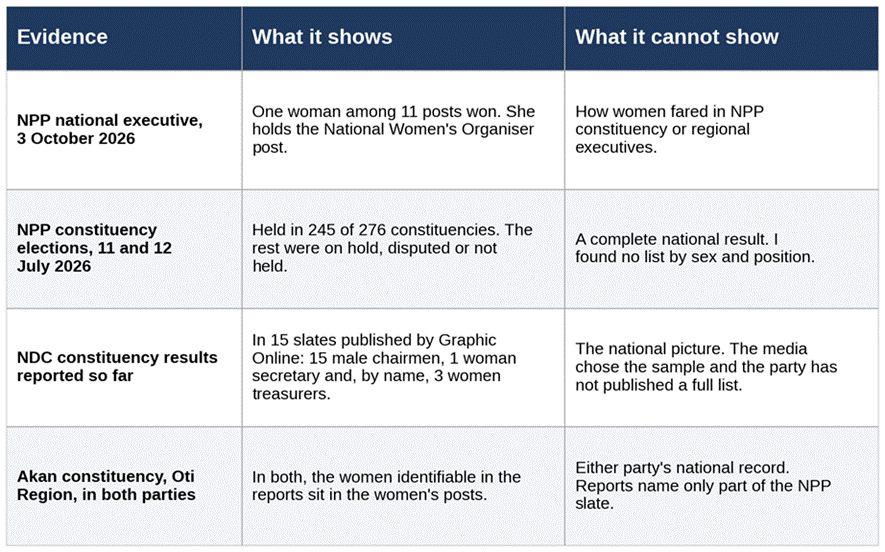
Sources linked in the text. Sex is read from names where reports do not state it.
The same pattern appears in individual contests. Gloria Fenu-Kofitse contested first vice-chairperson for the NPP in Ho West and lost, 701 votes to 406. Her loss is data too. Somebody should count how many women stand for posts like hers, and how many win.
What is the difference between women’s representation and women’s power?
Representation means women are present in a decision-making body. Power means they can change what that body decides. Political scientists call these descriptive and substantive representation. In plain terms: who is in the room, and who shapes what happens there.
A woman can hold a title and have no say over the budget. Another, in a quieter post, can steer a whole constituency. Titles alone cannot tell the two apart.
What does Act 1121 say about women in political parties?
Both parties answer to the same law. The Affirmative Action (Gender Equity) Act, 2024 (Act 1121) has a section on political parties and the representation of women. Its Seventh Schedule sets out strategies for parties, including a database of female aspirants, mentoring programmes for female candidates and a gender-sensitive organisational culture.
These are practical measures that can be checked. Neither the result sheets nor the party statements I reviewed show whether the NPP or the NDC has put them in place. Both parties should say what they have done.
What parties must submit to the Electoral Commission (EC), and how compliance is assessed, should come from the EC and the relevant authorities. I do not claim a filing duty the Act may not impose. What I propose below is a transparency standard, not a statement of the law.
What is the Power Audit? Five questions for the NPP and NDC
Gender Lens Africa proposes five questions for any party. This is an editorial framework, not an established research instrument. It does not assume either party has failed.
1. Who gets on the ballot, and who wins? Publish results by sex and position, with the number of candidates for each post. If 20 women stand and two win, the problem sits in the contest.
2. Who controls the money? Say what each post can approve, sign or refuse. Say whether women candidates receive campaign support on the same terms as men.
3. Who sets the agenda? Show who chairs meetings, drafts resolutions and sees proposals pass.
4. Who gets to advance? Follow women who serve as secretary, treasurer or organiser. Do they go on to chair, and to regional and national posts?
5. What influence do women exercise, and what follows? Examine whether women can introduce proposals, shape decisions and influence policy. Assess the evidence. Do not assume that a woman’s presence guarantees a particular outcome, or that she must speak only for women.
What should the NPP and NDC disclose?
Both parties should publish results by sex and position, in one format, for national, regional and constituency executives, with the number of candidates by sex for each post. They should publish the duties and spending powers of each executive post.
They should also say what gender-equity measures they have adopted under Act 1121 and how they track them. That includes the aspirant database and mentoring programmes in the Seventh Schedule.
Cost of contesting is a fair question for both. The NPP set constituency nomination fees of GH¢1,500 for chairman, GH¢1,000 for each vice-chairman and GH¢500 for other posts. I could not find the NDC’s fee schedule. Research by GenCED points to the wider costs of contesting. The questions for both parties are practical. Are fees proportionate? What do candidates spend on mobilising delegates? Is any financial, logistical or mentoring support available, and do women and men get it on equal terms?
When can the NPP and NDC be compared fairly?
Soon. The NDC files nominations for national posts from 7 to 9 November, holds regional elections on 14 and 15 November and elects its national executive at its national congress on 19 December. Then Ghana can set the NDC’s national executive beside the NPP’s one in 11. Watch how many women file, not only how many win.
Until then the evidence is uneven, and this article does not rank either party. It asks both for the data that would make a ranking fair.
Counting women tells us who has entered the room. It does not tell us who controls the agenda, the resources or the decisions.