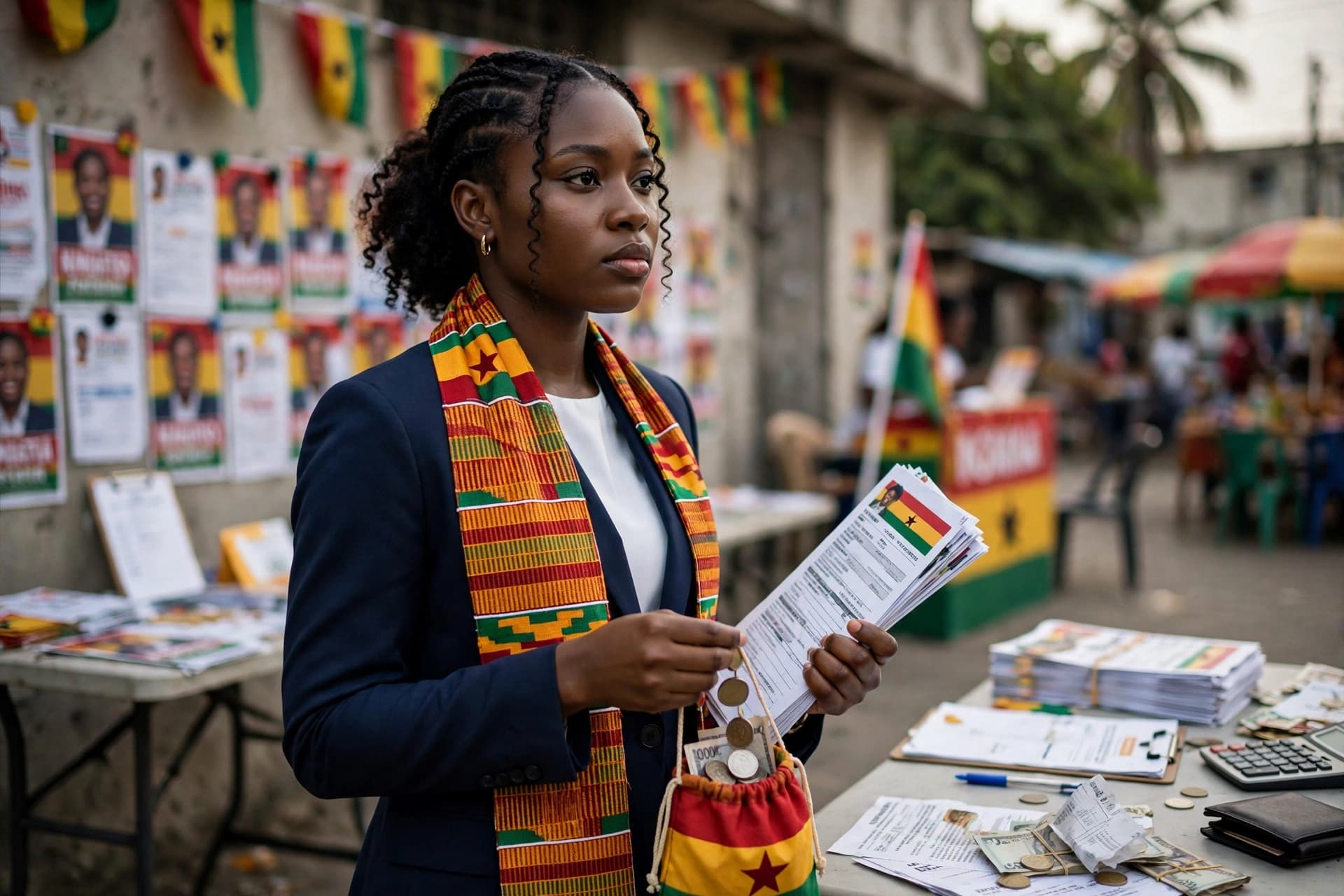
Accra, Ghana, October 28, 2026: Ghana often speaks about increasing women’s representation in politics as though the main challenge is persuading more women to put themselves forward. But what happens when a woman is willing to contest, has the experience and enjoys community support, yet cannot afford the cost of getting her name on the ballot?
That question sits at the heart of former Tamale Central MP Inusah Fuseini’s warning that the rising cost of politics is pushing women, young people and people with integrity out of public life.
Speaking on JoyNews, Hon. Fuseini argued that the financial demands of political competition are excluding people who lack the resources to compete. He also warned that politicians who spend heavily to secure political positions may feel pressured to recover their investments, creating conditions that can encourage corruption.
His comments come amid concerns about alleged vote-buying during the National Democratic Congress’ recent constituency executive elections. The party has said it will investigate credible complaints and sanction those found culpable.
But the implications reach beyond one party or one round of internal elections. They raise a bigger question about who can realistically participate in Ghanaian politics when money increasingly determines access to power.
The cost begins before the campaign
For aspiring politicians, the financial burden can begin with nomination fees and continue through campaign materials, transport, meetings, publicity and the cost of maintaining relationships with constituents and party delegates.
The GenCED study, The Price to Participate: How Money in Politics Undermines Women and Youth Political Participation in Ghana GenCED study, examines how these financial demands can shut out women, young people and first-time aspirants. Its findings point to a system in which access to money, influential party figures and patronage networks can shape political opportunities.
The problem is not simply that politics is expensive. It is that candidates do not start from the same financial position.
Women may have less access to personal wealth, business networks and established political financiers. Those who have spent years building careers while carrying disproportionate family and care responsibilities may also have less time and disposable income to devote to political organising.
A campaign expense that appears manageable to a well-connected candidate can become a barrier for someone without wealthy relatives, powerful sponsors or access to party fundraising networks.
This makes financial resources more than a campaign advantage. They can become a gatekeeping mechanism, determining whose ambitions are treated as realistic and whose are abandoned before the contest begins.
Women pay costs that political accounts may not capture
The financial barriers facing women are not limited to official fees or declared campaign expenditure.
A gender-focused analysis of political party financing by GenCED gender-focused analysis of political party financing by GenCED highlights the less visible costs women face, including unpaid care work, lost income, security expenses, expectations that they support community activities and the emotional labour involved in maintaining political relationships.
These pressures matter because political participation requires time as well as money. A candidate who must also manage childcare, household responsibilities or the care of relatives has fewer hours available for meetings, networking and campaigning.
The burden does not disappear simply because a woman has the qualifications to lead. Nor does it mean women lack ambition. It means the conditions under which they are expected to demonstrate that ambition may be unequal from the outset.
Women can also face gendered expectations about how they raise campaign funds and whom they approach for support. In March 2026, reports from Ghana highlighted concerns raised by political actors about inappropriate or sexual demands some women encounter when seeking campaign financing.
Where financial support comes with expectations that compromise a candidate's autonomy or dignity, fundraising becomes not merely an economic challenge but a question of safety and power.
A political system that expects candidates to secure resources privately, while overlooking these unequal conditions, risks rewarding those who already have access to money and influence.
Representation targets cannot fix a financial barrier on their own
Ghana has taken steps towards increasing women's representation, including through the Affirmative Action (Gender Equity) Act, 2024 (Act 1121). But commitments to improve representation will have limited impact if women cannot afford to enter the political contests that determine who holds office.
Representation targets and financial reform address different parts of the problem. One seeks to change who is represented; the other must help change who can compete.
Political parties therefore need to examine their nomination fees, campaign financing arrangements and internal election rules through a gender lens. Fee reductions or waivers for women and young candidates may help, but they will not be enough if informal spending, delegate inducements and patronage remain central to political competition.
Parties also need transparent rules on campaign expenditure and financial support, with clear procedures for reporting and investigating alleged vote-buying. These rules should distinguish legitimate campaign costs and reasonable logistical support from inducements intended to influence votes.
Such measures must be enforceable. A rule that exists only on paper will do little to change the incentives candidates face.
There is also a case for exploring gender-responsive political financing, including transparent support for underfunded candidates and safeguards to ensure that financial assistance does not become another route for political gatekeeping.
The question is who gets to compete
Hon. Fuseini’s warning about the relationship between heavy political spending and corruption points to another consequence of expensive politics. When candidates invest substantial sums to secure positions, the pressure to recover those costs can undermine accountability and public trust.
That pressure does not mean every candidate who spends heavily will engage in corruption. But a political culture that treats excessive spending as necessary for success risks creating incentives that deserve serious scrutiny.
For women without access to substantial financial resources, the same culture can impose a different penalty: exclusion. They may never reach the stage where voters can assess their ideas, experience or record because the cost of entry has already pushed them out.
The debate, therefore, cannot stop at encouraging women to contest elections. It must ask whether political parties are structured to give them a fair chance of doing so.
Ghana needs political financing rules that promote transparency, enforceable safeguards against vote-buying and practical measures to address the unequal costs women face. Parties must also examine whether their internal processes reward political ability and public service or the capacity to spend.
Women do not need a political system that simply invites them to participate. They need one in which participation is genuinely possible.
Democracy cannot offer equal opportunity if the price of competing for power puts that opportunity beyond the reach of so many.