Accra, Ghana, November 16, 2026: The Ghana Meteorological Agency (GMet) says a strong El Niño is still intensifying. It expects predominantly normal-to-below-normal rainfall for the rest of 2026, warmer-than-average temperatures and a hotter, drier dry season from November to April. It reports that prolonged dry spells have already hurt farming in parts of northern Ghana.
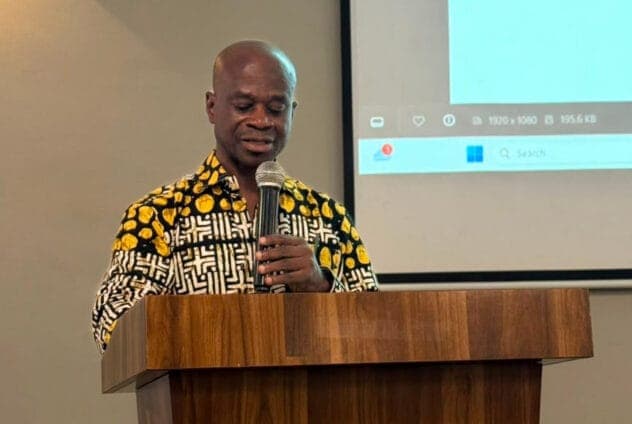
GMet’s Francisca Martey told Joy FM on 2 November that “although the El Niño affects the whole country, its impact is higher on the northern areas.”
For farmers, that warning is not only about weather. It changes what a season costs, whether a loan can be repaid and whether a farm can grow.
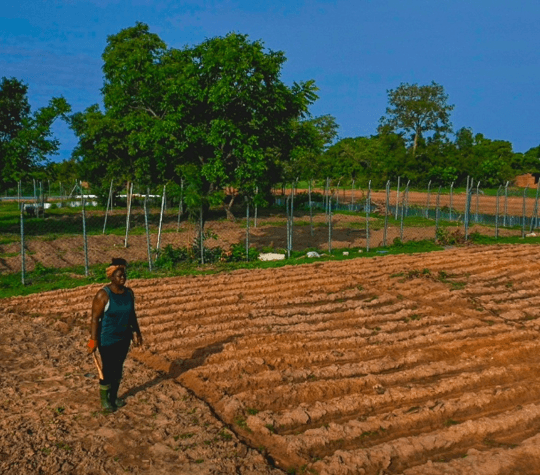
Golda Naa Adaku Addo, a commercial farmer in the Upper East Region, is already making decisions around these risks. She grows sorghum, millet, groundnut, sesame and chilli pepper at two sites about 20 km apart. She employs workers and pays service providers and consultants, so her decisions show the cost side of climate risk.
Her experience is not a survey of women farmers, and her observations describe what she has seen on her own farms. Set against the climate data, they show how changing conditions can affect investment, operating costs and the decision to farm through the dry season.
How is climate change affecting farming in northern Ghana?
GMet expects heat stress to peak between February and April 2027, especially in the north.
Long-term projections point to rising temperatures. GMet’s Climate Atlas, launched in March 2026, describes the Sudan Savannah in Ghana’s far north as the country’s hottest and driest zone. Under its medium-emissions scenario, the zone’s average annual temperature is projected to rise from 28.8°C (1991 to 2020 baseline) to 30.4°C by 2081 to 2100. The strongest warming, 1.8°C, comes in December to February.
Rainfall is harder to pin down. A 2015 study by a KNUST researcher found that 95% of 186 surveyed Upper East households reported declining rainfall and a shorter rainy season. The weather station data showed no clear fall in total rainfall because of high year-to-year variation. It did show the start of the rains shifting from April to June, with a growing dry spell.
That distinction matters to a farmer. A crop depends on when the rain falls, not on the annual total. Mongabay reported in 2024 that farmers in northern Ghana often sow two or three times before the rains settle, and every failed sowing is money spent twice.
Golda’s account follows that pattern. Three to four years ago, excess rain flooded and rotted several farms around hers. For the next two seasons the rain was relentless and sometimes excessive, though mostly manageable. This year it was minimal and ended early.
“For the past five years at least, the rain pattern has not behaved as it should,” she said. She estimates that temperatures have run from 32°C in the morning to 38°C around midday in November. “By March, when the dry season is at its peak, this could be devastating,” she said.
Why does irrigation not protect farms from extreme heat?
Irrigation answers a water problem. Heat creates two more: stress on the crop and a shortage of people willing to work.
Golda has a borehole and an irrigation system, yet she has suspended dry-season farming completely this year. She said the air is too hot for irrigated plants, which can “cook them as steam”. Some workers resign, she said. The heat becomes too much for most of the day, and nobody wants to work at night.
Water availability creates another risk. Some of her neighbours have seen boreholes dry faster than expected, and others did not strike water at all. An irrigation system is only as dependable as the water beneath it, and GMet’s latest brief warns of water stress and bushfires in the dry season to April 2027.
What does climate risk cost a farm, and does insurance cover it?
Golda also postponed starting a commercial order of 500 acres until next year’s rainy season, for the same reason. She did not give a figure for the cost.
The decision has consequences beyond one season. Suspending dry-season farming leaves irrigation she has already set up unused, and postponing the order delays the work it would bring. Climate risk can restrict expansion before a crop is planted.
Insurance should soften that choice. It does not yet. Ghana Agricultural Insurance Pool (GAIP) data reported in 2021 showed that fewer than 29,000 farmers had insured their farms over the preceding decade, from 2011 to 2020, in a sector that employs more than five million people. This research found no newer national uptake figure, so the number shows historically low uptake, not current coverage.
The Insurance Act, 2021 (Act 1061) requires the National Insurance Commission (NIC) to set up an Agricultural Insurance Fund. In May 2026, Commissioner of Insurance Dr Abiba Zakariah said the commission plans to establish the fund because cover is often too expensive for small-scale farmers. Published reports give no launch date.
GAIP also promotes germination index insurance. It compensates farmers for seed and ploughing costs when seeds fail to germinate because of too little or too much rain, so they can replant within a 21-day window. It has been piloted with maize, soybean and rice farmers in the Northern and Upper West regions.
The product addresses rainfall-related failure at the start of the planting season. By design, it does not address other costs Golda describes, such as heat damage, labour shortages or a failing borehole. The pilot has also focused on maize, soybean and rice, not the sorghum, millet and chilli pepper she grows.
Golda said the agricultural insurance sector is not yet well developed or reliable. That means, in her words, “the fail-safe plan is itself not reliable.”
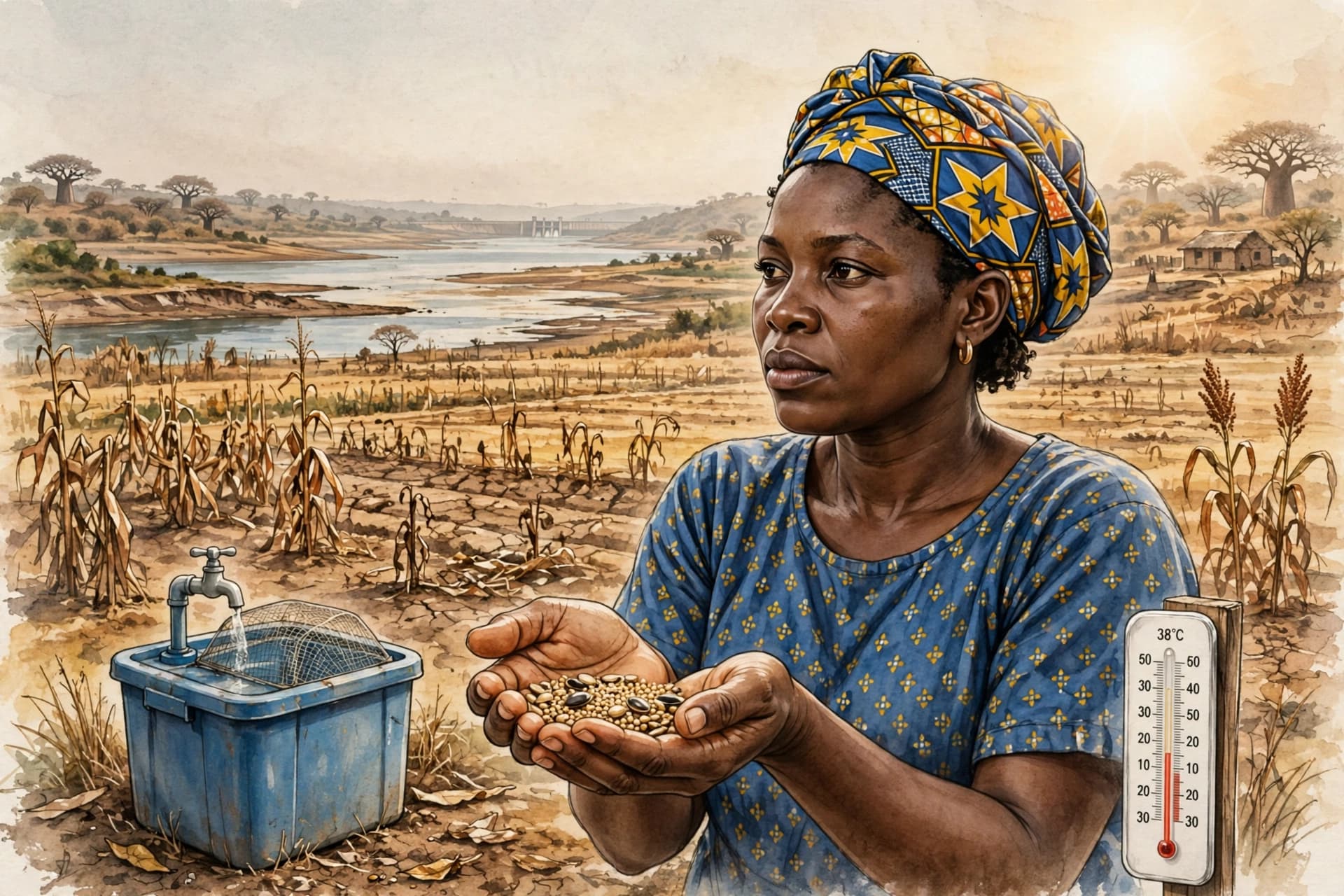
Illustration based on Golda Naa Adaku Addo’s account and published reporting. It is not a national assessment.
Why do women farmers in Ghana face higher climate costs?
Women contribute an estimated 50% to 70% of Ghana’s agricultural labour force, but fewer than 2% of women own titled land. Women farmers also receive less than 10% of available agricultural credit, according to ActionAid Ghana’s study, A Gendered Analysis of the Feed Ghana Programme, presented in April 2026.
Titled land means formally registered ownership. In many communities in northern Ghana, customary land arrangements favour male inheritance. Research by the International Food Policy Research Institute (IFPRI) found that women usually gain use rights through husbands or sons. Those use rights do not necessarily give women secure control of the land or the freedom to make long-term investment decisions.
That matters more as the climate turns. A farmer without secure land cannot safely invest in a borehole or irrigation. A farmer without credit cannot absorb a lost season.
Golda said she could not make a factual assessment of access across the sector. From her experience and what she sees around her, she does not believe women farmers have equal access to land, finance and support.
She also points to restrictions she says are rarely discussed. “Culturally, there are almost silently binding roles on what women farmers are allowed to do and own and achieve by the chiefs and men,” she said, calling it “a big elephant in the room that no one feels comfortable addressing.”
In her view, the number of successful women farmers will stay low, and drawn from high-society women rather than peasant women farmers or cooperatives, until that is addressed.
Are women farmers shaping Ghana’s agricultural programmes?
Golda questions whether consultation translates into influence. In her experience, women are often brought into agricultural programmes to meet participation quotas or funding requirements. Photographs are taken and sessions recorded, but she sees little evidence that their contributions shape what happens afterwards.
She points to what is missing: working tools and equipment designed around women’s needs, suitable financial support and recruitment help. A programme that counts women as participants, rather than designers, will keep producing solutions that do not fit them.
For funders and ministries, the test is simple. Measure what changed on a woman’s farm, not how many women attended.
What would help women farmers adapt to climate change in Ghana?
Asked for three things she would ask of government, Golda named these:
1. Work on cultural restrictions that keep women in certain roles or at certain status levels, so women can drive growth from planting to processing to reaching customers.
2. Provide support, resources and finance to women farmers and to farms that can work with more women, and check on them every year to prove the change is lasting.
3. Decentralise support so it reaches women through people they know, trust and can hold accountable.
ActionAid Ghana has made similar recommendations: targeted financing for women, dedicated budget lines and work with traditional authorities to secure women’s land rights.
Climate change is not only threatening what farmers harvest. It is deciding what they can invest in and whether their farms stay viable. Women cannot drive agricultural growth while the systems around farming limit what they can own, borrow and decide.