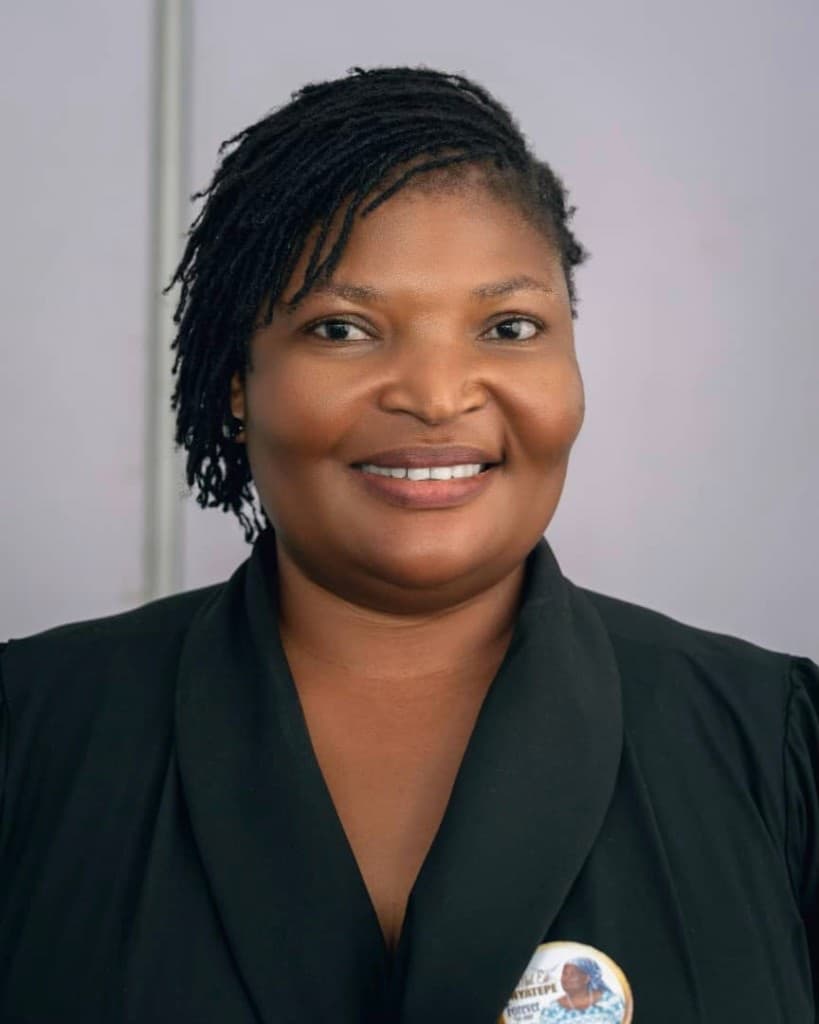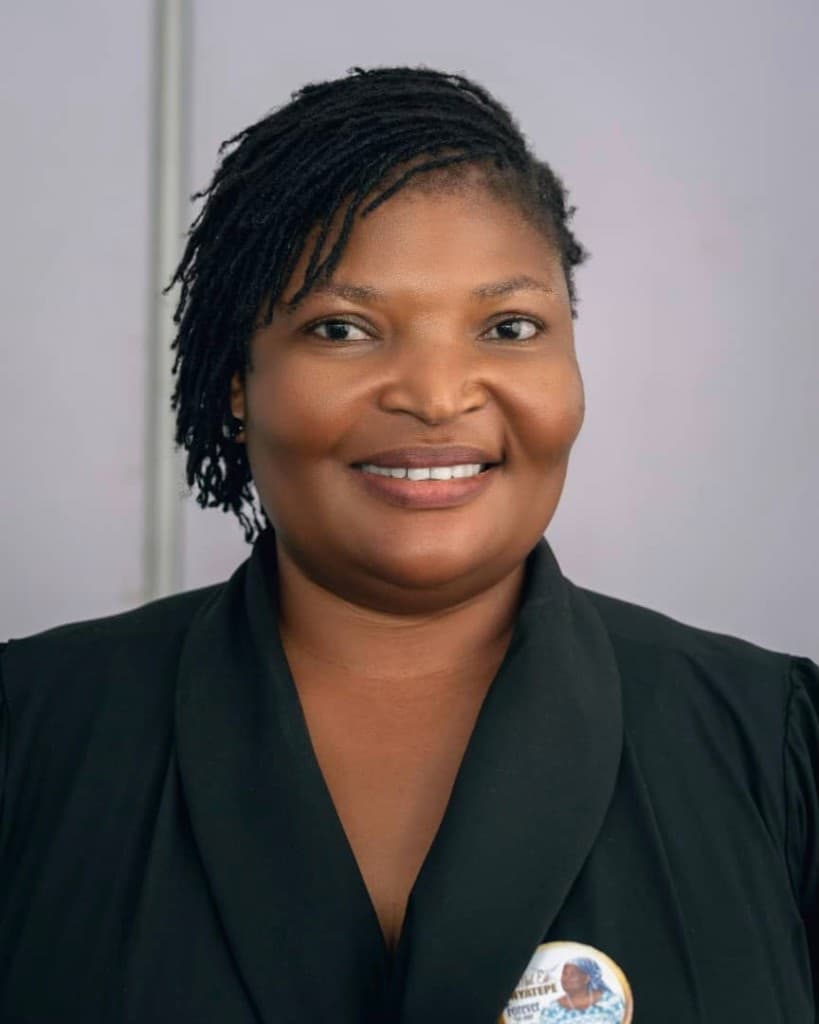
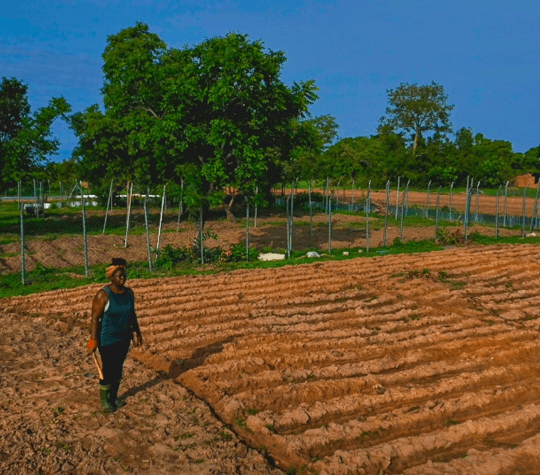
Accra, Ghana, September 17, 2026: Golda Naa Adaku is a Ghanaian strategist and agricultural entrepreneur who spent 17 years in monitoring, evaluation, policy and communications before moving into building a large-scale farming enterprise of her own.
Who is Golda Naa Adaku Addo? From development strategist to agricultural entrepreneur
For those 17 years, she made a career out of asking whether things were working, helping donors, governments and businesses across more than a dozen African countries find out whether their programmes produced what they claimed to produce.
Then, at some point, measuring the problem stopped being enough.
"I had the desire to stop pulling people out of the river, or to stop reporting on how many people are in the river being saved," she says. "And the aching pull to go upstream to find out why they keep falling in the river, and to stop or minimize it."
That image says more about the pivot than a conventional career story could. Golda did not simply leave development work for farming. She moved from studying a system to trying to change one from the inside.
Why Golda Naa Adaku Addo chose agriculture
Golda traces the decision to years of seeing poverty and wealth sitting inside the same development ecosystem.
"I had been seeing the misery and poverty, and the wealth and power within the same ecosystem of intervention all those years of work and travel," she says. "I could tell the solutions existed but few were interested in being part of the solution. I went into that line of work to be the solution."
Agriculture was not a new interest. She says she was drawn to what she calls the green space, climate issues, sustainability and plant health, from as early as 2007, and had mentored people who later became influential figures in Ghana's environmental and sustainability circles. She traces that pull further back than her career, to a household where plants and animals were treated as sacred, loved and constantly present, not only for use but for care and health. Respecting and caring for her environment, growing plants and raising animals has been part of her since birth. She describes it as practically a religion in the family.
She eventually fell out of love with monitoring, evaluation and policy work, when she found that space enabling corruption and poverty more than it curbed either. Farming offered something different: the chance to move from observing a system to owning a stake in it.
From development data to a 12,000-acre agricultural enterprise
Asked whether the discipline of an evaluation specialist shows up in how she runs a farm, her answer is immediate. "Very much so," she says.
She knows what to record, analyse, track and implement to ensure that intentional or unintentional poor practices do not affect the end product of her organic farm and agricultural operations, even when workers assume they are hiding the errors. Even labour management, she says, is shaped by habits built over years of reporting on other people's failures and successes.
She is now the founder, majority shareholder and chief executive officer of Northern-Savanna Crops and Tubers, an agricultural enterprise operating out of Accra, Bolgatanga and Paga. Her company profile confirms the 17 years in strategy and results based management, a stint chairing the African Development Bank hosted Gender4Results platform between 2013 and 2016, and a Ghana Compact Fellowship with ACET's Ghana leadership programme from 2022 to 2024, before she moved fully into agriculture in 2024.
The enterprise describes 12,000 acres of fertile, irrigated land farmed using organic and regenerative methods, producing crops for both export and local markets. The acreage matches what Golda herself describes in conversation, and it is a serious base on which to test whether her evaluation instincts translate into a working commercial farm. But the acreage is not the most interesting part of the story. The more useful question is what it means for a woman to move from advising systems to owning a stake in one of the most basic but critical systems in any economy: land, food and production.
Why land matters for women's economic power in Ghana
In Ghana, agriculture is not only about who farms. It is about who controls the asset that farming depends on.
Land determines who can produce, who can borrow against what they own, who can invest for the long term and who ultimately captures the value that farming creates. On that measure, Ghana's record is uneven.
An older but widely cited study found that women in Ghana owned land in roughly one in ten households, against sixteen to twenty three per cent for men, with the average value of men's landholdings running close to three times that of women's. A national gender assessment of Ghana's agriculture sector by the Food and Agriculture Organization documents the same pattern across credit, technology, extension services and land, all areas where women farmers face narrower access than men.
The FAO's global tracking of women's ownership of agricultural land under Sustainable Development Goal indicator 5.a.1 exists precisely because this gap is treated as a measure of inequality in its own right, not a side effect of it. A separate FAO review of women across agrifood systems globally puts a figure on the downstream effect: land productivity on farms managed by women runs 24 per cent below farms of the same size managed by men, and women in agricultural wage work earn roughly 82 cents for every dollar men earn.
Women can work the land without controlling it
Name the system, and the pattern gets easier to see. This is a land tenure story: who holds title, who can borrow against it, who decides what gets planted and what happens to the income it produces.
A woman can work a farm without controlling it. She can supply labour without owning the land beneath her feet, or generate income without deciding how that income is spent. This is the distance between access and control that Ghana's own agricultural data keeps returning to. Field research from northern Ghana finds that even where women do hold primary land rights, gaps in decision making over what to plant and how to spend farm income can persist. Ownership on paper does not automatically produce an equal say in practice.
Golda's move into large scale commercial farming sits on the far side of that distance. It is not simply a woman entering a sector men have historically dominated. It is a woman co-owning the asset with her community, in a deliberate and strategic effort to shift the cultural mindsets that have worked against women in these spaces, as she works to involve them across several aspects of the operation and its legacy, and to build the systems, data practices and labour standards around it.
That distinction sits close to the centre of where the global conversation on women's economic empowerment is heading. As the Commission on the Status of Women approaches its seventy first session in March 2027, with accelerating gender equality under the 2030 Agenda as its priority theme, the question being asked is not only whether women participate in economies. It is whether they hold the assets, the agency and the decision making power that make participation worth something.
Golda's story does not resolve Ghana's structural gaps in land access and control. But it puts a specific, working example against them, at a scale that is difficult to ignore.
The personal cost of building a farming business in Ghana
None of this has come without a personal price, and Golda does not dress that up.
Asked what it costs a woman to build something this large and physical in spaces still dominated by men, her answer is blunt. "It costs everything," she says. "I could not accept that for a long time, but finally made my peace with it a year or two ago. It costs love, and life, and relationships. The important ones like family and good friends will survive it. But most other things will burn."
She describes herself as quiet and private in spaces she does not know, unyielding in spaces that threaten her, and fully open in spaces where she feels safe. She links some of that intensity to being neurodivergent, and to a lifelong difficulty with the unwritten social rules most people manage without thinking about them, including what she experiences as people asking for honesty while punishing those who give it.
Golda describes family as something built through action rather than blood alone. "Family is who stays through thick and thin, and better or worse, and does not just be but also does, even when you cannot repay them," she says. She includes strangers in that definition, people who have quietly stepped into a gap for her or her children without expecting anything back.
The value she is most determined to pass on to her sons comes from the Ga concept of Akromadio, the belief that no one holds all the knowledge or is self sufficient, and that everyone depends on others in turn. "The moment you stop being interested in listening to others or learning, or checking to see strengths and weaknesses in yourself and others so that you all can rise, you are endangered," she says.
Both of her sons have aphantasia and are neurodivergent, a trait she says runs in her father's family and one she shares with herself. Rather than build their lives around shielding them from difference, she has focused on preparing them to hold their own in a world that will not always understand it, identifying what they do exceptionally well and helping them turn it into a durable skill. She calls herself a militant and adventurous mother rather than a traditional one.
As her sons have grown into young men, she says she has had to keep starting afresh rather than assume that what worked at one stage will work at the next. "As long as we are communicating and trying our best, we will figure it out and adjust, and make the best of things," she says.
There is one system Golda's professional discipline cannot fully manage, and that is her own health. She speaks openly about living with cancer, without reaching for the tidy language of having beaten it. "I am still going through it, honestly," she says. "I am not yet out the other side."
What steadies her, she says, is a belief that she has a role to finish, and her children are central to that sense of purpose. "I will not give up on them. I am all they have," she says, crediting what she calls good Samaritans who have appeared at difficult moments to help her keep going.
"Health is peace, and love, and family, and safe space, and community," she says. "It is the gift of time to see things through for the people we love. Health is Life."
Going upstream: What Golda's story says about women, land and economic power
It would be easy to file Golda's story under career pivot: development expert becomes farmer, woman enters a male dominated industry and succeeds. That framing makes the story smaller than it is.
For years, Golda exercised influence through knowledge, evaluating other people's programmes and advising institutions on their own performance. Now she exercises it through land, labour, production and enterprise, the assets that decide who actually benefits when an economy grows.
That is the question CSW71 puts back on the table for Ghana and for the wider region. Women are deeply embedded in agriculture already. What remains unequal is access to secure land, credit, technology and the decision making power that turns participation into ownership.
Golda's story will not close that gap on its own. But it gives the argument a face, a working farm and a clear answer to what the woman who once measured whether interventions worked decided to do when measurement stopped being enough. She went upstream, and she is still building there.
What would it take for a thousand more Goldas to exist? Planting for Food and Jobs II already asks farmers to register with GPS coordinates for their land, district by district. If that data were also broken down by sex and checked against land title records, policymakers and buyers would finally be able to see whether women like Golda are the exception or the start of a pattern.
Originally published in B&FT Weekend as part of Bridget Mensah's Her Space column.