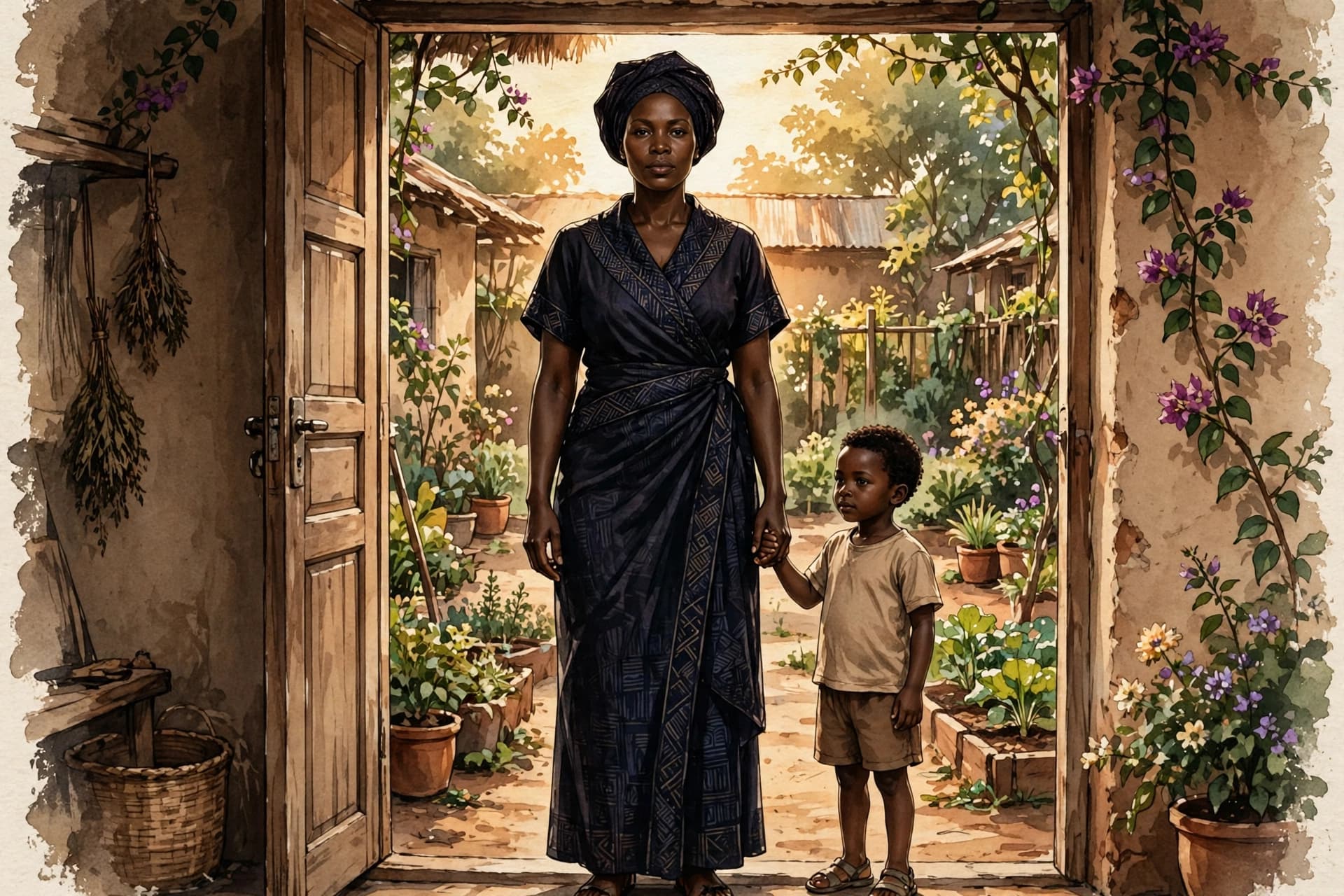
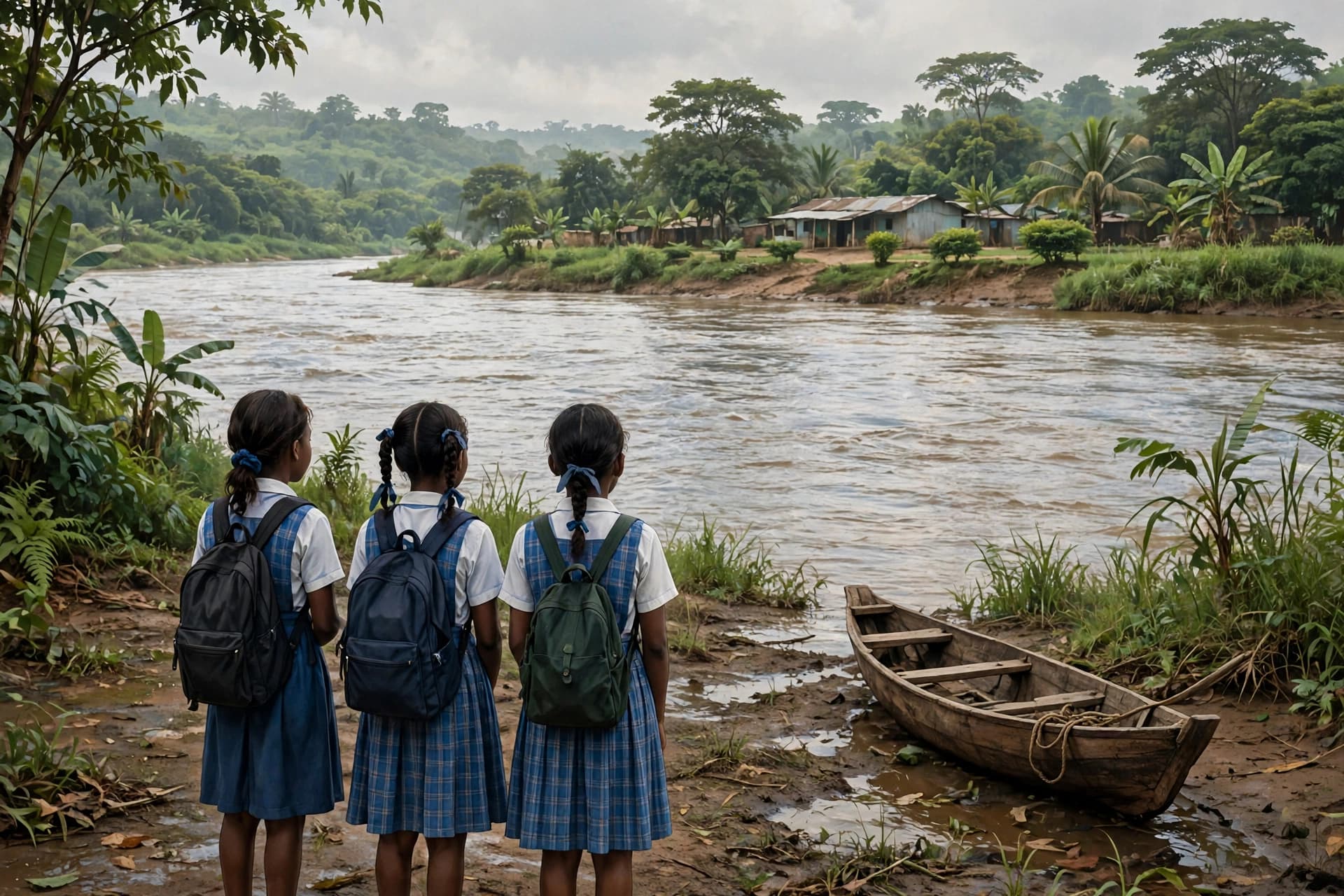
Accra, Ghana, 16 November 2026: Every Tuesday, girls in villages on the Ashanti Region bank of the River Offin stay home. So do girls who are menstruating. A customary rule forbids women and girls from crossing the river on those days, and the river is the only way to their school at Kyekyewere, in the Central Region.
On 20 October 2026, the African Committee of Experts on the Rights and Welfare of the Child (ACERWC) ruled that Ghana had failed them. According to the Institute for Human Rights and Development in Africa (IHRDA), which brought the case with JoyNews journalist Solomon Joojo Cobbinah, the girls lose between seven and 12 school days every month.
The decision gives Ghana a list of things to do and a deadline to report back. This tracker follows each one. We will update it as the government acts, or as the deadline passes.
What did the Committee decide?
The Committee adopted its decision during its 48th Ordinary Session in Maseru, Lesotho. 3News reports that it found violations of three articles of the African Charter on the Rights and Welfare of the Child: Article 3 on non-discrimination, Article 11 on education, and Article 21 on eliminating harmful social and cultural practices.
The most important line for Ghana is this: the state cannot hide behind custom. The Committee held that once a government knows children are being denied schooling, it is responsible for acting, even when the restriction comes from traditional authorities rather than state institutions.
Explainer: what is the ACERWC?
The ACERWC is the African Union body that monitors the African Children's Charter. Ghana has ratified the Charter, which means it has agreed to be held to it. Individuals and organisations can bring complaints, called communications, when they believe a state has broken the Charter's promises to children.
The Committee is not a court that can fine Ghana or order the police to act. Its power is the decision itself, the duty to report back, and the public pressure that follows. That is why tracking matters.
What must Ghana do?
The Committee's recommendations, as summarised by IHRDA and 3News, ask Ghana to:
1. Expedite the construction of a permanent bridge across the River Offin.
2. Provide immediate, safe crossing arrangements so children can attend school without interruption.
3. Give affected girls academic support and appropriate examination arrangements.
4. Review policies that leave smaller and remote communities without educational infrastructure.
5. Run awareness and training for teachers, education officials, affected girls and their families.
6. Keep engaging traditional authorities to end the practice.
Ghana must report on what it has done within 180 days of receiving the decision. The date Ghana received it is not public. If it arrived in early November, the report would fall due around May 2027.
A bridge has been promised before
The demand for a bridge is not new. In 2004, Graphic Online reported, hundreds of women in villages beyond the river could not vote in the Upper Denkyira by-election because it was held on a Tuesday.
In January 2018, the chiefs of Kyekyewere asked government to build a bridge. The municipal education office proposed a hostel for the girls instead. That same year, JoyNews reported, the then Deputy Education Minister promised the Ministry would take the issue up.
In March 2022, with no bridge built, IHRDA and Cobbinah filed the case. The Committee declared it admissible in August 2023.
In December 2025, after fresh media reports, the Vice President, Prof Naana Jane Opoku-Agyemang, sent a team to the area. Her political adviser told chiefs that government was determined to build a steel bridge. Safer fibre canoes with outboard motors were promised in the meantime. The report gave no timeline.
Where things stand
As of 9 November, 3News reported that the Attorney-General's Department, the Ministry of Education and the Gender Ministry had not publicly responded to the decision.
We found no public record of a bridge design, budget allocation, contract or start date. We found no public confirmation that the motorised canoes promised in December 2025 have been delivered. The Committee's own online case record still lists the case as admissible, with the merits decision not yet posted.
"No evidence" does not mean nothing has happened. It means nothing has been made public. If government agencies have acted, this tracker is the place to show it.
What we are asking
Gender Lens Africa is putting these questions to the agencies responsible:
• Attorney-General's Department: When did Ghana receive the decision, and who is preparing the 180-day report?
• Ministry of Roads and Highways: Is the River Offin bridge in any budget, design or procurement plan? What happened after the December 2025 visit?
• Office of the Vice President: Were the fibre canoes with outboard motors delivered? When, and how many?
• Ministry of Education and Ghana Education Service: What academic support and exam arrangements exist for affected girls today?
• Ministry of Gender, Children and Social Protection: What is the plan to engage traditional authorities on the practice itself?
• Upper Denkyira East Municipal Assembly: How many pupils cross the river to school, and how many are girls?
Why this matters beyond one river
The River Offin case links four things that usually sit in separate reports: menstruation, rural infrastructure, custom and the right to education. Our recent feature, The girls who disappear from the classroom, found that Ghana enrols girls well but struggles to keep them in school. River Offin shows one concrete reason why.
Cobbinah has said a decision on paper is only the beginning. The test of this ruling is simple. On a Tuesday next year, can a girl on the Ashanti bank get to school?
Gender Lens Africa will update this tracker each month until Ghana reports to the Committee.