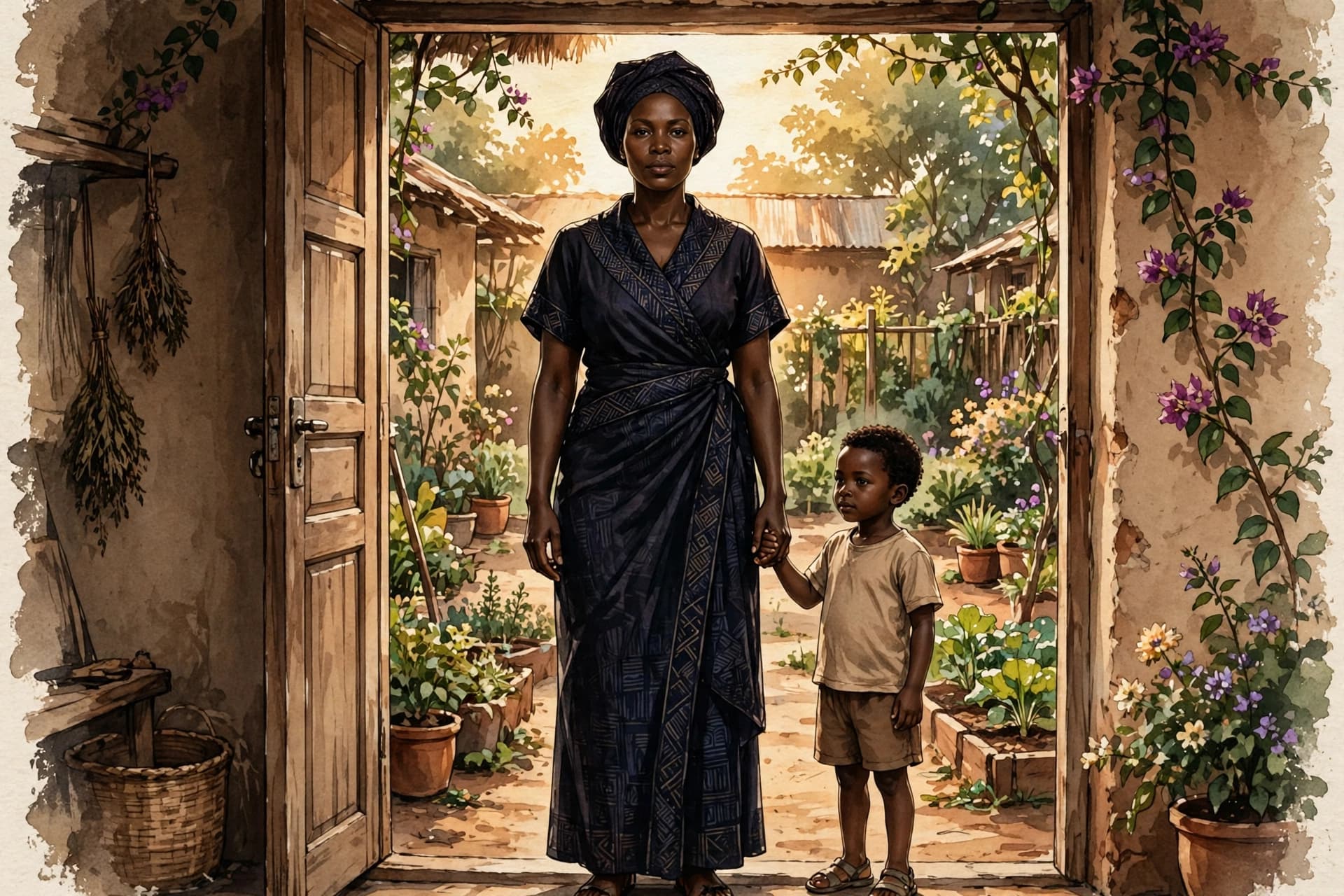
Accra, Ghana, November 13, 2026: A husband's death should not force his wife to fight to stay in her home, keep her belongings or care for her children. Yet for some women across Africa, widowhood brings a second crisis: the loss of property, livelihood and security, and sometimes control over decisions about their children.
Relatives may challenge a widow's entitlement to land, houses, businesses or savings, question her contribution to the household, or insist that property belongs to the deceased man's wider family. In some communities, women face humiliating mourning practices or accusations that they caused their husbands' deaths.
These are not simple family disagreements. When a woman is threatened, evicted or stripped of property, her rights and economic security are at stake, and her children can lose the home that sustained them. The question for governments is what equality within marriage means if a woman can lose her security when that marriage ends in death.
When bereavement becomes a fight over property
A woman who has spent years raising children, running a business or helping to acquire family assets can find her position insecure the moment her husband dies. Relatives may take household belongings, occupy the matrimonial home or try to remove her before the estate is properly administered. Defending these actions as family or cultural matters does not make them harmless.
A study by Rose Korang-Okrah and Wendy Haight in Qualitative Social Work examined the experiences of 20 Akan widows in Ghana's Ashanti and Brong-Ahafo regions. Thirteen described violations of their property rights during bereavement or widowhood rites, with long-term economic consequences for the women and their children.
The study is not a national survey and cannot show how often such violations occur. It does show how the gap between legal rights and everyday practice can hurt women at their most vulnerable.
A 2025 follow-up by Korang-Okrah and colleagues, drawing on the same 20 women, documented food insecurity, homelessness and lost income after evictions from homes and farms. Some children left school, or never started, because their mothers could no longer pay fees.
Children lose out too
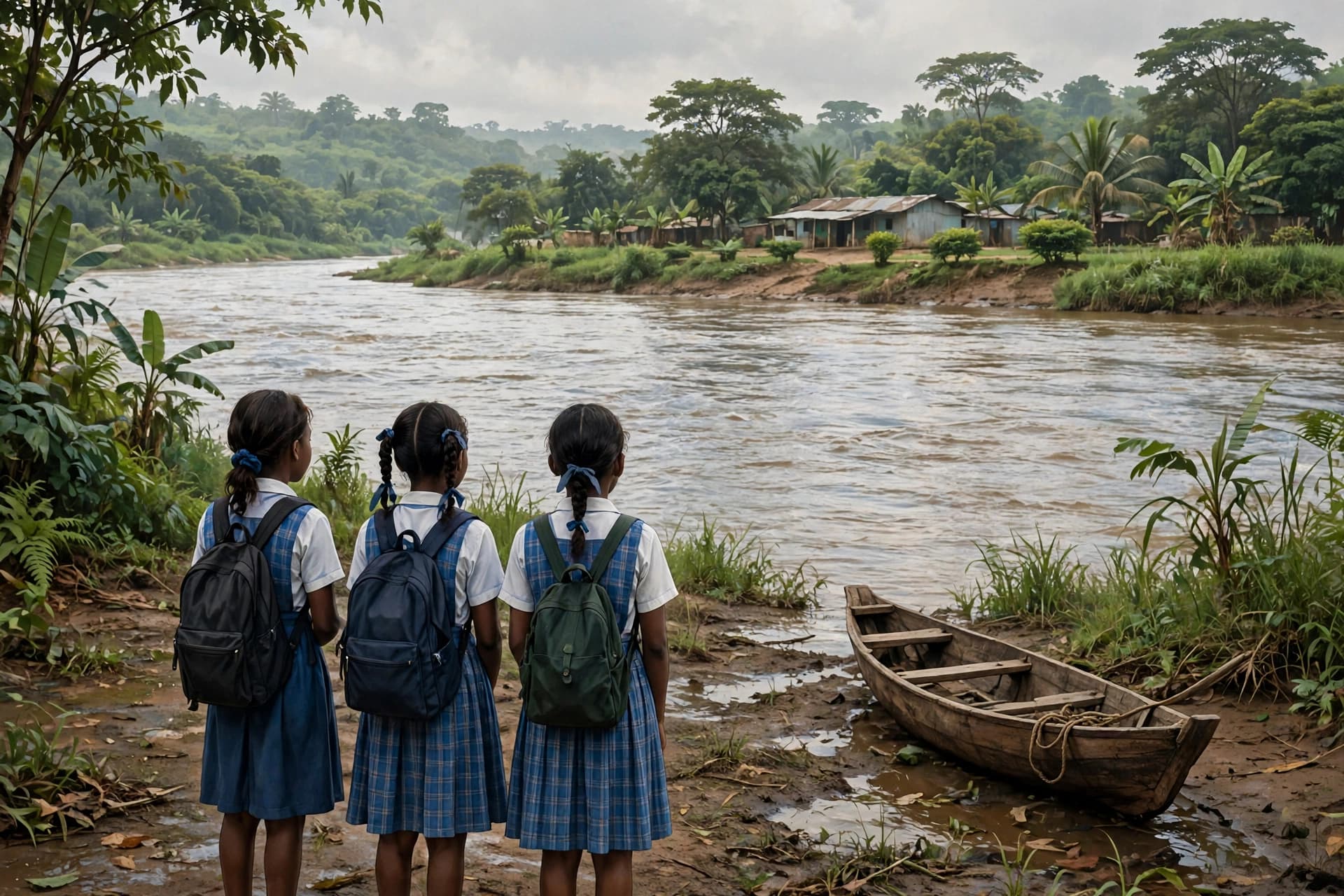
When a widow loses the family home or the resources her husband left, her children become collateral victims. They may leave the only home they have known, miss school, go without healthcare, or be separated from their surviving parent and placed with relatives who claim the estate.
The Maputo Protocol, the African Union's treaty on women's rights, addresses this directly. Article 20 requires states to protect widows from inhuman, humiliating or degrading treatment. It also provides that a widow automatically becomes the guardian and custodian of her children, unless this is contrary to their interests and welfare.
The Convention on the Rights of the Child likewise puts the child's best interests at the centre. Governments must look beyond who receives an estate to what happens to the children who depend on it.
Ghana has inheritance protections, but implementation matters
Article 22 of Ghana's 1992 Constitution says a spouse should not be deprived of reasonable provision from a deceased spouse's estate, whether or not there is a will. It also provides for equal access to jointly acquired property and its equitable distribution if a marriage is dissolved.
The distinction matters. A claim to jointly acquired property is not the same as a claim to inherit, and not every asset linked to a marriage is jointly owned. Ownership, how an asset was acquired and the applicable law all count.
Where a person dies without a will, the Intestate Succession Law, 1985 (PNDC Law 111) governs the distribution of qualifying property. It was introduced because earlier arrangements often left spouses and children with little protection against extended family claims.
Problems persist. The Commission on Human Rights and Administrative Justice (CHRAJ) has raised concerns that families still distribute estates by customary formulas rather than PNDC Law 111. In a 2022 public education exercise, it urged spouses and children to seek legal redress where relatives ignore the law.
A June 2023 report by Parliament's Select Committee on Constitutional, Legal and Parliamentary Affairs on the Intestate Succession Bill, 2022 identified weaknesses in the fractional distribution system, jointly acquired property, provision for school-going children and cases with several surviving spouses.
Parliament's bills register now lists an Intestate Succession Bill, 2025, introduced by the Attorney-General on 24 October 2025. It is not yet law. The test is whether it fixes the practical problems that have persisted for decades.
Polygamous marriages and inheritance
Inheritance is harder when a man leaves several wives and children from different households. In Ghana, customary and Muslim marriages may be polygamous, while marriages under the Ordinance are monogamous.
Without clear rules, how should the law recognise several widows, protect children from different households, or separate the deceased's estate from property a particular wife jointly acquired? Ghana's parliamentary committee flagged the absence of provisions for several surviving spouses as a weakness. Without them, wives and children face prolonged disputes over one estate.
Kenya shows another difficulty. Under its Law of Succession Act, an intestate estate in a polygamous family is divided by household unit, with each wife and her children treated as one. Equality Now and Come Together Widows and Orphans Organization (CTWOO) argue this can disadvantage a widow, whose entitlement is not recognised independently.
The aim is not to set wives against one another. Lawmakers, not widows, are responsible for clear rules that protect every legally recognised spouse and eligible child.
Kenya's proposed bill puts widows' rights at the centre
The Widowed Persons Protection Bill, 2026, was submitted to Parliament on 12 May 2026 as a Private Member's Bill sponsored by Rarieda MP Otiende Amollo. CTWOO and Equality Now, which have documented the challenges widows face, contributed to its development.
It would let widows in polygamous marriages inherit in their own right. It would also criminalise coercive mourning rites, widow inheritance, forced marriage, unlawful seizure of property and the forced removal of children, and act against harassment and false accusations of killing a husband or witchcraft.
A Widowed Persons Protection Board would coordinate implementation, support legal aid and counselling, improve public education and strengthen data collection. The bill also proposes emergency support for widowed people made homeless.
It remains a proposal. On 6 November 2026, Kenyan reports said widows and widowers were still urging Parliament to fast-track it. CTWOO reported handling 139 widow cases in May 2026 alone. That is its own caseload, not a national estimate, but it shows the demand for justice.
Dianah Kamande: turning loss into a campaign
Behind the campaign is Dr Dianah Kamande, founder and Executive Director of CTWOO. According to the organisation, she was widowed young after surviving a life-threatening incident of domestic violence. She founded CTWOO in 2013, initially as part of her own healing, and it now advocates for the rights, dignity and economic empowerment of widows and orphans.
Her story shows how a woman who has already survived violence must then face the social and economic fallout of widowhood. Her work with Equality Now on the bill aims to move beyond awareness towards protections that can be enforced. Widows are women with rights, knowledge and agency, and they should help shape the laws meant to protect them.
What the Maputo Protocol requires
Beyond Article 20, Article 21 recognises a widow's right to an equitable share of her husband's inheritance and to continue living in the matrimonial home. It also recognises women's and men's equal right to inherit their parents' property.
A regional treaty does not settle every dispute. National law, custom, religion and estate administration all shape what women experience. Widows need to know their rights, afford legal help and report violations without fear. Police, courts, local authorities and traditional leaders must accept that culture cannot justify violence, coercion or unlawful dispossession.
What a fair inheritance system needs
A fair system recognises the rights of surviving spouses and children, counts women's contributions to family assets, and sets clear rules for every family arrangement, including polygamy. It also separates legitimate claims from unlawful seizure.
A widow seeking her lawful share is not evidence of wrongdoing. Accusations of witchcraft or murder must never be used to intimidate her. Where there is credible evidence of a crime, lawful processes should investigate it.
Governments must let widows stay safe, keep access to their property and care for their children while estates are administered. Public education on wills, property ownership, marriage registration and succession would help families plan before a death.
A husband's death is already a profound loss. It should not become a chance to strip a woman of the home and family life she helped build. A woman's rights do not end at her husband's funeral. Neither should the protection of her children.