Accra, Ghana, November 20, 2026: Ghana’s Ministry of Gender, Children and Social Protection (MoGCSP) has begun examining whether the country should ratify two African Union (AU) treaties that would create a single continental court for human rights and international crimes, after AU legal officials told ministry staff the court could strengthen accountability for child marriage, female genital mutilation (FGM), human trafficking and other harmful practices.
The consultation was held on Monday, 9 November 2026, at the Ministry’s conference room in Accra, with a delegation from the Office of the Legal Counsel of the AU Commission. No timeline for a decision on ratification was announced.
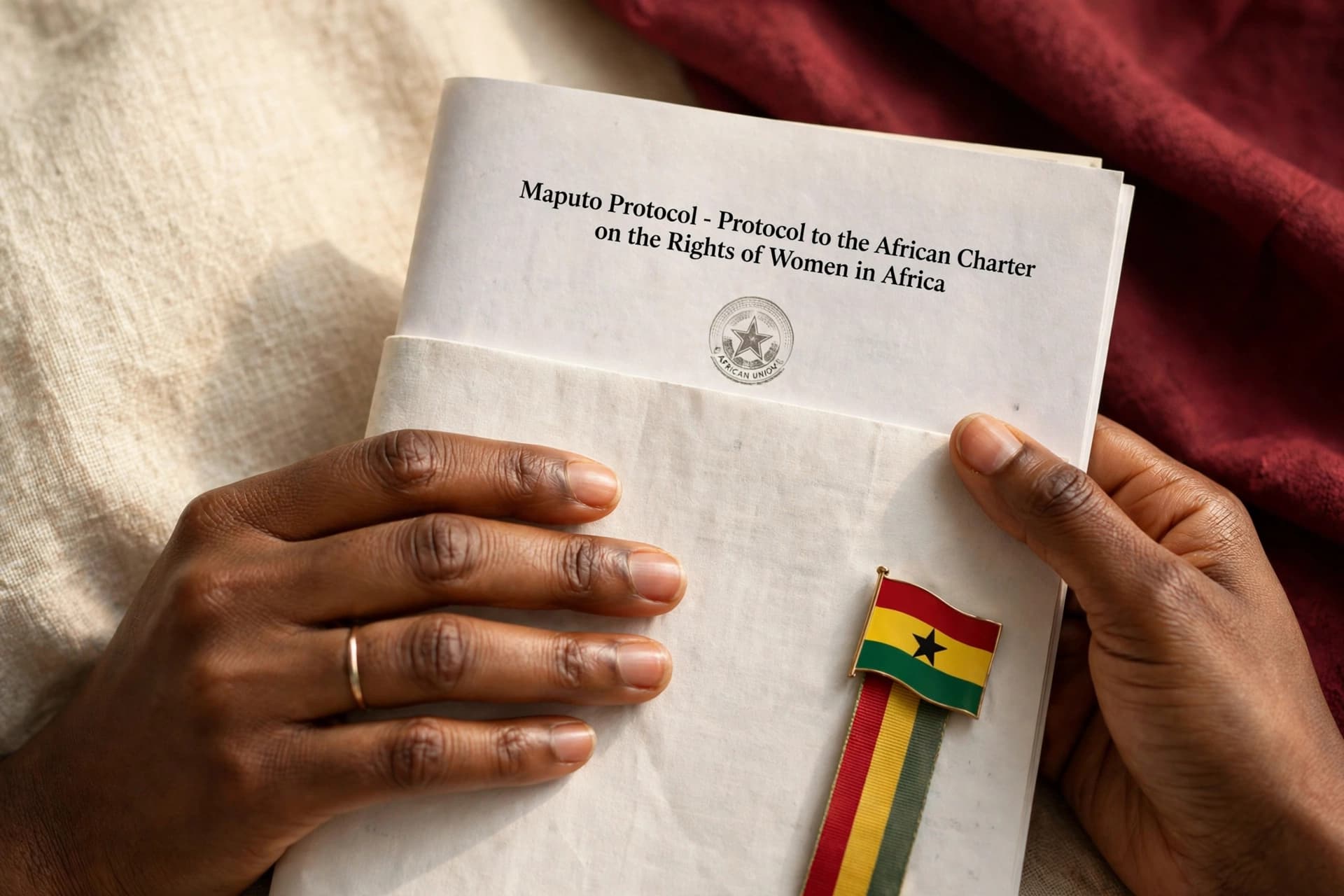
The two treaties are the Protocol on the Statute of the African Court of Justice and Human Rights, adopted in Sharm El Sheikh, Egypt, in 2008, and the Protocol on Amendments to that Statute, known as the Malabo Protocol, adopted in Malabo, Equatorial Guinea, in 2014.
What the AU delegation told the Ministry
The AU delegation was led by Justice Gérard Niyungeko, a former judge and former President of the African Court on Human and Peoples’ Rights. The meeting was chaired by Madam Grace Otabil, Principal Programme Officer at the Human Trafficking Secretariat.
Justice Niyungeko said the proposed court would give Africa a continental judicial mechanism for human rights violations and other offences, including transnational crimes. He said it could strengthen accountability for violations affecting women and children, including child marriage, FGM, human trafficking and other harmful practices, and would have jurisdiction over a range of African and international human rights instruments.
The AU officials said ratification would strengthen Ghana’s commitment to human rights, good governance and the rule of law, and would allow Ghana to nominate judges to the court.
Sovereignty, enforcement, access and cost
Ministry officials pressed the delegation on four issues:
1. Sovereignty and national courts. Officials asked how the court would relate to Ghana’s judicial system and raised concerns about state sovereignty. The delegation said individuals would generally have to exhaust domestic remedies before taking a case to the continental court.
2. Enforcement of judgments. The delegation acknowledged existing challenges in enforcing judgments and said work is ongoing to strengthen implementation mechanisms.
3. Access for vulnerable people. Officials asked how people who cannot afford legal costs would reach the court. The delegation pointed to legal assistance arrangements and remote application procedures.
4. Cost to Ghana. The delegation said the court would be funded through the AU’s regular budget, with contributions from member states and partners, and that states which ratify would not be asked for additional contributions.
What the two protocols would do
The Sharm El Sheikh Protocol would merge the existing African Court on Human and Peoples’ Rights with the Court of Justice of the African Union into one court, the African Court of Justice and Human Rights.
The Malabo Protocol would give that merged court criminal jurisdiction over international and transnational crimes, including trafficking in persons. The court envisaged under the two protocols has not yet been established.
Ghana’s existing record on the African Court
Ghana already accepts the jurisdiction of the current African Court on Human and Peoples’ Rights in Arusha, Tanzania. It became a party to the Court’s founding Protocol in 2005 and, on 10 March 2011, deposited a declaration under Article 34(6) allowing individuals and NGOs to bring cases against Ghana directly. Few African states have made this declaration, which legal scholars describe as an opt-in route to accountability.
The delegation also congratulated Ghana on ratifying the AU Convention on Ending Violence Against Women and Girls. Parliament approved the Convention on 30 July 2026, and Ghana deposited its instrument of ratification on 29 September 2026, becoming the second AU member state to ratify it, after The Gambia.
Why it matters for women and girls
For survivors of child marriage, FGM and trafficking, a continental court would offer another route to justice when national systems fail them. The questions raised in Accra, however, mirror long-standing concerns about the African Court system: whether states comply with judgments, and whether poor women and children can realistically bring cases.
The Ministry said the consultation helped officials examine how the proposed court relates to its mandate on protecting women and children, promoting gender equality and advancing human rights, and would inform Ghana’s consideration of ratification.
Frequently asked questions
What is the Malabo Protocol?
The Malabo Protocol is an AU treaty adopted in June 2014 in Malabo, Equatorial Guinea. It amends the Statute of the African Court of Justice and Human Rights to give the court jurisdiction over international and transnational crimes.
What is the Sharm El Sheikh Protocol?
Adopted in 2008, it would merge the African Court on Human and Peoples’ Rights and the Court of Justice of the African Union into one African Court of Justice and Human Rights.
Has Ghana ratified the Malabo Protocol?
Not yet. On 9 November 2026, the Ministry of Gender, Children and Social Protection held consultations with AU officials to inform Ghana’s consideration of ratification. No decision or timeline has been announced.
Can people in Ghana already take cases to the African Court?
Yes. Ghana deposited a declaration under Article 34(6) of the African Court Protocol in 2011, allowing individuals and NGOs to bring cases against Ghana directly before the African Court on Human and Peoples’ Rights.