Accra, Ghana, October 31, 2026: Some weeks the news arrives in a pile, and you cannot decide which story deserves your anger first. This week I had a schoolboy shot on his way to class, new HIV figures I could not stop reading, a continent about to host the world’s young athletes, a woman’s childbirth turned into content, and a room of women being coached on how to drink soup.
I have questions about all of them. Some of the answers will make you uncomfortable, including me.
A 15-year-old reported bullying. What did the adults do?
Javits Frimpong was 15. He moved from Ghana to live with his father in the Bronx a year ago, and he told his father he wanted to be a physician. On Thursday 29 October, police say, he was shot once in the stomach near East 171st Street and Crotona Place while walking to school. He died at St Barnabas Hospital.
Here is what we know and what we do not. His father says Javits reported bullying several times. In an ABC7 New York interview, as reported by the Black Information Network, he said the principal told him three days before the shooting that two students had been suspended. A school bus aide told CBS he knew of at least two suspensions in recent weeks. Police are searching for three teenagers believed to be between 16 and 18, and have not pinpointed a motive.
So I will not write that bullies killed him. Nobody has established that. The same bus aide said he was speculating when he floated revenge, and he mentioned talk of mistaken identity. Both are guesses, and a grieving family deserves better than our guesses.
I will ask what any parent, teacher or education officer can ask without waiting for a verdict. When a child reports bullying again and again, is a suspension the end of the adults’ duty or the start of it? A suspension punishes. It does not protect.
A quiet boy, new to a country, who keeps reporting and keeps being targeted, is the child adults should watch hardest. I have no figures on how often this happens to Ghanaian children abroad, and I would like someone to count. I also wonder how many of us at home have told a son to toughen up, stop reporting and stop crying “like a girl”. That lesson has a cost, and boys pay it too.
HIV among young people in Ghana: a condom access problem or a behaviour problem?
I keep seeing the same question. Is it a lack of condoms and other basics, or are our children having indiscriminate sex? The figures cannot settle that debate. But they do tell us that blaming young people is not an adequate prevention strategy.
Start with what the number means. The Ghana AIDS Commission (GAC) says 3,835 young people aged 15 to 24 acquired HIV in 2025, which is 27.5 per cent of all new infections. That is a share of new infections. It does not mean 27.5 per cent of young people have HIV. The figure is also down from 4,278 in 2024, out of 13,951 new infections nationwide.
Now look at who. An earlier release of the 2024 estimates reported that females accounted for 3,932 of the 4,732 new infections in this age group, which is 83.1 per cent. The 2025 release, published in July 2026, revised the 2024 figure for this age group to 4,278, so the two sets are not directly comparable. The gender pattern holds either way, and it matches the 83 per cent reported for 2020. It is overwhelmingly young women and girls.
Why? The commission’s own officials give us clues. The Director-General said in 2025 that many young people fear pregnancy more than HIV and reach for emergency contraception instead of condoms. Young people also told the media that embarrassment and stigma stop them using condoms, and the commission admits that many condom vending machines are outdated or broken. That is an access and stigma problem adults created.
There is a power problem too. In 2021 the then Director-General said some young people were being infected by older partners, and that some traded sex for money. A girl whose economic circumstances make it hard to negotiate condom use with a partner has more than an information problem.
Some readers will say behaviour matters and parents must set the values. They are right that parents matter. But lectures have not stopped infections. The commission’s prevention project for adolescent girls and young women offers education, STI screening, condoms and self-test kits, and officials say it has contributed to the decline. They now want it expanded nationwide, which needs money.
So, access or behaviour? I think we are asking the wrong question. Ask who can say no, who can ask for a condom without shame, and who is paying to keep the machines working.
Dakar 2026 Youth Olympics: Africa’s moment, and who keeps it after 13 November
Tomorrow, 31 October, the Youth Olympic Games open in Dakar and run until 13 November. About 2,700 young athletes will compete, and organisers describe it as the first Olympic sporting event ever held on the African continent. They also promise full gender balance across all sports and events. That deserves applause, and I am giving it.
You asked whether there is anything to add. There is. For the first time at a Youth Olympics, a Refugee Olympic Team will compete. It has six athletes, three women and three men, all based in Africa, in athletics, judo and taekwondo. Some come from camps in Kenya and Uganda.
When it approved the team in December 2024, the IOC said Africa hosts more than 47 million of the more than 120 million displaced people worldwide. Six athletes is a story. Millions without a coach or a track is the statistic. At Paris 2024, 37 refugee athletes competed and Cindy Ngamba won bronze in boxing. Medals are possible. The pipeline is the question.
So here is my addition. How many displaced girls in Africa have a coach, a pitch or a pair of running shoes? What happens to these six after the closing ceremony? And when the flags come down, what will Ghana do for its own young athletes, especially its girls?
Childbirth videos on social media: her body, her consent, her footage
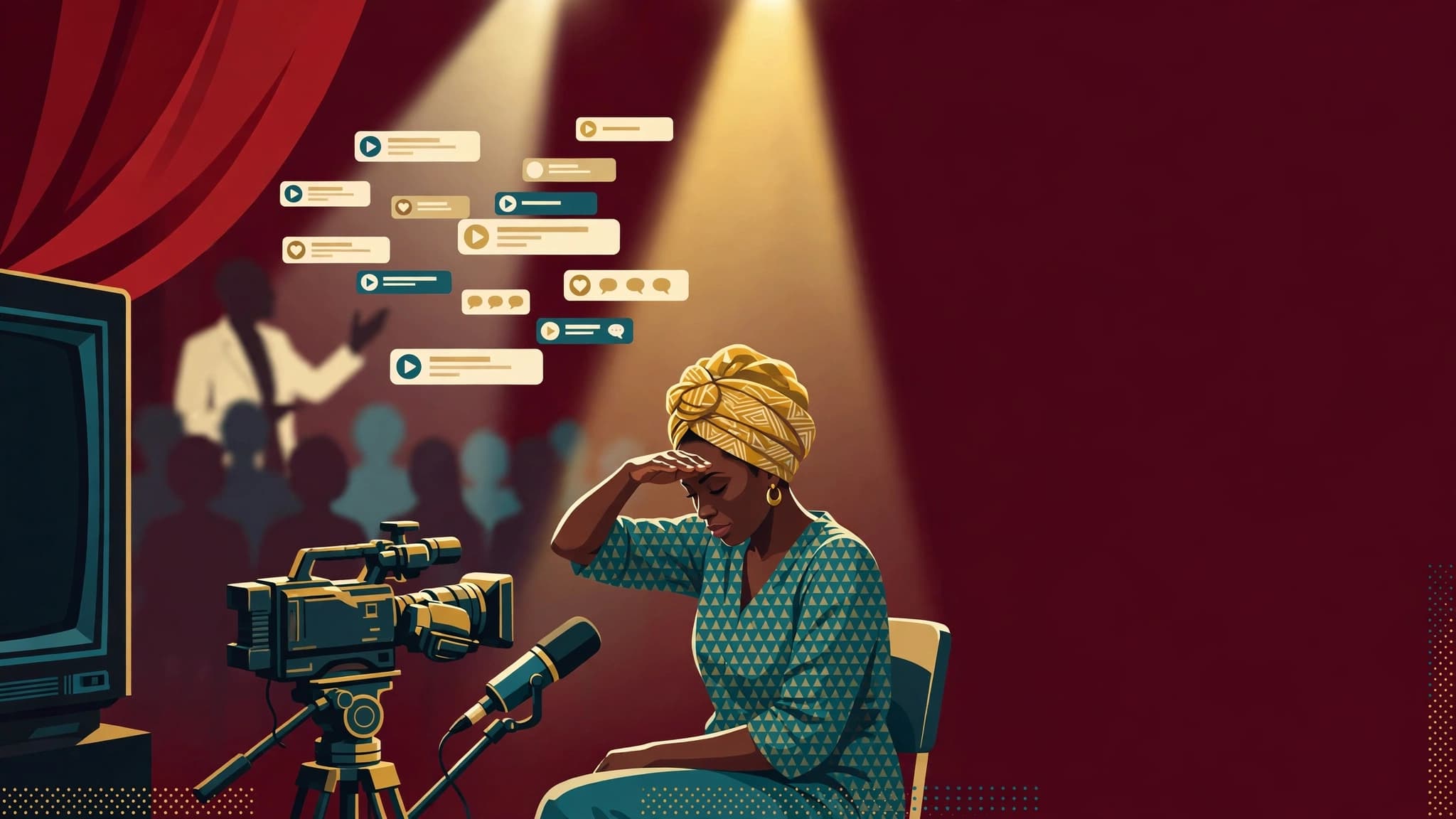
This week I watched a video of a real woman crowning during birth. It was not an illustration and not AI, and her body was fully visible on social media. I want to hold two ideas at once. Birth is not obscene. And nobody is entitled to a woman’s body because it appeared on a feed.
I do not know who she is or whether she agreed. Everything turns on that. Did she consent to being filmed? Did she consent to the video being posted? Who posted it: she, her partner, a health worker or a stranger? A woman who chooses to share her own birth to educate others is exercising her choice. A woman whose labour was filmed and uploaded without her say is being violated.
The law helps only partly. Section 67 of the Cybersecurity Act, 2020 (Act 1038) makes it an offence to distribute an intimate image of an identifiable person without consent, where she had a reasonable expectation of privacy and the intent was to cause serious emotional distress. That intent requirement is narrow. A clip reposted for views may not fit it. A birth video can be lawful to share and still be wrong to share.
There is a contradiction here that I cannot ignore. We shame women for bodies doing what bodies do, then watch the same bodies on repeat when they come packaged as content. How many of the people who judged a neckline this week watched that clip twice?
My rule is simple. Before you share, ask whether she said yes. If you do not know, do not post.
Women’s empowerment events: what are we actually teaching women?
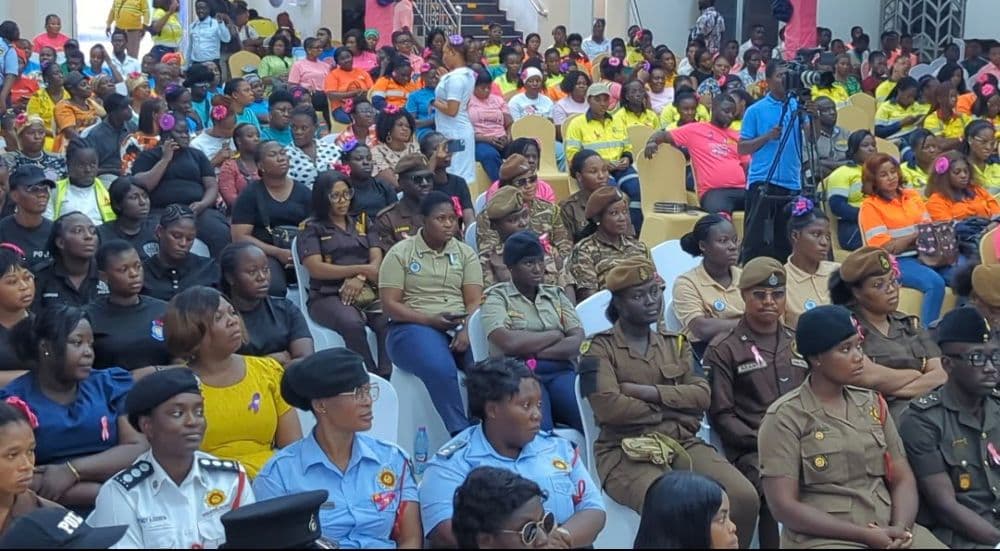
On Sunday 25 October, IGNITE’s “The Complete Ignite Woman” session put broadcaster and lawyer Serwaa Amihere in front of young women. She advised them against buying fake designer bags to look wealthy, saying a genuine Birkin costs more than $25,000 while fakes sell for as little as GH¢300. She called pretending “very offensive” and urged patience, with affordable brands in the meantime.
The same programme included lessons on how to drink soup from Ms Nancy, a popular style and etiquette coach, and advice to use lime when bathing from Vera George, wife of Samuel Nartey George, the MP for Ningo-Prampram and Communications Minister. A minister’s wife has a platform most women never get. What did she choose to do with it?
Let me defend the organisers first. Etiquette and presentation are skills, and women walk into rooms where they are judged on appearance whether we like it or not. Serwaa’s core message, be patient with money and do not perform wealth you do not have, is sound. A young woman who hears it from someone who has worked her way up may well benefit.
Now the problems. First, the claim that a fake bag shapes how an employer sees you puts the burden on women again. Efia Odo replied that hiring should depend on qualifications, not appearance, and Mzbel argued that a fake bag is no more fake than wigs or lashes. They have a point. Then the backlash turned ugly, with critics picking over Serwaa’s own bags and teeth. That is appearance policing in reverse, and it proves how easily women are reduced to how they look.
Second, you asked whether this is disrespect for the audience, poor preparation, or a failure to understand what empowerment means. I think it can be all three. A programme that sells empowerment and delivers soup etiquette treats its audience as pupils to be corrected, not professionals to be equipped. That is disrespect. Personal advice about bathing habits, handed to a room of women who came for career tools, is what an unprepared programme looks like, though I cannot prove that. And gathering women in a room is not empowerment. Empowerment changes what women can earn, own, decide and report.
Look at the numbers. The Ghana Statistical Service found that among paid workers, women earned 34.2 per cent less than men in the first quarter of 2022, after adjusting for age, experience, education, occupation, industry, sector and region. The gap was 58.7 per cent in the private informal sector and 29.9 per cent in the private formal sector. It narrowed to 12.7 per cent among workers with tertiary education. These are 2022 figures, but the women facing the widest gaps are still the least likely to be sitting in a ticketed room learning personal branding.
What would I teach instead? How to negotiate a salary. How to read a contract. How to get credit, register a business and report harassment. How to run for office. I would swap a soup lesson for an hour on any of those.
Women should drink their soup however they like. They should earn what men earn while doing it.
The thread that binds
A boy reports bullying and the response is a suspension. Young women carry most new HIV infections and we argue about condoms instead of power. A continent hosts the world and nobody has said who keeps the legacy. A woman’s labour becomes content. Women are coached on soup while the pay gap stays put.
In every story, someone with power decided what young people and women needed, and the person with less power carried the cost. We blame the child, the girl, the woman, the audience. We rarely ask the adult, the institution, the organiser or the platform what they did.
That is the question I am taking into next week. Who is responsible, and why is it so rarely the person who could have changed the outcome?