Accra, Ghana, October 31, 2026: Children aged 13 to 18 have called for stronger action to protect them from violence in their homes, schools, communities and online spaces, following a national consultation organised to ensure their perspectives inform efforts to end violence against children.
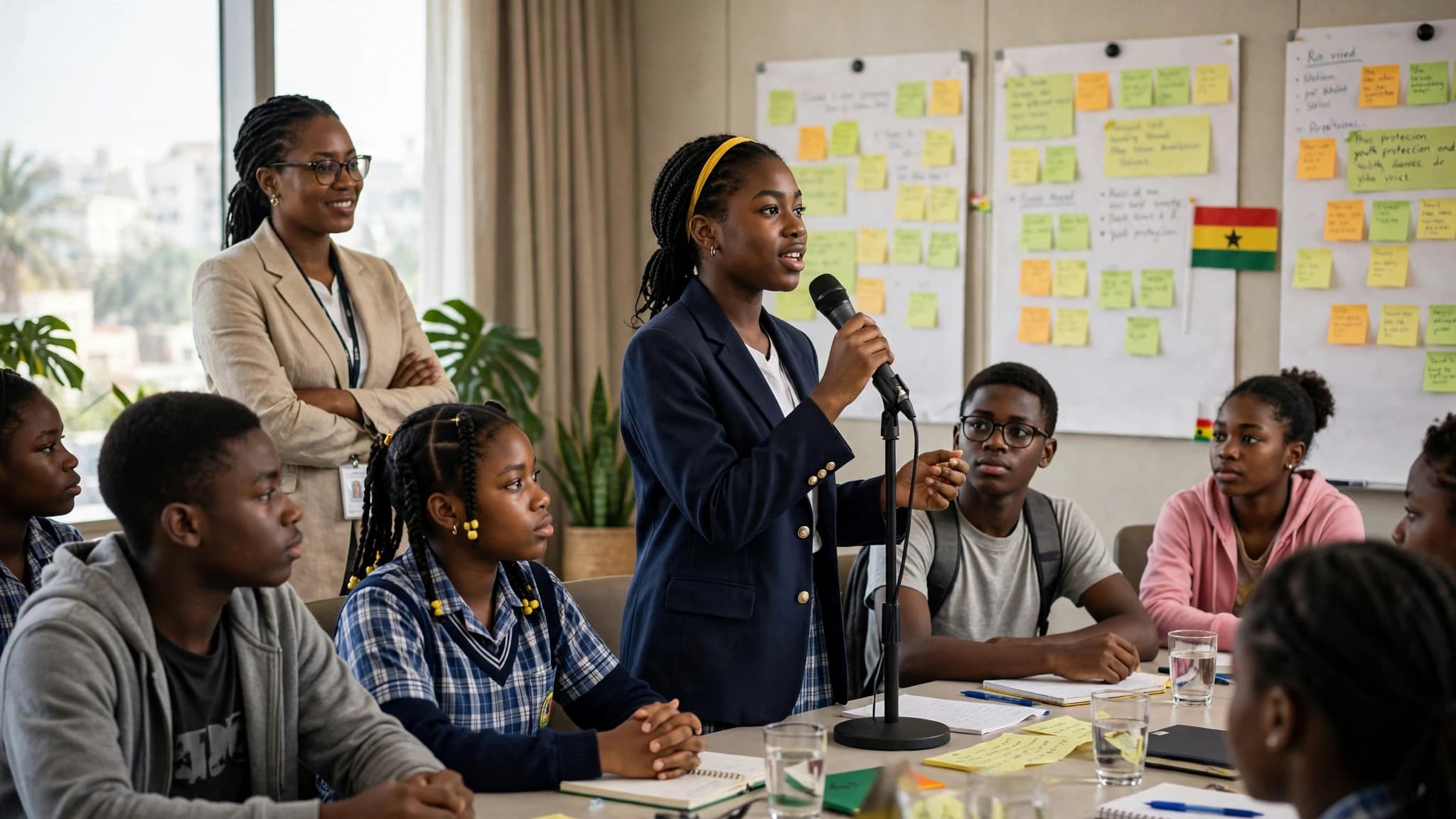
The consultation, held on Friday, 23 October 2026, at the Fiesta Royale Hotel in Accra, brought together children and their teachers to share experiences, identify concerns and propose practical measures to prevent and address violence against children.
The event was organised by the Department of Children of the Ministry of Gender, Children and Social Protection (MoGCSP), in partnership with UNICEF, World Vision, SCEF and the Ghana Education Service, as part of preparations for the Second Global Ministerial Conference on Ending Violence Against Children, scheduled for 17 to 19 November 2026.
Addressing the participants, the Minister for Gender, Children and Social Protection encouraged the children to speak openly and without fear, assuring them that their views mattered and would be taken seriously.
She engaged directly with the children and reaffirmed the Government's commitment to listening to them and strengthening efforts to protect their rights and well-being.
Through interactive discussions and group activities, the children examined the different forms of violence affecting them and shared their perspectives on how such experiences could be prevented and addressed.
Their discussions highlighted the need for children to be heard, their experiences taken seriously and their participation recognised in decisions and policies affecting their safety.
A key outcome of the consultation was the Minister's assurance that the recommendations developed by the children would be compiled into a document and presented at the upcoming global ministerial conference.
This will provide an opportunity for Ghanaian children's perspectives and proposed solutions to contribute to international discussions and efforts to end violence against children.
The consultation also highlighted the shared responsibility of government institutions, families, schools, communities and other stakeholders in creating safe and supportive environments for children, both offline and online.
By bringing children into discussions on their protection, the initiative recognises them not merely as beneficiaries of child protection interventions but as active participants whose experiences and recommendations should inform the decisions that affect their lives.