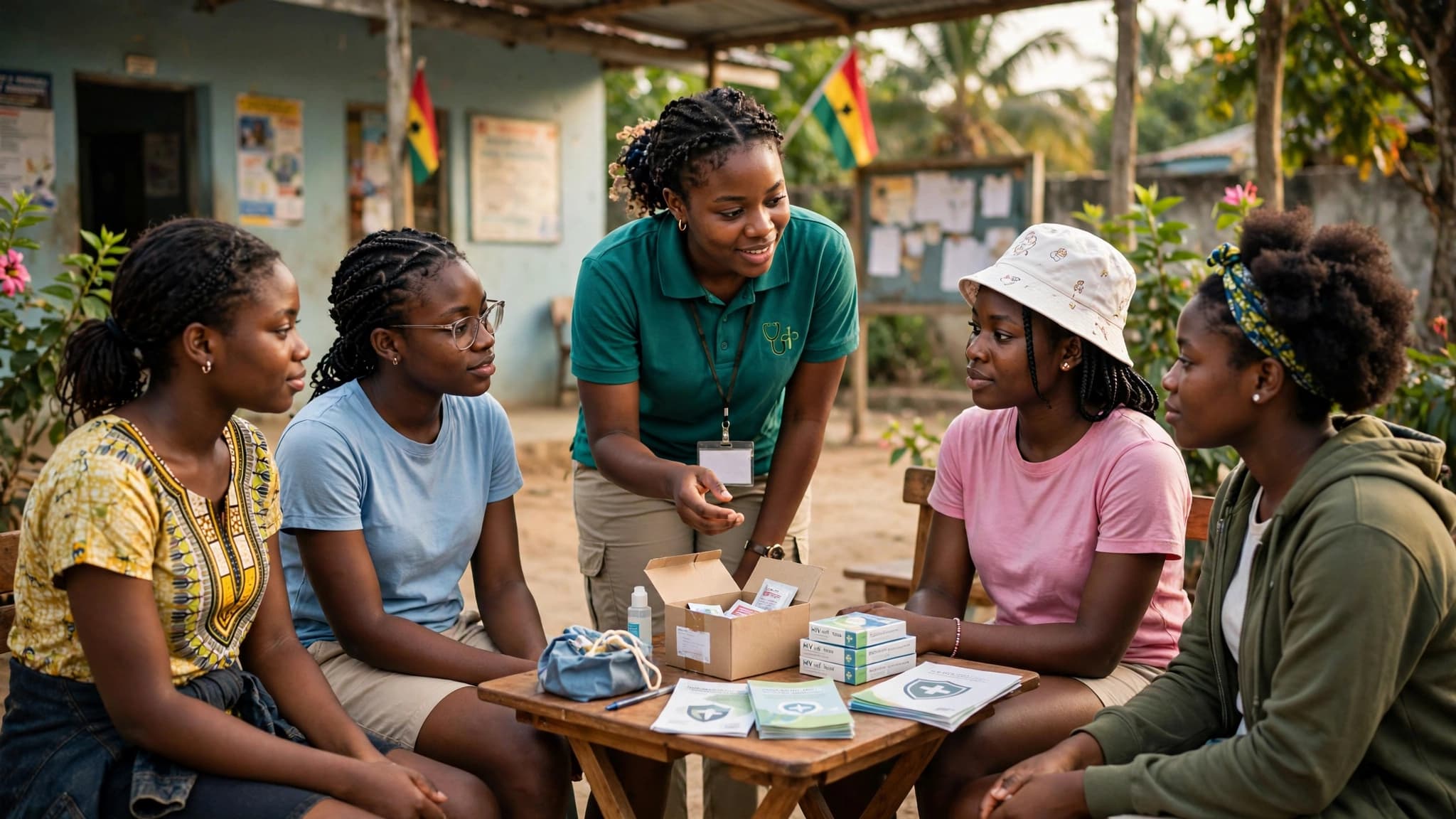
Accra, Ghana, October 31, 2026: Ghana needs US$25.7 million annually to finance HIV prevention. Yet domestic spending on prevention in 2024 was approximately US$400,000.
The difference is not simply a budgetary concern. It raises questions about the country's ability to prevent new infections, sustain community-based interventions and provide people with the information and services they need to protect their health.
It also raises a gender equality question that deserves more attention: what does chronic underinvestment in HIV prevention mean for women and girls, particularly those who already face greater barriers to accessing sexual and reproductive health services?
The figures are difficult to ignore.
Ghana recorded an estimated 15,200 new HIV infections in 2024, of which 69 per cent were among females aged 15 and above, according to the Ghana AIDS Commission's National HIV Prevention Roadmap 2026–2028.
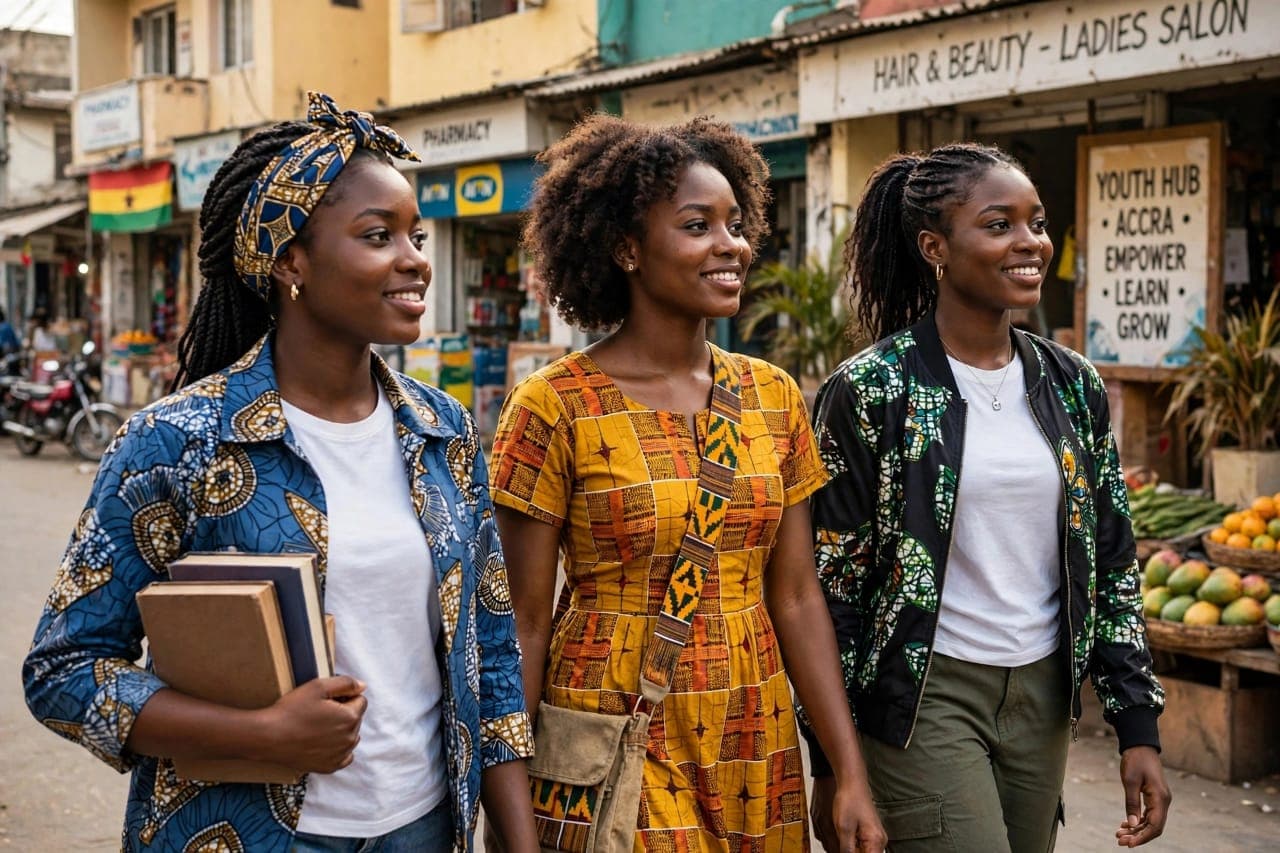
The disparity is particularly pronounced among young people.
An estimated 3,900 new infections occurred among adolescent girls and young women aged 15 to 24 in 2024, compared with 800 among adolescent boys and young men in the same age group. That is almost five times as many infections among young women.
These figures should change how Ghana discusses HIV prevention and where it directs its resources.
The burden is not shared equally
HIV does not affect everyone in the same way. Age, gender, economic circumstances, relationships, access to information and the ability to negotiate safer sex all influence a person's vulnerability.
For many adolescent girls and young women, the ability to protect themselves is not determined by knowledge alone.
A young woman may understand how HIV is transmitted and know that condoms reduce the risk of infection. But can she insist that her partner uses one? Can she access HIV prevention medication without being judged? Can she ask for an HIV test without worrying that someone will question her sexual behaviour?
These are not merely individual choices. They are shaped by unequal power relations, social expectations, stigma and the availability of accessible health services.
Ghana's own National HIV Prevention Roadmap acknowledges these challenges.
Drawing on the 2022 Ghana Demographic and Health Survey, the roadmap reports that only 36.2 per cent of adolescent girls and young women had comprehensive knowledge of HIV prevention methods. Only 13.2 per cent had heard of pre-exposure prophylaxis, commonly known as PrEP.
PrEP is medication taken by HIV-negative people to reduce their risk of acquiring HIV. It is an important prevention option, particularly for people who may face ongoing exposure to the virus.
The same roadmap reports that among adolescent girls and young women aged 15 to 24 who had sexual intercourse in the preceding 12 months, only 17.2 per cent had tested for HIV during that period and received their results.
The figures point to gaps in knowledge, awareness and service uptake. They also show why prevention cannot depend solely on telling young women to make safer choices.
They need access to the tools and services that make those choices possible.
Prevention is more than distributing condoms
Ghana's HIV prevention strategy recognises the need for a comprehensive approach.
The National HIV Prevention Roadmap 2026–2028 identifies five priority areas: adolescent girls and young women, adolescent boys and young men, vulnerable populations, condom programming and antiretroviral-based prevention.
Its proposed interventions include expanding access to PrEP, strengthening condom distribution, increasing HIV self-testing, improving reproductive health education and integrating HIV prevention into sexual and reproductive health services.
These commitments matter because prevention must respond to the different circumstances in which people live.
For example, PrEP can give an HIV-negative woman an additional prevention option that does not depend entirely on her partner agreeing to use a condom. However, access requires more than making medication available on paper. Women need accurate information, confidential services, trained health workers and consistent supplies.
A study published in BMC Health Services Research on 3 October 2026 offers further insight into these barriers.
The WISE WOMAN study, which involved adolescent girls and young women and community stakeholders in Greater Accra and the Eastern Region, identified four major obstacles to HIV self-testing and PrEP uptake.
These included cultural and religious attitudes that portrayed female sexuality and HIV prevention as inappropriate, limited practical knowledge, fear and stigma, and structural barriers such as inconsistent service availability, financial constraints and geographical inequalities.
The participants also highlighted concerns about confidentiality and the possibility of being judged by partners or other people.
Their proposed solutions included peer-led education, culturally appropriate communication, engagement with faith leaders, anonymous digital support and community-based service delivery.
The findings are particularly relevant to the funding debate. Prevention programmes cannot succeed simply because policies exist. They require sustained investment in the people, services and community structures that make those policies work.
The sustainability question cannot wait
Ghana's overall HIV expenditure has increased considerably over the years. According to figures presented by the Ghana AIDS Commission at the 15th National HIV and AIDS Partnership Forum, expenditure rose from US$28.4 million in 2005 to US$125.2 million in 2025.
However, the growth in total HIV spending should not obscure the financing difficulties facing prevention.
The National HIV Prevention Roadmap identifies heavy dependence on international development partners as a major threat to the sustainability of prevention programmes.
It reports that development partners provided 96.1 per cent of HIV prevention funding in 2022. The roadmap also notes that reductions in external funding, particularly from the United States, had affected critical prevention programmes, especially those serving key populations.
This dependence creates uncertainty for programmes that require consistent funding to maintain outreach, provide prevention commodities, train community workers and connect people to health services.
There are already questions about the continuity and geographical reach of targeted interventions.
In August 2026, the Ghana AIDS Commission called for the expansion of the Adolescent Girls and Young Women HIV Prevention Project beyond selected high-burden districts in Greater Accra, Eastern and Ashanti Regions.
The project, implemented by Hope for Future Generations in partnership with the National AIDS/STI Control Programme and supported by the Global Fund, provides HIV education, sexually transmitted infection screening, condoms, HIV self-test kits and referrals for PrEP.
At the time, the Commission reported 3,835 new HIV infections among young people aged 15 to 24 in 2025, representing 27.5 per cent of all new infections.
The project coordinator also indicated that the programme was expected to end on 31 December 2026.
The timing raises an important question: what happens to the women and girls reached by these interventions when project funding ends?
The Commission has called for expansion, not a retreat from prevention. But expansion requires money, institutional commitment and a clear plan for continuity.
A successful intervention should not leave its beneficiaries without support simply because a funding cycle has ended.
Ghana has identified the solutions. Now it must finance them.
The country's National HIV Prevention Roadmap already provides a framework for addressing many of these challenges.
It calls for stronger domestic resource mobilisation, increased government investment, more funding for civil society organisations and better integration of HIV services into existing health programmes.
The Ghana AIDS Commission has also proposed increasing government budgetary allocations at national and local levels, strengthening the use of the District Assemblies Common Fund and integrating HIV services and commodities into the National Health Insurance Scheme benefit package.
These proposals deserve serious consideration.
Community-based organisations, particularly those working with adolescent girls, young women and vulnerable populations, must be recognised as essential partners in the national response. They often provide the trusted relationships, outreach and information that formal health facilities alone cannot deliver.
Funding must also reach beyond Accra and other major urban centres. A prevention strategy that works in selected districts but leaves other communities with limited access cannot deliver equitable protection.
Most importantly, government must demonstrate how much it intends to commit to prevention, where the money will go and how expenditure will be tracked.
This is not an argument for diverting resources from treatment. People living with HIV need uninterrupted access to antiretroviral therapy, testing, care and support. Treatment saves lives and remains central to ending AIDS as a public health threat.
But prevention and treatment cannot be treated as competing priorities. Every new infection creates additional demands on a health system that must provide lifelong treatment and care.
Preventing infections is both a public health responsibility and a long-term investment.
Women and girls must be part of the funding conversation
Ghana's ambition to end AIDS as a public health threat by 2030 will require more than targets and policy documents.
It will require a financing strategy that recognises where the burden falls, addresses the barriers people face and makes prevention services accessible to those who need them.
For women and girls, this means investing in comprehensive sexual and reproductive health education, confidential HIV testing, accessible prevention medication, condoms, community outreach and services that take account of gender-based violence and unequal power relations.
It also means involving young women in decisions about the services intended to protect them.
The question is no longer whether Ghana understands the importance of HIV prevention. Its national roadmap makes that clear.
The more difficult question is whether the country is prepared to put sufficient public resources behind its commitments.
When adolescent girls and young women account for almost five times as many new infections as their male counterparts in the same age group, prevention funding cannot be gender-blind.
Ghana cannot expect to end AIDS by 2030 while leaving the prevention needs of women and girls inadequately financed.
The cost of failing to invest now will not be measured only in budget deficits. It will be measured in infections that could have been prevented and opportunities for healthier lives that were lost.