Accra, Ghana, October 22, 2026: Ghana’s Ministry of Health has urged the public not to panic over Ebola, assuring citizens that the country has the personnel and resources needed to manage cases if the virus reaches its borders.
The assurance comes as health authorities respond to confirmed cases of Ebola Bundibugyo virus disease in Nigeria and Kenya, amid an ongoing outbreak in the Democratic Republic of the Congo (DRC).
Speaking to Citi Fm, on October 21, Ministry of Health spokesperson Tony Goodman urged Ghanaians to remain vigilant and report concerning symptoms to health facilities rather than give in to fear.
“I want to allay the fears of Ghanaians. Let’s not trigger the panic button too early,” he said.
Goodman identified symptoms including fever, body pains, headaches and vomiting, urging the public to seek medical assessment when concerns arise. He said Ghana had the personnel and resources to manage cases.
The Ministry’s reassurance follows Nigeria’s confirmation of an Ebola Bundibugyo case in Abuja on October 20. Nigerian authorities identified 44 contacts for monitoring. Kenya had also reported infections linked to an imported case earlier in October.
Ghana has not reported a confirmed Ebola case, but the developments in the region have renewed questions about the country’s preparedness to detect and respond to a potential infection.
Preparedness must extend beyond public assurances
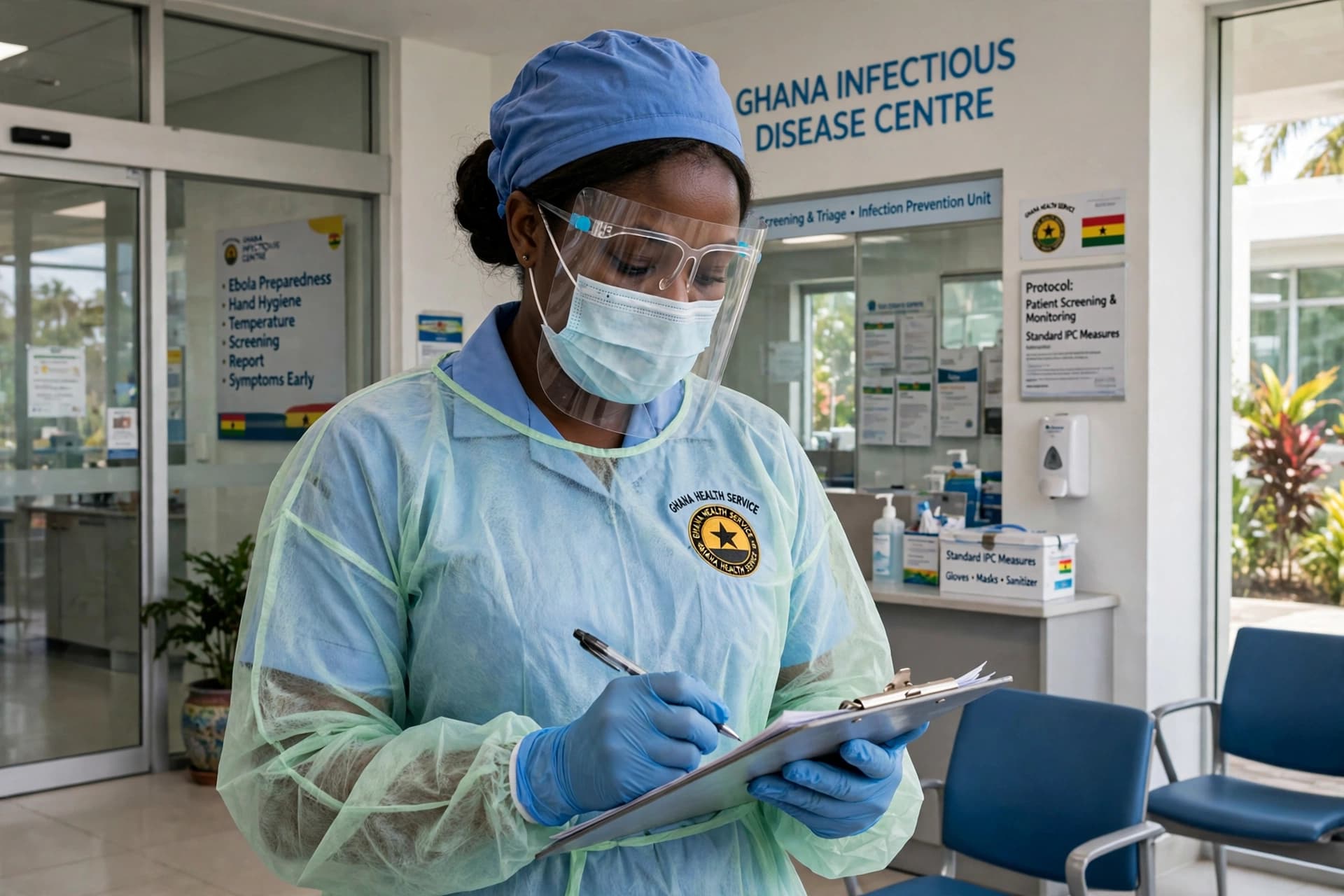
The Ghana Health Service has previously outlined measures to strengthen readiness, including work at the Ghana Infectious Disease Centre, coordination with private health facilities, airport surveillance and engagement with agencies responsible for managing the country’s points of entry.
In May, the Service said it was strengthening systems for the timely detection, isolation and management of suspected cases. It also highlighted the importance of referral arrangements between public and private health facilities, infection prevention and control, and coordination among agencies.
These preparations matter because an effective response depends on more than the availability of specialised facilities. Health workers must recognise suspected cases, know how to escalate concerns, use appropriate protective equipment and follow established referral procedures. Laboratories and surveillance teams must also be able to support timely assessment and response.
The Ministry’s latest assurance should therefore be accompanied by clear public information about what has been activated, how suspected cases will be assessed and referred, and how frontline workers are being supported.
The public also needs to know where to obtain verified information. During a public health scare, uncertainty can create room for rumours, stigma and unnecessary fear. Timely communication from health authorities can help people understand the risk without either exaggerating it or dismissing legitimate concerns.
Why a gender lens matters in an outbreak response
Ebola preparedness is also a question of whose health, safety and access to care are protected when an emergency occurs.
Women often carry substantial responsibility for caring for sick relatives and children. Healthcare workers, including nurses and other frontline staff, may also face occupational exposure while providing care. These realities make infection prevention, access to protective equipment, clear guidance and reliable referral systems essential.
Pregnant women and people who need regular medical care must also be able to obtain appropriate services during an outbreak response. Public health authorities need to communicate how routine and urgent care will be maintained while suspected infections are assessed and managed.
These are preparedness questions, not claims that Ghana is experiencing an Ebola outbreak. They should be addressed before an emergency, rather than after health services come under pressure.
A gender-responsive response also means making public information accessible to people with different literacy levels and disabilities, and ensuring that communities can obtain guidance in languages they understand.
What should Ghanaians do?
Ebola symptoms can include fever, severe headache, fatigue, muscle pain, sore throat, vomiting and diarrhoea. In some cases, unexplained bleeding may occur. Symptoms can develop between two and 21 days after exposure.
These symptoms are not unique to Ebola and do not, on their own, establish that someone has the disease. Concern is particularly important where symptoms follow travel to an affected area or contact with a suspected or confirmed case.
Anyone who develops concerning symptoms in those circumstances should contact a health facility promptly, disclose relevant travel or contact history, and follow the instructions of health professionals. People should not attempt to diagnose themselves or spread unverified claims about suspected cases.
Ebola spreads through direct contact with the blood or other body fluids of an infected person, or with contaminated materials. It is not transmitted through the air in the way that illnesses such as measles can be.
The public should follow updates from the Ministry of Health and Ghana Health Service, practise good hand hygiene and cooperate with public health guidance.
The real test is readiness
Ghana is right to discourage panic. But reassurance works best when the public can see the systems behind it.
The Ministry and the Ghana Health Service should continue to communicate clearly about surveillance at points of entry, laboratory capacity, referral arrangements, healthcare worker protection and the management of suspected cases. They should also explain how preparedness is being maintained beyond major facilities and transport hubs.
The immediate priority is to prevent the virus from entering Ghana and to identify and manage any suspected infection quickly. That requires trained staff, functioning systems, public cooperation and communication that people can trust.
The message should be clear: there is no confirmed Ebola case in Ghana, but preparedness cannot be taken for granted. Public confidence must rest not only on assurances that resources are available, but on evidence that the country is ready to use them effectively.