Gender Minister explores support for disability centre seeking better training facilities and market access
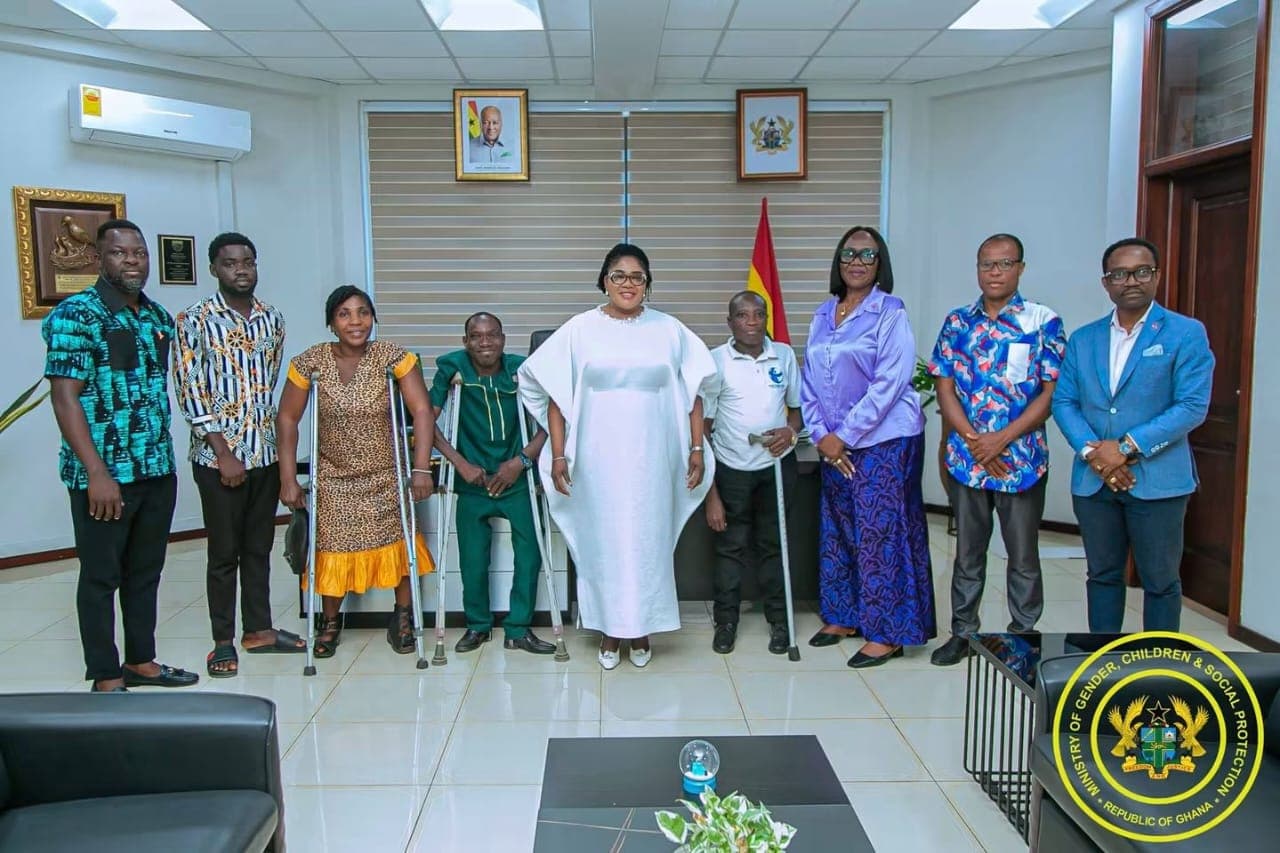
Accra, October 27, 2026: The Minister for Gender, Children and Social Protection, Dr Agnes Naa Momo Lartey, has held discussions with a disability rehabilitation and training organisation seeking support to improve vocational training facilities, expand access to digital technology and create better markets for products made by its trainees.
The engagement with Future Life for Disabled Rehabilitation and Training Center, led by Emmanuel Jikun Tepa, focused on strengthening the organisation's capacity to equip persons with disabilities with practical skills that could improve their prospects for employment, entrepreneurship and independent living.
The delegation used the meeting to outline challenges affecting its operations and explore areas of potential collaboration with the Ministry.
The request followed a submission to the Office of the Vice President, which was referred to the Ministry for consideration and appropriate action.
Although the meeting provided an opportunity to discuss possible support, the Ministry's statement did not specify any funding allocation, equipment commitment or implementation timeline arising from the engagement.
Training and rehabilitation at the centre of discussions
Future Life for Disabled is a non-profit organisation that supports persons with disabilities through rehabilitation, vocational training and livelihood development.
Its training areas include leatherwork, shoemaking, furniture design, information and communication technology (ICT), beadmaking, soap making and fashion design.
These programmes are intended to help trainees acquire practical abilities that can be applied to employment or income-generating activities.
However, the organisation told the Minister that improving its facilities and resources was necessary to strengthen its training programmes and extend opportunities to more persons with disabilities.
The delegation identified improved training facilities and ICT equipment among its priorities. Better access to technology could help trainees develop relevant digital skills, while improved workshop facilities could support practical instruction across its vocational programmes.
The organisation also called for assistance in connecting trainees and their products to markets, highlighting the importance of ensuring that skills development leads to viable livelihood opportunities.
From skills acquisition to sustainable livelihoods
Vocational training can help persons with disabilities develop marketable skills, but the ability to earn an income also depends on access to customers, suitable working environments, equipment and opportunities to participate in the economy.
Future Life for Disabled therefore called for support that would enable it to train more people, strengthen entrepreneurship and improve the commercial prospects of products made by its trainees.
Better market access could help trainees turn their skills into income-generating activities, while improved facilities and equipment could expand the range and quality of products they are able to make.
The organisation emphasised that strengthening its capacity would enable more persons with disabilities to become self-reliant and contribute to their communities.
The requests point to a broader challenge in disability inclusion: ensuring that rehabilitation and training programmes are connected to practical economic opportunities, rather than treating skills acquisition as an end in itself.
Minister reaffirms commitment to disability inclusion
Dr Lartey welcomed the delegation and reiterated the importance of promoting the welfare, skills development and economic empowerment of persons with disabilities.
She said persons with disabilities should have opportunities to develop their abilities, acquire relevant skills and participate meaningfully in national development.
The Minister also stressed the importance of enabling persons with disabilities to live with dignity and greater independence.
The engagement reflects the Ministry's interaction with disability organisations to understand their priorities and consider approaches to improving access to opportunities.
However, the Ministry's statement did not indicate which of the centre's requests would receive support or whether further assessments and consultations would be required before any intervention could be agreed.
A wider question of implementation
Ghana has taken steps to strengthen disability inclusion through social protection, skills development and employment initiatives. In September 2026, Dr Lartey told the Government Accountability Series that 19,760 persons with disabilities had benefited directly from the Disability Common Fund across 208 metropolitan, municipal and district assemblies. She also said the Ministry was working with the Ghana Education Service to formalise the employment of 272 graduates with disabilities.
Those initiatives provide a wider policy context for the concerns raised by Future Life for Disabled, particularly the need to connect skills development with employment, enterprise support and sustainable incomes.
The centre's engagement with the Minister raises the practical question of how broader commitments to disability inclusion can translate into accessible facilities, appropriate equipment and reliable routes to market for people completing vocational training.
For the organisation, the immediate priorities are clear: improve the conditions in which trainees learn, expand access to relevant skills and strengthen the opportunities available to them after training.
The outcome of any potential collaboration will depend on the follow-up arrangements and whether the needs identified during the meeting translate into concrete support.