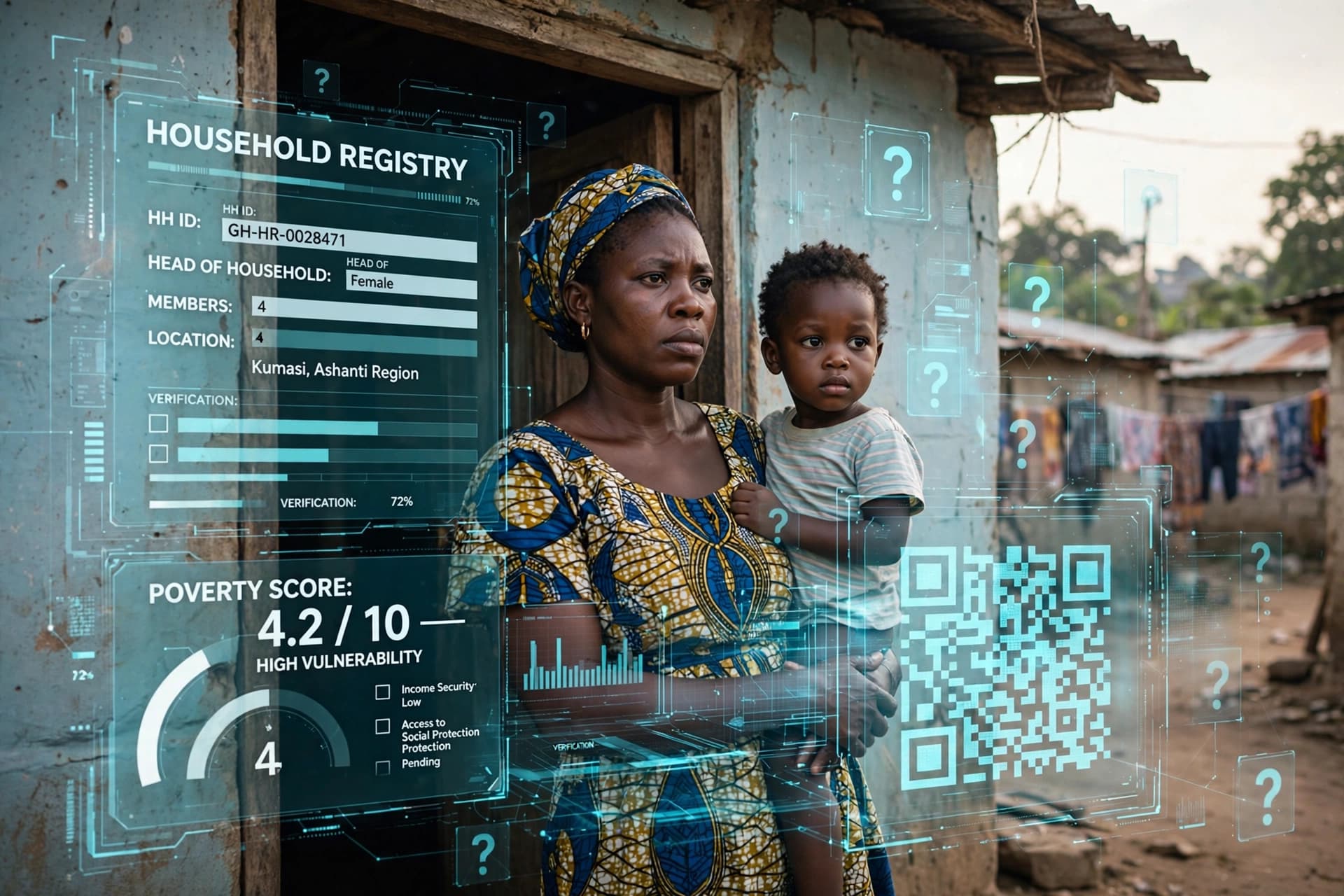
Accra, Ghana, November 5, 2026: Ghana's media organisations compete for attention in an increasingly crowded information market. Stories about infidelity, marital breakdowns, celebrity controversies, sexual scandals and public confrontations can attract enormous interest. But when humiliation generates clicks, views and advertising revenue, who is responsible for the content being produced? Are media organisations simply giving audiences what they want, or are they cultivating an appetite for other people's private pain?
The story that gets the clicks
A public official is accused of misusing public funds. A woman speaks about domestic abuse. A celebrity's marriage breaks down. A private conversation finds its way onto social media. A presenter invites two people with a troubled relationship to discuss their differences on air.
Which story attracts the most attention?
The answer cannot be assumed. It depends on the subject, the platform, the audience and how the story is presented. But anyone who follows Ghana's media landscape will recognise how readily private disputes, celebrity controversies and public confrontations can become major talking points.
A headline designed to provoke curiosity can travel further than a carefully researched report. A video of someone crying can attract more immediate reactions than an investigation into the conditions that produced the crisis. A heated exchange can generate hundreds of comments before anyone asks whether the issue deserves that level of public exposure.
This is where the relationship between journalism and entertainment becomes complicated.
Media organisations need audiences. Broadcasters compete for listeners and viewers. Digital publishers compete for traffic. Bloggers and content creators compete for followers, shares and visibility. Attention has become a valuable commodity, and the pressure to secure it can influence what gets published, how stories are framed and which subjects receive repeated coverage.
But a story's ability to attract attention does not establish its public value.
Are we confusing public interest with public curiosity?
There is a difference between information the public needs and information the public is curious about.
A public-interest investigation into violence against women, for example, may reveal failures in policing, gaps in survivor support, weaknesses in the justice system or the absence of effective prevention programmes. It may require weeks of research, interviews, verification and careful reporting.
A sensational account of one woman's marital dispute may be easier to package and promote. It can offer conflict, emotion, personalities and a ready-made invitation for audiences to take sides.
Both may attract attention. Only one may substantially advance public understanding of the issue.
This distinction matters because journalism is not simply the business of satisfying curiosity. It has a democratic responsibility to inform citizens, scrutinise power and help the public understand events that affect their lives.
The Ghana Journalists Association's ethical standards place accuracy, fairness, independence and responsibility at the centre of professional journalism. Those obligations do not disappear because an audience finds a particular story entertaining.
The question for editors is not only whether people will watch. It is whether the story deserves to be told in the way they intend to tell it.
What do Ghanaian audiences actually want?
It would be easy to accuse Ghanaian audiences of preferring gossip to serious journalism. But that would be a convenient conclusion, not an evidence-based one.
Research into audience behaviour suggests a more complicated picture.
A study by Peter N. Amponsah and Mavis Okyere, titled News-ness and Hybridity of News: What Audiences Consider News in Ghana, examined responses from 419 people. It found that breaking news received the highest rating as news, followed by fact-checking. Stories incorporating humour, outrage and satire also received high ratings.
The findings point to an audience that does not necessarily draw a rigid boundary between information and entertainment. People may value credible news while also responding to content that is humorous, emotional, provocative or satirical. That does not mean they want misinformation or humiliation. It does, however, show why the boundary between journalism and entertainment can become difficult to maintain.
The study is not a nationally representative measurement of Ghanaian appetite for sensational stories. It should not be used to claim that most Ghanaians prefer scandal. But it raises an important question about the changing expectations audiences bring to news.
The challenge for media organisations is to understand those expectations without abandoning their professional obligations.
The attention economy has changed the competition
The competition for audiences is no longer confined to radio and television stations fighting for ratings or newspapers competing for readership.
A news organisation now competes with independent bloggers, celebrity gossip accounts, influencers, YouTubers, TikTok creators, podcasts and thousands of social media pages. A story can move from a radio discussion to a Facebook post, then to a short video, a reaction clip and a series of commentary posts.
The original context can disappear as the content is repackaged for different audiences.
A 2024 report by FIPP, examining how Ghanaian journalists are coping with fake news and influencer news aggregation, described the growth of social media accounts that collect and republish news. The report raised concerns about accounts rushing to post breaking stories without adequate fact-checking and deliberately using sensational framing to drive engagement. It also discussed entertainment content presented with misleading captions or context.
This is not an argument that every blogger is irresponsible or that social media has no journalistic value. Independent digital publishers can expose wrongdoing, bring neglected stories to public attention and reach people who may not consume traditional news.
But the speed of publication and the pressure to build a following can create incentives to publish first and verify later.
When a platform rewards visibility, the temptation is to make a story more dramatic, more personal and more provocative. Accuracy and context can become casualties of the race.
Bloggers and influencers are now part of the news ecosystem
The distinction between a journalist, blogger, influencer and content creator is not always clear to audiences.
A person with a large social media following may break a story before a traditional newsroom. A celebrity gossip account may have access to information that established media organisations do not. A content creator may interpret a political development for an audience that rarely watches television news.
These developments have changed the information environment. They have also raised questions about accountability.
Who verifies the claims? Who contacts the people named? Who distinguishes an allegation from an established fact? Who corrects a false report after it has been shared thousands of times?
An apology posted after a damaging allegation has circulated may not reach everyone who saw the original claim. A correction rarely travels with the same speed or excitement as the initial controversy.
The issue is not whether bloggers should be allowed to publish. They have the right to participate in public conversation. The issue is whether influence should come without responsibility.
A large following is not a substitute for verification. A screenshot is not automatically evidence. An anonymous tip is not proof. And a story being widely discussed does not make every detail suitable for publication.
Who makes money when outrage goes viral?
Attention is not only social currency. It can also have commercial value.
Views, clicks, followers and engagement can support advertising, sponsorships, brand partnerships and other revenue opportunities. For some creators, controversy can help build a personal brand. For digital publishers, traffic can strengthen their commercial appeal.
The financial arrangements vary across platforms and organisations. Not every viral post generates direct income, and not every media organisation earns more simply because a story attracts attention. But the commercial incentive to grow an audience is real.
This creates an uncomfortable question: when a person's humiliation becomes the content, who benefits?
The broadcaster may gain an audience. The blogger may gain followers. The influencer may secure more engagement. A platform may receive more activity. Yet the person whose distress has attracted the attention may be left to deal with public ridicule, stigma, threats, family conflict or further abuse.
In cases involving women and girls, the consequences can be particularly serious. A private image, intimate conversation or account of abuse can circulate far beyond its original audience. Even when the material is removed from one account, copies may continue to appear elsewhere.
The person at the centre of the story may lose control over her own narrative while other people gain visibility from telling it.
This is one reason the discussion cannot stop at whether a post is popular. It must also ask whether publishing it is ethical, necessary and in the public interest.
The audience is not just watching
Audiences are often described as passive consumers of media. Social media has made that description increasingly inaccurate.
People now participate in the circulation and interpretation of news. They comment, repost, record, edit, create reaction videos, add captions and introduce their own claims. They can challenge misinformation, demand corrections and expose wrongdoing. They can also amplify harmful content.
A viewer who forwards an intimate video to a WhatsApp group is making a decision. A person who shares a humiliating clip with a mocking caption is participating in its distribution. Someone who joins an online pile-on against a woman whose private life has become public entertainment is helping extend the harm.
It is not enough to say that the material was already online.
The decision to share it again gives it another audience. The decision to comment can direct more people towards it. The decision to turn it into a joke can make the humiliation appear acceptable.
This does not mean audiences carry the same responsibilities as professional editors. They do not have the same resources, institutional power or professional obligations. But they do have choices about what they reward and amplify.
Are women paying a higher price for our curiosity?
The appetite for scandal is not gender-neutral.
In stories about marriage, infidelity, sexuality, parenting and relationships, women can face intense public scrutiny. Their appearance, clothing, sexual history, motherhood and behaviour may become subjects of commentary, even when those details have little relevance to the original issue.
A woman who speaks about abuse may be questioned about why she stayed. A woman accused of infidelity may be subjected to insults and character judgements. A woman whose intimate images are circulated may find that public attention shifts from the person who violated her privacy to the circumstances in which the images were created.
Men can also experience public humiliation, online abuse and reputational damage. But the standards applied to women in matters of sexuality, marriage and respectability deserve closer examination.
The public's curiosity can reproduce familiar gender stereotypes. Women are expected to explain themselves, defend their choices and demonstrate that they are worthy of sympathy. Their private lives become material for public judgement.
This is not accountability. It is often a form of punishment disguised as public discussion.
The question is not whether people are entitled to discuss public figures or matters of legitimate public concern. They are. The question is why a woman's most vulnerable moments so often become the centre of the story, while the conduct, institutions or systems that may have contributed to her suffering receive less attention.
The public does want accountability journalism
There is another side to this conversation, and it matters.
Ghanaian audiences cannot simply be described as consumers of scandal. Research suggests that many citizens expect the media to perform a strong watchdog role.
In its May 2025 World Press Freedom Day findings, Afrobarometer reported that 82 per cent of Ghanaians wanted the media to constantly investigate and report on government mistakes and corruption. Yet only 41 per cent said they trusted news from private media outlets somewhat or a lot. The same proportion expressed that level of trust in state-owned media, while only 26 per cent said they trusted news from social media.
These findings do not measure audience demand for investigative journalism against demand for entertainment. They do, however, challenge the idea that Ghanaians are indifferent to serious reporting.
The public expects the media to hold power accountable. At the same time, confidence in news sources is limited.
That gap should concern the industry.
If people want investigations into corruption, public spending, poor services, abuse of power and institutional failure, media organisations must consider whether their content and business priorities are meeting that expectation.
Serious journalism may not always produce the immediate excitement of a celebrity controversy. It can take longer to investigate, cost more to produce and expose journalists to legal, political and commercial pressure. But its value cannot be measured only by the speed or volume of online reactions.
The answer is not to dismiss entertainment or human-interest reporting. It is to stop treating audience attention as the only measure of editorial success.
The media cannot keep blaming the audience
There is a temptation for broadcasters and publishers to defend sensational programming by saying they are giving audiences what they want.
That argument is incomplete.
Media organisations do not merely respond to public taste. They help shape it. Editors decide which stories receive prominence. Producers decide which guests are invited. Presenters determine the tone of discussions. Headlines frame how audiences interpret events. Repeated coverage can make certain subjects appear more important than others.
When a broadcaster repeatedly turns private disputes into public confrontations, it is not simply reflecting audience interest. It is also creating a format, promoting a particular kind of content and teaching viewers what to expect from that programme.
When a digital publisher repeatedly uses provocative headlines, it is training its audience to associate the brand with controversy.
The relationship works in both directions. Audiences influence media choices, but media choices also influence audiences.
That is why the industry cannot transfer responsibility to consumers whenever its editorial decisions are challenged.
The professional duty to verify, protect privacy, avoid unnecessary harm and distinguish public interest from public curiosity remains with the publisher.
What should a responsible audience demand?
A better media environment requires more than telling people to stop watching gossip or sharing scandalous posts.
Audiences should be able to expect accurate reporting, meaningful investigations, fair representation and responsible coverage of sensitive issues. They should be able to question headlines that make allegations appear established, challenge content that exposes vulnerable people and demand corrections when information is wrong.
They can also make conscious choices about what they share, whose platforms they support and whether they reward content that relies on humiliation.
Media organisations, in turn, should explain their editorial decisions, invest in public-interest reporting, strengthen complaints and correction processes, and resist the assumption that the most popular story is necessarily the most important.
Bloggers and influencers who publish information about other people should recognise that reach brings responsibility. Platforms should respond more effectively to harmful content and the non-consensual circulation of intimate material.
And media regulators and professional bodies must continue to examine how standards apply across a changing information environment, without using regulation as a pretext to suppress legitimate expression.
The Fourth Estate must earn the audience's attention
This four-part investigation began with questions about who controls Ghana's newsrooms and what happens when stories are killed. It examined the working conditions of journalists, the commercial pressures facing media organisations and the consequences when women's pain becomes entertainment.
The final question is about the audience.
The media cannot survive without public attention. But it must decide what it is willing to do to secure that attention. It cannot claim to defend the public interest while repeatedly confusing curiosity with accountability, or engagement with journalism.
Audiences also have a responsibility to think about the content they reward. We cannot demand credible journalism while sharing unverified claims without question, circulating private images or treating another person's distress as entertainment.
But the greater institutional responsibility remains with those who produce and publish the content. A viewer may click on a headline. An editor decides to publish it. A presenter decides how to conduct the interview. A blogger decides whether to verify the allegation. A platform decides how it responds when harmful material is reported.
The choices are connected, but they are not equal.
The Fourth Estate is supposed to inform the public, scrutinise power and give citizens the information they need to participate in society. It should not have to manufacture humiliation to remain relevant.
And the public should not have to choose between being entertained and being informed.
If the media gives audiences what they want, who is responsible when what audiences want is someone else's humiliation?
The Fourth Estate must answer for what it publishes. The audience must answer for what it rewards.