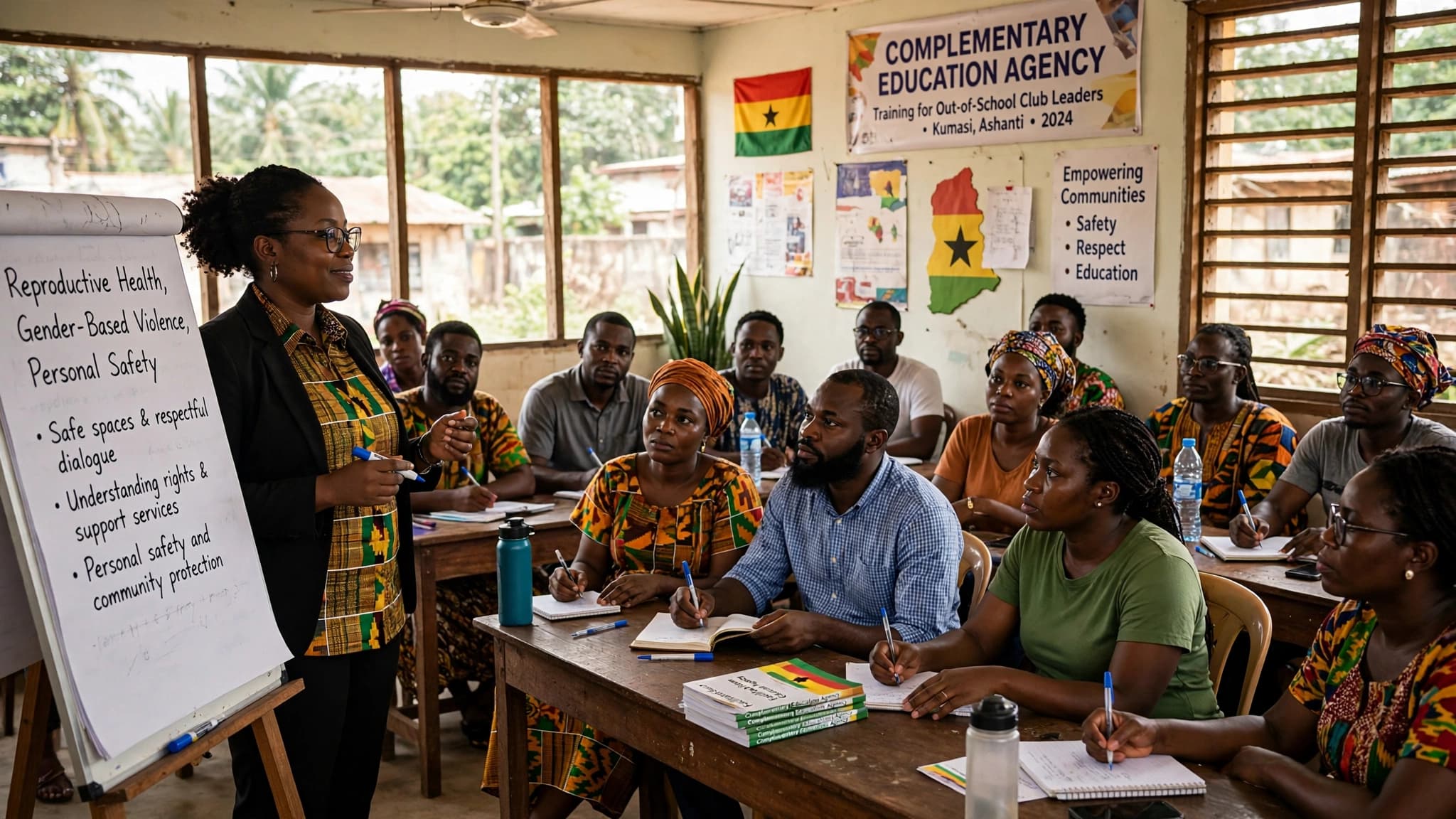
Kumasi, October 23, 2026: The Ashanti Regional Division of the Complementary Education Agency, with support from the United Nations Population Fund (UNFPA), is training 28 out-of-school club leaders to strengthen their capacity to guide, educate and protect adolescents.
The two-day reproductive health education programme is equipping participants with knowledge of reproductive health, peer pressure, relationships, gender-based violence, harmful practices and personal safety.
Deborah Abla Dzorgbenyui Boakye, Ashanti Regional Director of the Complementary Education Agency, said many adolescents faced challenges that required reliable information, guidance and support to make informed decisions.
Speaking at the opening of the programme in Kumasi, she noted that young people were growing up in a world that offered opportunities but also exposed them to risks involving relationships, harmful practices and gender-based violence.
She said inadequate information and limited access to trusted adults could leave adolescents struggling to respond to difficult situations.
Fear and shame can prevent adolescents from reporting abuse
Boakye observed that some young people were afraid to ask questions, while others relied on peers or the internet for information. Some adolescents who experienced abuse remained silent because they did not know where to seek help or feared bringing shame upon themselves or their families.
She said comprehensive education and accessible support systems were necessary to help young people make responsible decisions and seek assistance when they encountered abuse or other difficulties.
The programme recognises that education must extend beyond literacy and numeracy to include practical life skills and the confidence to navigate everyday challenges.
Boakye stressed that every young person, whether in school or out of school, deserved opportunities to learn, develop and make informed decisions about their lives.
Club leaders urged to become trusted sources of support
The regional director urged participants to see themselves as mentors, trusted guides and community educators who could connect adolescents to appropriate support services.
She encouraged them to apply the knowledge gained during the training to promote positive behavioural change, prevent harmful decisions and help victims of abuse access the assistance they need.
Vera Dasmani, a representative of the Complementary Education Agency from Accra, also emphasised the importance of assertiveness among adolescents.
She said young people needed the confidence to speak up about challenges affecting them and to make sound decisions.
The training therefore places club leaders in a position to help bridge the gap between adolescents and the support available within their communities.
Traditional leaders urged to support adolescent protection
Torgbi Professor Agboka, Nifahene of the Council of Ewe Chiefs in the Ashanti, Bono East and Ahafo regions, called for traditional authorities to take an active role in protecting young people.
He said safeguarding adolescents should not be left solely to educational and health institutions but should involve families, communities and traditional leaders.
Torgbi Agboka encouraged the participants to remain resilient and courageous in helping young people make positive decisions throughout their lives.
The programme highlights the importance of community-based education and trusted support networks in protecting adolescents, particularly those outside the formal school system.