Accra, Ghana, September 17, 2026: A weekly scroll of “soft life” and submissive-wife content is teaching a new generation of girls the same lesson their grandmothers were taught by hand; shrink, smile, and wait to be chosen.
Open any social platform tonight and an algorithm will happily coach you on how to be more feminine, how to speak so a man never feels challenged, how agreeableness is a woman's greatest currency. It looks like harmless lifestyle content, wrapped in soft lighting and gentle music.
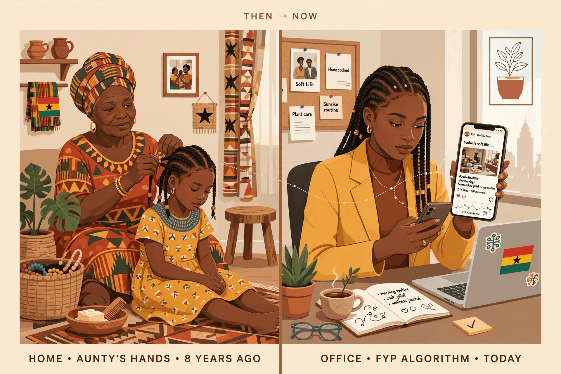
It is not new advice. It is old conditioning rebranded. What used to arrive through an aunty's hands while she plaited your hair now arrives through an FYP, and it reaches more girls, faster, and with far better production values.
We are, quietly and at scale, training a generation of girls to trade voice for approval. And a girl who learns that lesson well enough may hesitate before she ever pulls a chair up to a table that decides anything.
Long before any algorithm got involved, the shrinking began with sentences most Ghanaian women can recite without thinking. Sit down properly. Don't talk too much. Be grateful. A woman who argues too freely will chase a good man away.
None of it was said with cruelty. It was said as preparation, a survival manual handed down by women who had learned, often at real cost, that a smaller woman was a safer woman in the rooms she had to sit in. The intention was protective. The effect was a lifetime of editing yourself before you speak.
What has changed is scale and speed. Academic research on TikTok's tradwife content describes accounts that present submission and self-erasure as an aesthetic and even a spiritual calling, dressed in linen and candlelit kitchens rather than delivered as a warning from an elder.
The vocabulary changed. The instruction did not. “Be a good girl” became “be feminine, soft, agreeable, desirable.” The voice moved from an aunty's hands to an algorithm's autoplay, and the lesson survived every rebrand; don't take up too much space.
In 2003, business students at Columbia were given a case study about a real Silicon Valley venture capitalist. Half read her real name, Heidi. The other half read the identical case with the name changed to Howard. Both groups rated the two as equally competent, but students consistently found Howard more likeable, hireable and easier to work with than Heidi, even though nothing about the person had changed but the name.
That gap between competence and likeability is not a flaw women need to fix. It is a bias built into how assertiveness gets read differently depending on who is doing the asserting, and it is why so many capable women learn to soften a good idea before they say it out loud.
The same early lesson, that a girl's first duty is to serve the household, resurfaces later as a plain time deficit. A recent study using Ghana's national time-use data found women carrying roughly 80 percent of the country's unpaid care work, with marriage widening that gap further, while men's share barely moves.
Put plainly, a Ghanaian woman can be raising children, running a home and holding down a job, all before she reaches the hours she might have spent building the profile, the network or the pitch that gets her promoted. The boy in the same household, taught that cooking is a favour rather than a duty, keeps those hours for free.
Time spent running a household is time not spent building the visibility that can help a woman get noticed for a board seat or a party nomination. Ghana's numbers show how large the representation gap remains. Women now hold roughly a quarter of board seats among the country's larger listed companies, up from a fifth a few years ago. It is real progress, and it still means three of every four seats belong to men.

Ghana's new affirmative action law sets a target of one-third women's representation in public appointments within two years, rising to half within a decade. Parliament sits outside that law, since its seats are won rather than appointed, and women hold just 41 of 276 seats, under 15 percent, a reminder of how far persuasion still has to travel where legislation can't reach. At the grassroots, where most Ghanaians first meet public office, just 4 percent of district assembly members elected in 2023 were women.
These are not numbers about ambition. They are numbers about who was taught, early and thoroughly, that leadership was somewhere she would be invited, not somewhere she could simply walk toward.
Ask an editor why a panel or a front page ended up all-male and the reflex answer is usually that no women were available. Research into so-called manels tells a fuller story; women decline invitations to speak, be quoted or be profiled more often than men do, and organisers keep returning to the same shortlist of names, a shortlist built from networks that were male to begin with. Each habit reinforces the other.
I hear a version of this constantly through Her Space. Women who have built extraordinary careers hesitate to be interviewed, worried it will read as boasting. A man with a fraction of the achievement calls the newsroom himself. That is not confidence versus modesty. It reflects a familiar pattern; one gender is more often taught to wait until it is spoken to, while the other is more often taught to walk in and start talking.
The cost compounds into exhaustion. McKinsey's long-running Women in the Workplace research keeps finding women reporting higher burnout than men, particularly at senior levels. Much of that load stays invisible; senior women are twice as likely as senior men to spend significant time on mentoring and inclusion work that sits outside their formal job, work most companies still don't recognise in a performance review or a pay rise.
This is the half of the headline that matters most, because shrinking is not undone by a single brave woman deciding to be loud. It is undone the way it was taught, through what the next generation watches us do.
Praise a girl for being brave, curious and stubborn as often as you praise her for being quiet and good. Ask her what she thinks before you ask her to agree. When a younger colleague hesitates to put her name forward for something she is qualified for, tell her plainly that the hesitation is inherited, not instinctive, and that she is allowed to unlearn it.
That is part of the work organisations such as the Network of Women in Broadcasting Ghana (NOWIB) exist to do, putting women in front of microphones and cameras until being seen stops feeling like an act of defiance and starts feeling ordinary.
Model the expansion yourself. Speak first in the meeting instead of last. Say the number you actually want instead of the modest one. Let a photograph of your own achievement sit on a page without apologising for it in the caption.
Unlearning the instinct to shrink is not a weekend project. It is lifelong work, undone one sentence, one meeting and one raised hand at a time.
The truest gift we can give the next generation of Ghanaian women is to let them watch us take up the space we have already earned, so they never think twice about taking up theirs.
So, ask yourself honestly; who taught you to shrink? And, more importantly, who are you teaching not to?
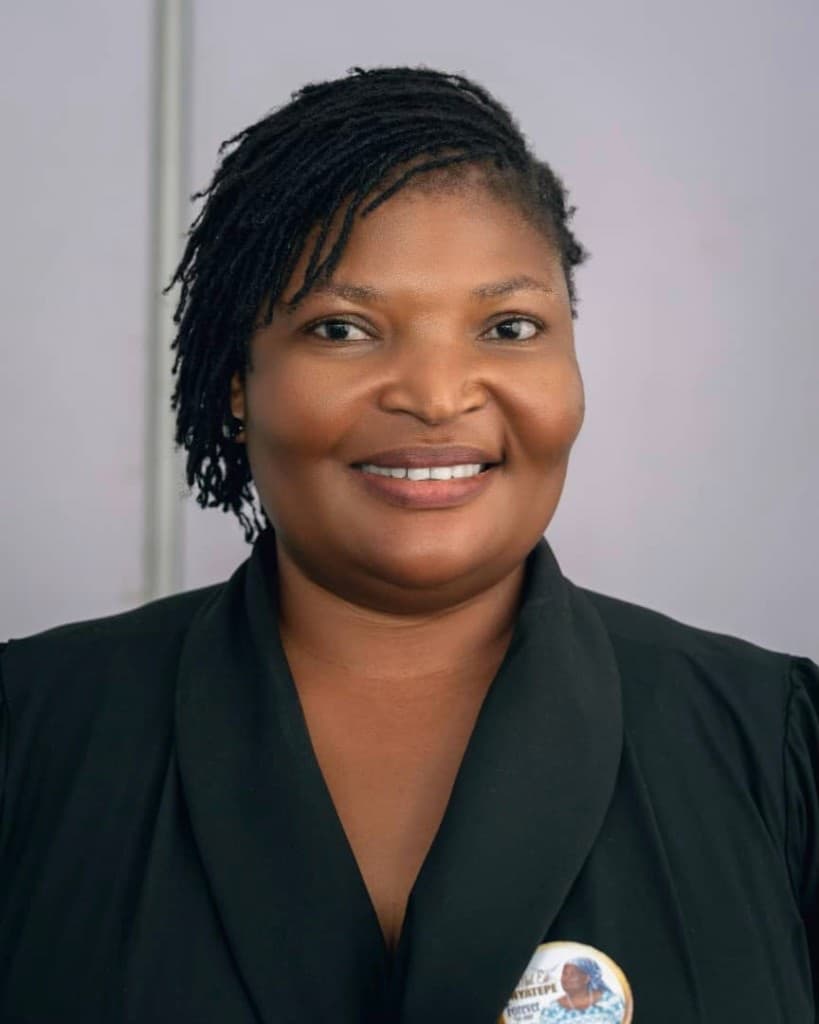
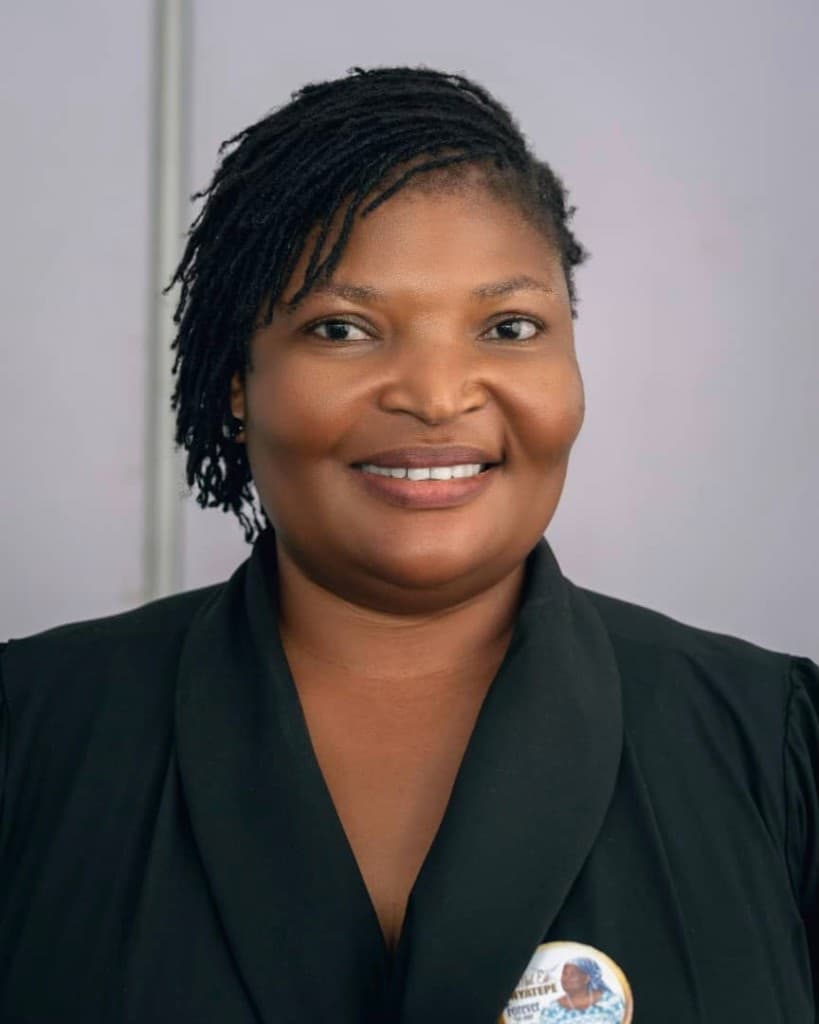
Bridget Mensah believes the right story, told well, can change everything. A communications strategist and gender equality advocate with 10+ years in Ghana’s media industry, she uses words as tools for accountability and amplification particularly for women. She leads communications for the Network of Women in Broadcasting (NOWIB), She is the Head of Corporate Affairs at Ghana Digital Centres Ltd (GDCL)