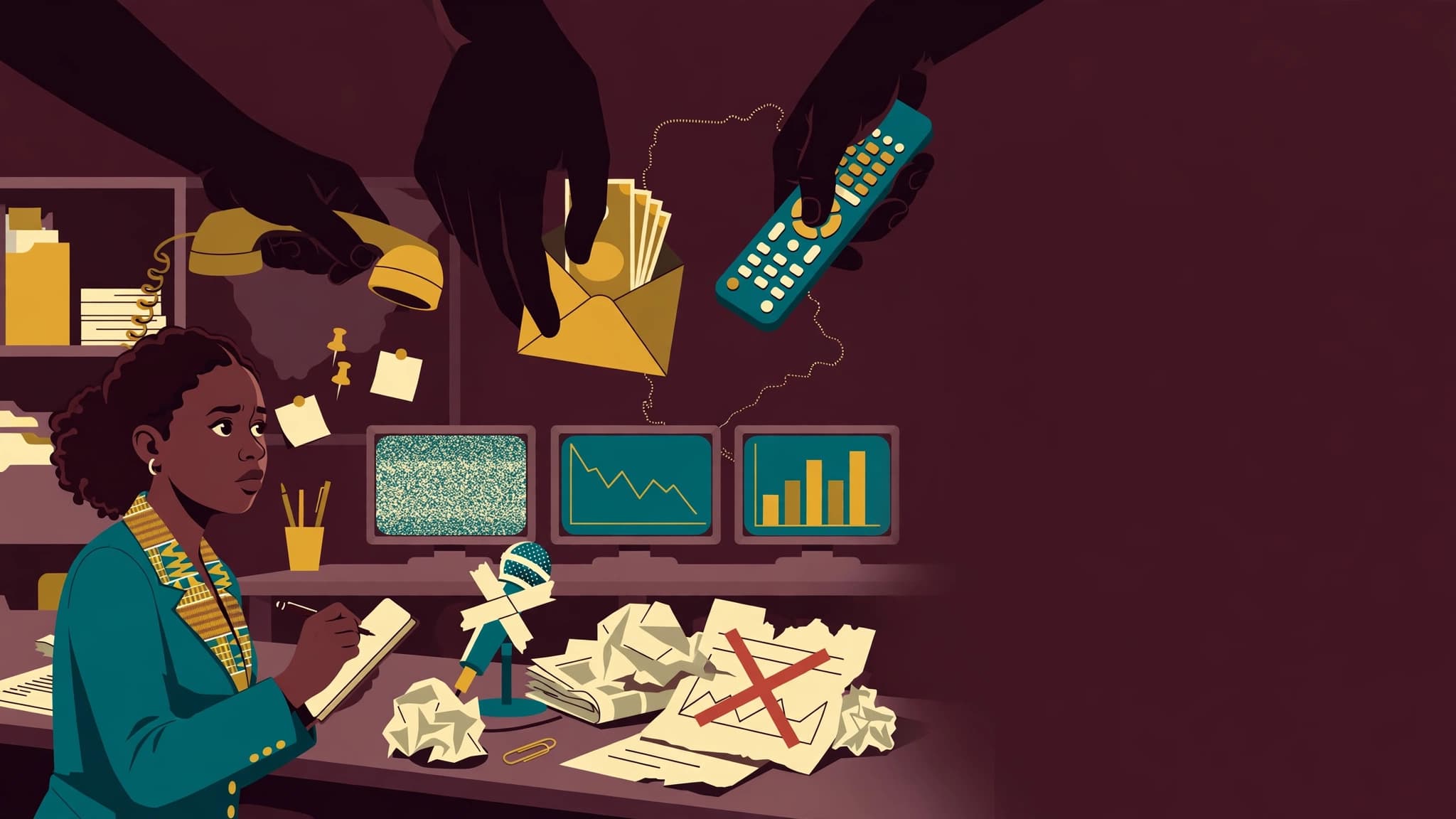
Accra, Ghana, November 05, 2026: A story can be investigated, verified, written and ready for publication. A journalist can have the documents, the sources and the facts. An editor can know that the public has a legitimate interest in the information. Yet the story may never reach an audience.
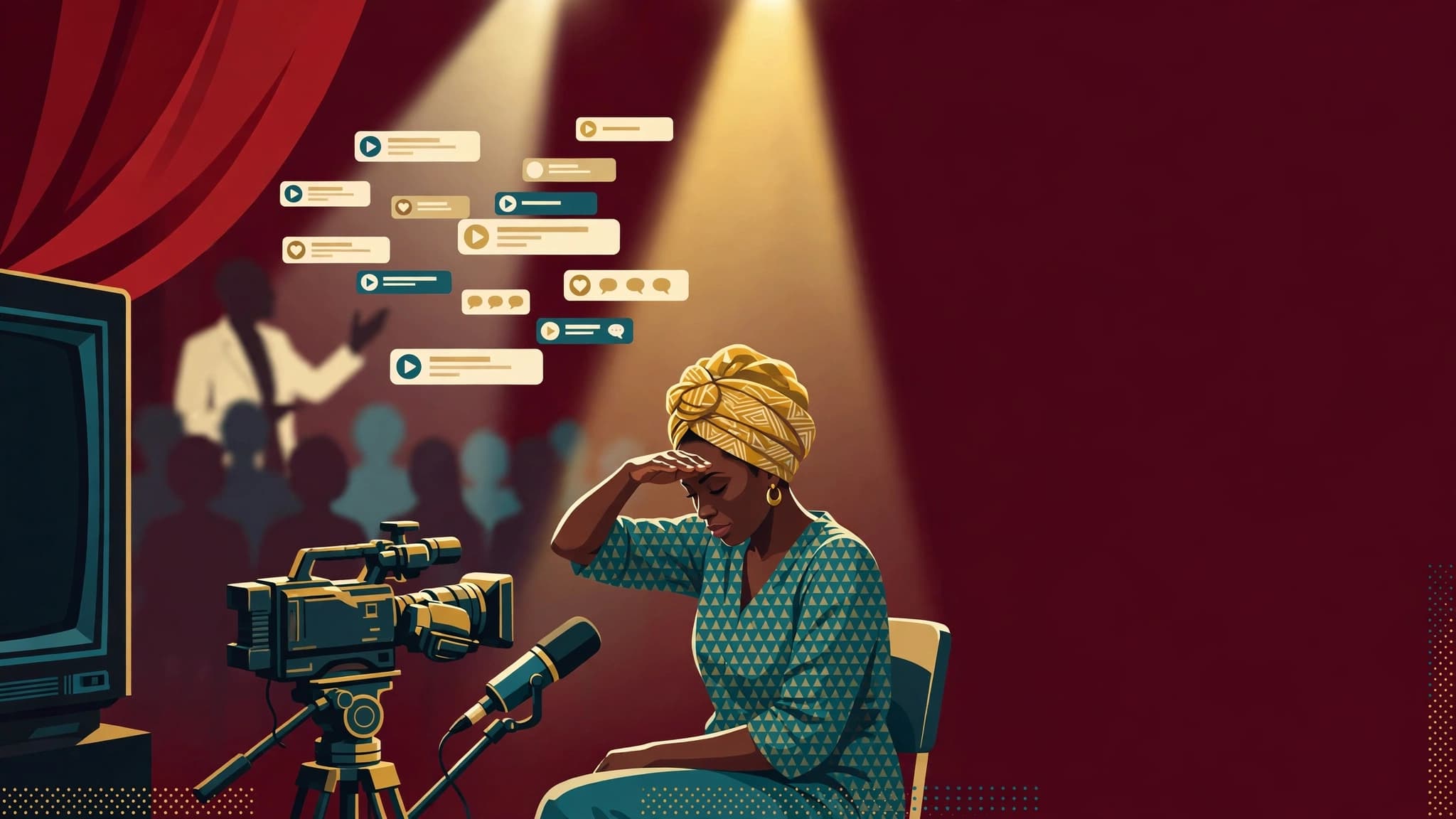
Sometimes, all it takes is a phone call.
The call may come from an advertiser who does not want a business exposed, a politician who does not want an uncomfortable question asked, a media owner protecting a personal or commercial interest, or a senior executive who has decided that a particular subject is too sensitive.
The instruction can be brief: drop the story.
The public may never know that the story existed. The journalist may never be permitted to explain why it disappeared. And the person or institution that stood to face scrutiny continues without the questions being asked.
This is one of the least visible threats to journalism in Ghana. It does not always involve an attack on a reporter, a court case or a public threat. Sometimes, the interference happens quietly, inside the newsroom, through people who have the authority or influence to determine what gets published.
The consequences reach beyond the journalist who has been told to stop. They affect the public's ability to know what is happening in the country.
Ghana has a vibrant and diverse media landscape. Radio, television, newspapers and digital platforms provide citizens with news, debate and entertainment. But a large number of outlets does not automatically mean that journalism is independent, ownership is transparent or editorial decisions are free from pressure.
The question is not simply whether Ghana has a free press. It is whether journalists can exercise that freedom when the interests of the people who own, finance and influence their organisations are at stake.
Why stories are killed in Ghana's newsrooms
The concern is not new. In October 2020, journalist Nana Ama Agyemang Asante examined the state of press freedom in Ghana in an article for the Reuters Institute for the Study of Journalism at the University of Oxford.
Her account described media owners silencing journalists considered too critical, killing stories and excluding certain subjects from their platforms. It also discussed pressure on editors to change headlines and narratives, overlook damaging stories and concentrate on sensational coverage of political opponents.
The article raised an uncomfortable possibility: journalists and editors could become participants in a culture of keeping damaging information from the public.
This is important because editorial interference does not always arrive as a written instruction. It can come through a phone call, a private meeting, a warning from management or an instruction passed through an editor.
There is also a distinction between legitimate editorial judgement and interference. A story may be stopped because it is inaccurate, defamatory, inadequately verified or legally unsafe. Editors have a responsibility to make those decisions.
But when a verified, public-interest story is stopped because it threatens an advertiser, media owner, executive or political interest, the decision is no longer simply about editorial standards. It raises a question about whose interests the newsroom serves.
The consequences can extend beyond the stories that are directly suppressed.
A journalist who has watched a verified investigation disappear because it threatens an influential person may think twice before pursuing the next one. An editor who has been reprimanded for publishing an uncomfortable story may begin to anticipate management's objections. A reporter who depends on a monthly salary may decide that challenging the wrong person is a risk they cannot afford.
Eventually, the instruction may not need to be given.
Self-censorship: when journalists stop asking questions
Self-censorship is the decision to withhold, soften or abandon a story because of the consequences a journalist expects if it is pursued.
It can happen when a reporter avoids investigating a company that advertises with the station, decides not to pursue allegations involving a politically connected individual or drops a subject because management has previously made its position clear.
It can also influence the questions journalists ask on air, the guests they invite and the stories they choose to follow.
The difficulty is that self-censorship leaves little evidence. There may be no email, written directive or public record. Some stories are never pitched. Some investigations are abandoned before they begin. Some questions are never asked.
A newsroom can therefore appear busy, outspoken and politically engaged while avoiding subjects that threaten its most influential relationships.
This matters because journalism is not measured only by the stories that make headlines. It must also be judged by the questions journalists are free to ask and the subjects they are able to investigate.
A press can remain noisy and partisan while becoming less willing to investigate the powerful.
Who owns Ghana's media? The politics of media ownership
Editorial independence cannot be separated from media ownership.
The Media Ownership Monitor Ghana found that four major owners accounted for 77.4 per cent of television audience share. Its weighted analysis across television, radio and print placed the reach of the four largest owners at 86.7 per cent of the audience.
These are historical findings, not current audience measurements. The monitor's research also identified gaps in publicly available ownership information, making it difficult to establish the legal and beneficial ownership of some media operations.
Its findings identified political connections among shareholders of several media organisations. For example, it listed Frederick Blay as a majority shareholder of Western Publications, publisher of the Daily Guide and News One. It also identified former Finance Minister Kwabena Duffour as a shareholder of the Excellence in Broadcasting Group.
These relationships do not prove that an owner has instructed a journalist to alter a story or that a particular publication has abandoned its editorial responsibilities. Ownership is not proof of interference.
But political and commercial connections are relevant to a discussion about transparency, potential conflicts of interest and the safeguards that protect editorial decisions.
Who owns a media organisation? Who are its beneficial owners? What other businesses do they have? What political interests or public positions do they hold? And what happens when a newsroom needs to investigate a person or institution connected to those interests?
The public should not have to guess.
Ownership information should not be treated as a private curiosity. It is part of what citizens need to assess the independence of the news they consume.
How advertising can threaten editorial independence
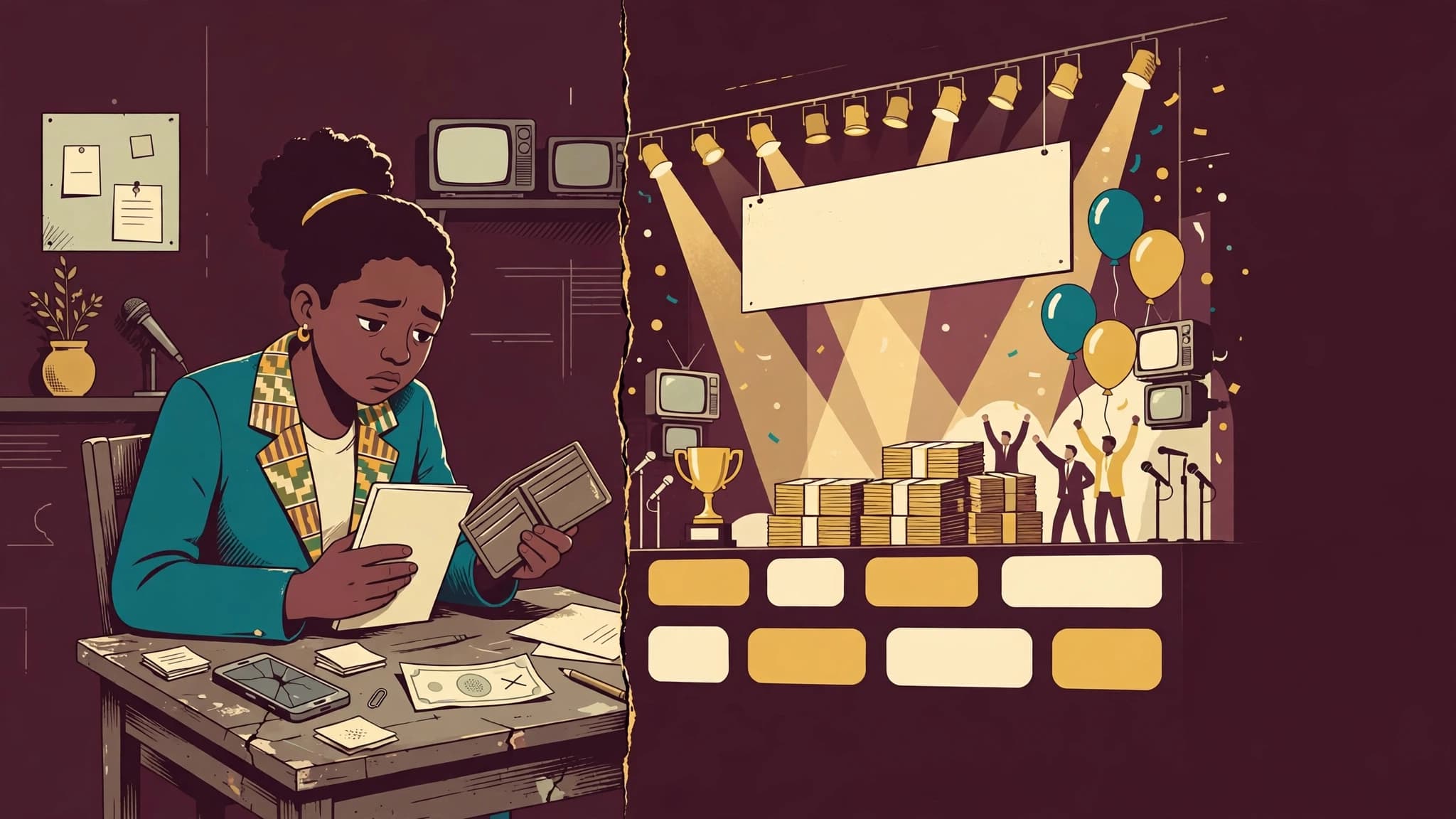
Media organisations need revenue. Journalists need salaries, equipment, transport, airtime and the resources to investigate stories. Advertising is a legitimate part of the business model. Sponsorships and commercial partnerships can help keep media platforms operating.
The difficulty begins when commercial relationships reach into editorial decisions.
The University of Ghana's Department of Communication Studies and the Media Foundation for West Africa examined this issue in the 2023 State of the Ghanaian Media Report.
Researchers analysed advertising content on morning programmes across 34 radio stations and 17 television stations. They coded 1,371 commercial and advertising items. Commercial businesses accounted for 96.9 per cent of the television advertising sampled and 93 per cent of radio advertising.
The pharmaceutical sector accounted for 30.4 per cent of television advertising and 27.4 per cent of radio advertising. Herbal medicines alone represented 23.9 per cent of the television advertising and 22 per cent of radio advertising recorded in the study.
The report also found that live presenter mentions accounted for about a quarter of the advertising formats recorded.
These findings do not establish that advertisers dictated news coverage. They do, however, show the importance of commercial relationships to the media platforms examined and raise questions about how audiences distinguish paid promotion from independent editorial content.
What happens when a company that buys substantial advertising from a station becomes the subject of an investigation by that same station? Can the newsroom pursue the story without interference? Is there a written separation between the advertising department and editorial decision-making? Can an editor reject a commercial client's demand without fearing financial consequences?
A company has every right to complain about inaccurate reporting and seek a correction. It does not have a right to determine whether a newsroom investigates it.
An advertiser can withdraw its business, but the public should not have to pay for that decision through the disappearance of legitimate journalism.
Political interference in Ghana's media goes beyond ownership
Political influence over the media does not require direct ownership of a station.
It can operate through relationships with proprietors, access to senior executives, party connections, government advertising, threats, intimidation and expectations of favourable coverage.
A politician who dislikes a story can contact an owner. A party operative can approach a presenter. A government official can threaten to withdraw access. A political figure can use a public platform to attack a journalist or discredit a media organisation.
Some pressure is visible. Much of it is not.
The danger is that political influence can shape coverage long before a story is published. It can affect which allegations receive sustained attention, which investigations are pursued, which voices are invited to comment and which questions are repeatedly avoided.
The public is then offered a version of political accountability that is selective. One party's scandals become headline news while the other party's uncomfortable questions are treated as distractions. A broadcaster may be outspoken in its criticism of one government and cautious when dealing with people closer to its ownership or political interests.
Inviting representatives of two political parties to argue on air is not, by itself, balanced journalism. Journalism requires verification, context, evidence and a willingness to scrutinise all sides.
When political competition becomes the organising principle of news coverage, the public interest can disappear beneath partisan performance.
What Ghanaians expect from the media
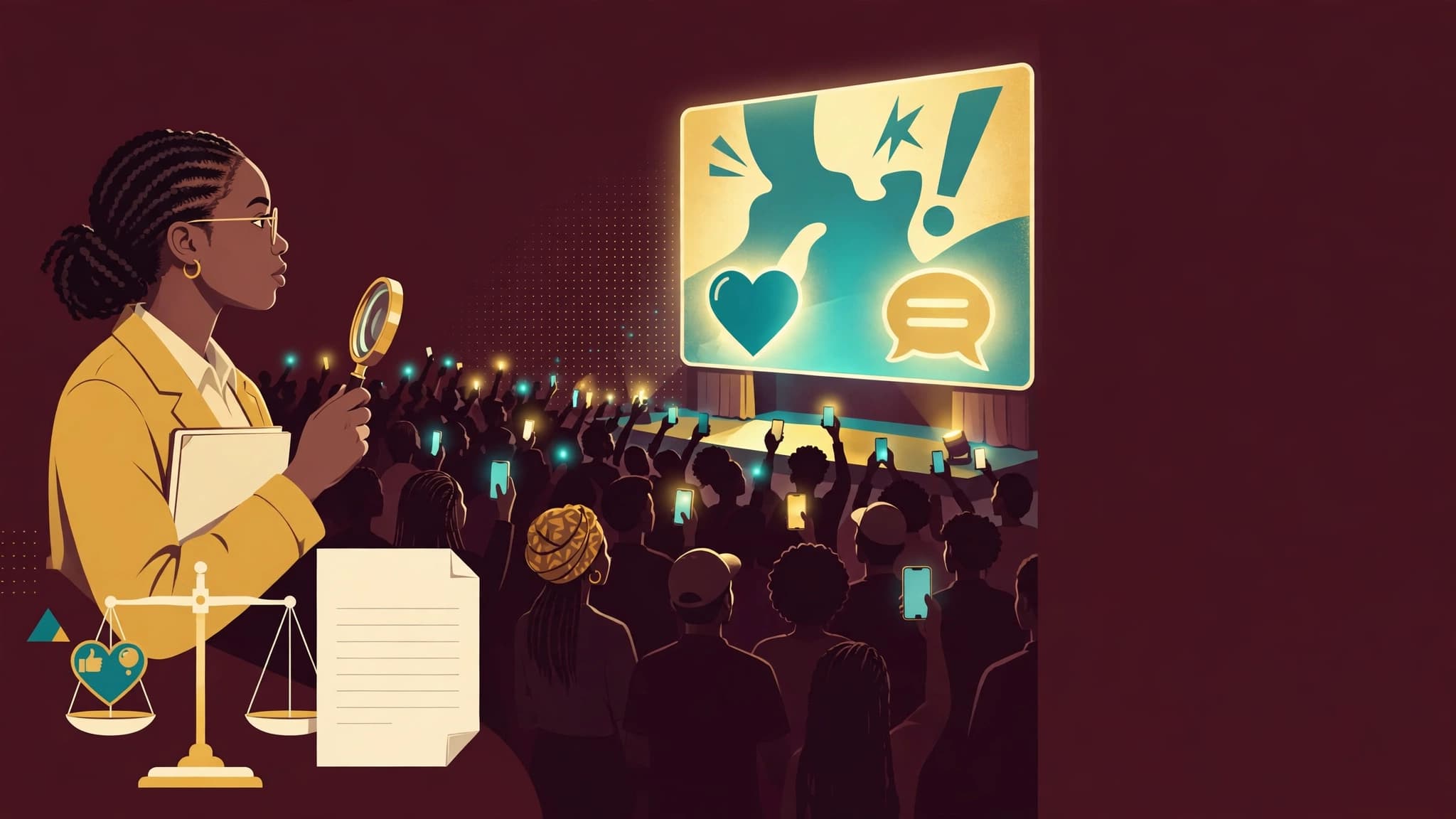
The public has a stake in this debate, and recent survey findings show that citizens still expect the media to perform its watchdog role.
An Afrobarometer survey released in May 2025 found that 82 per cent of Ghanaians wanted the media to constantly investigate and report government mistakes and corruption.
Yet only 41 per cent said they trusted news from privately owned media outlets somewhat or a lot. The same proportion expressed that level of trust in state-owned media.
The survey also found that 67 per cent considered the media somewhat or completely free, while 32 per cent considered it not very free or not free at all.
These findings point to a difficult relationship. Ghanaians want the media to scrutinise those in power, but confidence in the news they receive remains limited.
The public cannot demand accountability from politicians while overlooking the need for accountability within the institutions reporting on them. Media organisations must explain their ownership, disclose commercial relationships where appropriate, correct errors and protect editorial independence.
Audiences also have a responsibility to distinguish journalism from propaganda, paid promotion and sensational entertainment.
But the primary responsibility for editorial integrity rests with the media organisations and the people who control their newsrooms.
The journalist cannot be the only one expected to be brave
The 2023 State of the Ghanaian Media Report also examined the working conditions of journalists. Its findings on financial viability and employment conditions describe an industry dealing with poor remuneration, weak welfare provisions and job insecurity.
These conditions matter.
A journalist who has little job security and is struggling to meet basic needs may have limited power to resist pressure from an employer. That does not excuse unethical conduct, but it helps explain why editorial independence cannot be separated from the economic conditions in which journalists work.
A newsroom cannot be expected to hold powerful people accountable if the journalist doing the reporting has no meaningful protection when those people object.
Media owners and managers must establish clear safeguards between commercial and editorial operations. Editors should be able to explain why a story was stopped, and journalists should have a safe way to raise concerns about interference. Media organisations should also make their ownership and commercial interests more transparent.
Professional bodies and regulators have a role in strengthening accountability, but they cannot replace the responsibility of media owners and newsroom leaders to protect editorial independence.
Ghana's media freedom should not be measured only by the number of stations broadcasting or the number of political arguments taking place on television. It must also be measured by the stories journalists are free to investigate, the questions they are allowed to ask and the protection they receive when those questions upset powerful people.
A story that is killed before publication leaves no headline for the audience to challenge. A journalist who self-censors leaves no public record of the question they chose not to ask.
But the silence is not neutral. It protects someone. And it deprives the public of something.
The Fourth Estate is supposed to hold power accountable. When power can decide what the Fourth Estate is allowed to report, who is left to hold power accountable?
This is the first part of Gender Lens Africa's series, The Fourth Estate on Sale? examining media ownership, commercial influence, political pressure, newsroom conditions and the public's right to independent journalism.