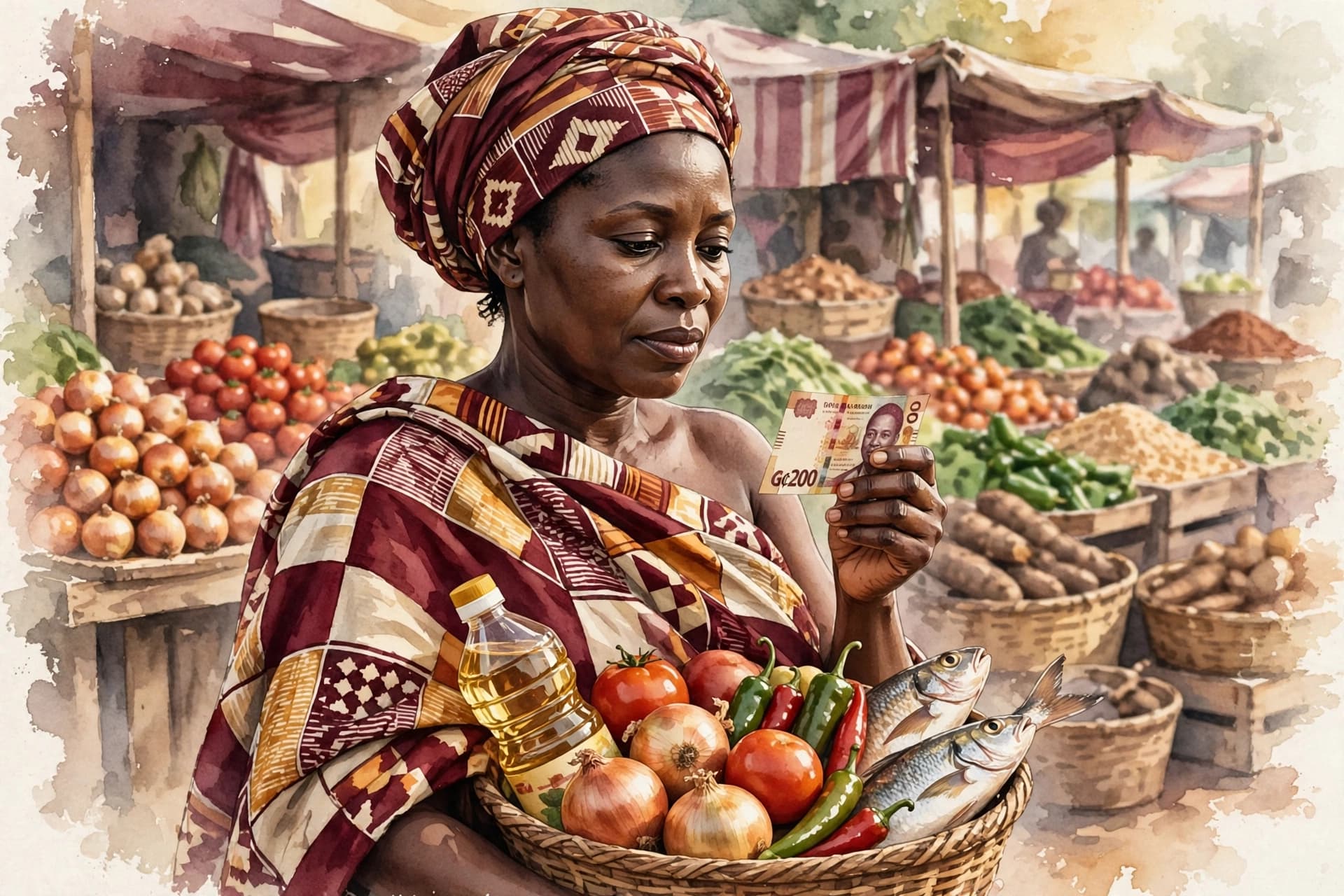
Accra, Ghana, November 14, 2026: Imagine you earn GH¢5,000 a month. Before the month begins, you sit down to work out how much you expect to spend on food, transport, rent, electricity, school fees and other household expenses. You also consider how much money you expect to receive.
You may decide to set aside some money for emergencies, pay off a loan, save towards a particular goal or postpone a purchase because you cannot afford everything at once.
Now imagine having to do that for an entire country.
That, in simple terms, is what a national budget helps a government do.
Every year, government presents a document setting out how much money it expects to collect, how much it plans to spend and the priorities it intends to fund. The document is filled with figures and economic terms that can make it difficult to follow if you do not work in finance.
You hear about revenue, expenditure, deficits, borrowing, public debt, allocations and fiscal policy. Politicians announce billions for roads, schools, hospitals, businesses and new programmes.
But what do these terms mean? And when government announces that it has allocated money to a project, does that mean the project will definitely happen?
Welcome to Gender Lens Africa’s Monster Word Explainer, where we break down the big economic and political words that have a very real impact on our everyday lives.
First, let us understand the word BUDGET.
What exactly is a national budget?
A national budget is the government's financial plan for a particular period, usually one financial year.
It sets out how much revenue government expects to raise, how much it plans to spend, where that money is expected to come from and what it intends to use the money for.
In Ghana, the financial year runs from 1 January to 31 December.
The national budget is therefore not simply a list of projects or a speech announcing government plans. It is a financial and policy document. It shows the government's priorities and how it intends to use public resources to pursue them.
For example, if government says it wants to improve healthcare, the budget should show the resources it plans to commit to the health sector. If it wants to build roads, support farmers or expand digital infrastructure, the budget should indicate how those priorities are to be financed.
But a budget is also based on estimates. Government does not know with absolute certainty how much revenue it will collect or what every expense will be during the year. Economic conditions can change, revenue can fall short of expectations and unexpected costs can arise.
That is why a budget is a plan, not a guarantee that every amount or promise will materialise exactly as announced.
Where does government get its money?
Before government can spend, it needs money.
The money government receives is called *revenue*. It comes from several sources, but taxes make up a significant part of Ghana's public revenue.
Some of the main sources include:
Taxes: These are compulsory payments collected by government. They include income tax paid by individuals and businesses, Value Added Tax (VAT) on many goods and services, import duties and other taxes.
Non-tax revenue: Government also earns money through fees, licences, charges, permits, fines and other services. Some public institutions generate income from the services they provide.
Oil and other natural resources: Ghana receives revenue from petroleum and other natural resource activities. These receipts can be affected by production levels and international commodity prices.
Grants: These are funds received from development partners and other sources that do not have to be repaid, usually for specified development purposes.
Borrowing: Government can borrow money when its revenue is not enough to meet its spending commitments or when it needs financing for particular investments. Borrowing provides money now, but it creates an obligation to repay the loan, usually with interest.
These sources are not interchangeable. Tax revenue is money collected from taxpayers. A grant is support that does not ordinarily have to be repaid. A loan is money that must be repaid.
This distinction matters because when government announces how much money it expects to raise, we need to know how much will come from taxes and other domestic sources, how much will come from grants and how much may depend on borrowing.
What does Ghana's 2027 Budget tell us?
The 2027 Budget Statement and Economic Policy was presented to Parliament by Finance Minister Dr Cassiel Ato Forson on 12 November 2026.
The full budget statement projects total revenue and grants of GH¢323.1 billion for 2027. Of this, non-oil tax revenue is projected at GH¢255.8 billion, while non-tax revenue is estimated at GH¢33.5 billion. Oil and gas receipts are projected at GH¢15.5 billion, with grants from development partners estimated at GH¢3.2 billion.
These are projections. They represent what government expects to collect, not money that has already been collected.
The difference between a revenue target and actual revenue is important. If government expects to collect GH¢323 billion but collects less, it may have to adjust spending, find additional financing or borrow more.
You can read the 2027 Budget Statement and Economic Policy on the Ministry of Finance website.
Where does the money go?
Government spending is called expenditure.
It covers the cost of running the country and providing public services. This includes paying public sector workers, operating schools and hospitals, maintaining roads, providing security, supporting social programmes and investing in infrastructure.
Some spending goes towards everyday operations. Some is used to build or acquire assets. Some is transferred to other public institutions and statutory funds. Government also has to pay interest on money it has borrowed.
The 2027 Budget, for example, provides for GH¢104.1 billion in compensation for public employees, including wages, salaries and social contributions. It also projects GH¢61 billion in interest payments on domestic and external obligations.
Capital expenditure, which is spending on assets and infrastructure, is projected at GH¢98.4 billion in the full budget statement.
These figures help us understand the different demands on public money.
A government cannot treat every cedi as money available for a new project. It must also meet existing obligations, keep public institutions operating and pay the cost of borrowing.
This is why looking only at the amount announced for a new programme does not tell us the full story of the budget.
What is a budget deficit?
Here is another term that appears regularly in budget speeches and economic reports: budget deficit.
A budget deficit occurs when government plans to spend more than it expects to collect in revenue over a given period.
Let us return to the household example.
Imagine your monthly income is GH¢5,000, but your planned expenses amount to GH¢6,000. You have a shortfall of GH¢1,000.
You must find a way to cover that difference. You might use savings, borrow money or reduce some expenses.
Government faces a similar financing question, although the scale and options are very different.
When its planned spending exceeds its expected revenue, the difference is called the deficit. Government may finance that gap through borrowing and other financing arrangements.
A deficit is not automatically evidence of poor management. Governments sometimes borrow to invest in infrastructure, respond to emergencies or support the economy during difficult periods. The important questions are how much is borrowed, what the money is used for, whether the investment produces lasting benefits and whether the debt can be repaid.
A persistent or very large deficit can create pressure on public finances, particularly when borrowing costs are high.
Is a deficit the same as public debt?
No. They are related, but they are not the same thing.
A budget deficit is the shortfall between revenue and expenditure over a particular period.
Public debt is the amount government owes from borrowing accumulated over time, subject to repayments and other debt adjustments.
Think of it this way: the deficit is what you fall short by this month. Your debt is the total amount you still owe from loans you have taken and not yet repaid.
A government can record a deficit in one year and borrow to finance it. That borrowing can add to public debt. But the total debt is shaped by more than one year's deficit because government also makes repayments, refinances obligations and may experience changes in the value of foreign-currency debt.
This is why the two figures should not be used as if they mean the same thing.
What is a primary surplus?
You may also hear government or economists refer to a primary surplus.
This is the amount by which government revenue exceeds its expenditure when interest payments on public debt are excluded.
Why exclude interest?
Because interest is the cost of servicing debt accumulated from previous borrowing. Looking at the primary balance helps economists assess whether government is collecting enough revenue to cover its spending before accounting for those interest costs.
For example, if government collects GH¢100 billion and spends GH¢90 billion on everything other than interest, it has a primary surplus of GH¢10 billion.
But if it then has to pay GH¢15 billion in interest, its overall budget position would still be in deficit.
A primary surplus therefore does not automatically mean government has more money than it needs or that it has stopped borrowing. It tells us something specific about revenue and spending before interest payments.
The 2027 Budget projects a primary surplus of 0.5 per cent of Gross Domestic Product on a commitment basis. That is one of the indicators used to assess the government's fiscal position.
What does it mean when government allocates money to a project?
This is one of the most important things citizens need to understand when reading a budget.
An allocation is not the same as delivery.
When government announces that it has allocated money to a programme, it means that an amount has been provided for that purpose in its spending plan.
It does not mean the money has already been paid out, that the project has started or that the intended beneficiaries have received anything.
There are several stages between a budget announcement and the delivery of a public service.
1. Announcement: Government announces a policy, programme or project it intends to undertake.
2. Allocation: An amount is provided for it in the budget.
3. Parliamentary approval: Parliament considers the budget and approves the necessary spending authority through the appropriation process.
4. Work planning: The responsible ministry, department or agency prepares plans for how the programme will be carried out.
5. Release of funds: The necessary funds are authorised and made available for spending.
6. Implementation:The institution uses the resources to carry out the programme or project.
7. Delivery and results: The intended service, facility or benefit reaches people, and its results can be assessed.
These stages matter.
Imagine government announces that GH¢500 million will support women-owned businesses.
That announcement does not mean GH¢500 million has been paid into the accounts of women entrepreneurs. The programme must be approved, designed and implemented. The responsible institution must explain who qualifies, how applications will be assessed, how funds will be distributed and how the results will be monitored.
Citizens should ask:
Has Parliament approved the allocation?
Which ministry or agency is responsible?
Have the funds been released?
What are the eligibility requirements?
How many people have actually received support?
How much has been disbursed?
What results can be demonstrated?
Ghana's Ministry of Finance's own Budget Operations Manual explains that implementation involves approved budgets, institutional work plans, cash management plans, the release of funds, financial controls, monitoring and reporting. It explicitly notes that budget implementation does not happen automatically.
There can also be delays or changes. Revenue may fall below projections. Government may face cash-flow constraints. Procurement may take longer than expected. A project may encounter technical difficulties or its costs may change.
An allocation is therefore an important starting point, but it is not proof of completion.
Who approves the national budget?
The national budget is not simply a document that the Finance Minister presents and government immediately starts spending from.
Under Ghana's constitutional and public financial management framework, the President causes the budget estimates to be presented to Parliament. Parliament considers the proposals, debates the priorities and examines the estimates before approving the necessary expenditure.
The 2027 Budget was presented to Parliament on 12 November 2026. At the time of writing, its presentation should not be confused with final parliamentary approval.
The approval process matters because Parliament's role is to scrutinise the government's proposals and authorise public spending. Members of Parliament can question ministers, examine allocations and debate whether the proposed spending reflects the country's needs.
Once the budget has been approved and the necessary appropriation law is in place, government institutions can implement the authorised spending, subject to the applicable financial rules and controls.
Citizens also have a role. A budget is public money, and people have a right to understand how it is raised, allocated and spent.
What is the difference between a budget allocation and actual spending?
An allocation tells us what government has planned or authorised for a particular purpose. Actual spending tells us how much was spent.
The two figures can be different.
For example, a ministry may receive an approved allocation of GH¢100 million for a programme but spend only GH¢70 million during the year. The remaining amount may not have been released, the programme may have been delayed, procurement may not have been completed or the institution may have faced other implementation challenges.
The opposite concern also matters. Government institutions must not spend public money beyond their authorised limits or use it for purposes that have not been properly approved.
This is why budget monitoring and reporting are important.
To understand whether a budget is being implemented, readers should look for budget performance reports, actual expenditure figures, procurement information, audit findings and evidence that the promised services or projects have been delivered.
The Ministry of Finance publishes budget documents and fiscal reports through its [official publications portal](https://www.mofep.gov.gh/). These documents help citizens compare what government planned with what it actually collected and spent.
What is the difference between a budget and a budget review?
A national budget is prepared for the coming financial year. But government does not simply set the figures in November or December and leave them untouched regardless of what happens.
Economic conditions can change. Revenue may be higher or lower than expected. Spending needs may increase. Government may need to adjust its plans.
A mid-year budget review allows government to assess how the budget is performing and present changes or updated projections where necessary.
For example, if revenue collection is below target, government may revise its spending plans. If unexpected costs arise, it may seek approval for additional expenditure through the appropriate parliamentary process.
A budget review is therefore not necessarily evidence that the original budget has failed. It is a way of assessing performance and responding to changing circumstances. But it should also invite questions about why the original estimates changed and what the changes mean for public services.
What is gender-responsive budgeting?
A national budget affects different groups of people in different ways. This is why looking at public spending through a gender lens is important.
Gender-responsive budgeting is an approach that examines how government revenue and spending decisions affect women, men, girls and boys.
It is not a separate budget exclusively for women. It asks whether the policies and allocations in the national budget recognise different needs, unequal opportunities and the barriers that different groups face.
Consider agriculture.
If government provides funding for agricultural inputs, extension services or irrigation, we should ask whether women farmers can access those resources. Are the application requirements realistic for small-scale farmers? Do women have access to land, credit, equipment and training? Are the services available in the communities where they work?
Consider transport.
If government invests in roads and public transport, the question is not only how many kilometres of road will be built. It is also whether the investment improves access to markets, schools, hospitals and workplaces, including for people who depend on public transport.
Consider healthcare.
If the health budget increases, we should ask whether the additional resources will improve access to maternal healthcare, reproductive health services, emergency care and other essential services.
The same questions apply to education, technology, social protection, employment and business support.
A budget can announce substantial spending without automatically reducing inequality. We must examine who can access the programmes, how the money is spent and whether the outcomes improve people's lives.
Ghana's Ministry of Finance Budget Operations Manual recognises gender budgeting as part of the country's public financial management approach. It explains that gender considerations should inform revenue, spending and budget-related policies, and that outcomes should be monitored rather than judged by allocations alone.
So, how should we read Ghana's 2027 Budget?
Now that we understand the basic terms, we can look at the 2027 Budget with better questions.
When government announces GH¢30 billion for the New Economy programme, we should ask what the money will finance, how it will be distributed across the programme's priorities, which institutions will implement it and what measurable results are expected.
When government projects GH¢323.1 billion in revenue and grants, we should ask how realistic those projections are and what happens if the money collected is lower than expected.
When the budget provides for GH¢61 billion in interest payments, we should understand that this is money required to service existing debt, not money available for new schools, hospitals or roads.
When government announces a major allocation for education or health, we should look beyond the headline amount. How much is intended for specific programmes? How much will be released? What services will improve? Who will benefit?
And when government says it has delivered a project, we should look for evidence of the work completed and the people reached.
The budget is one of the most important public documents a citizen can read. It tells us what government says it intends to do with the money collected from taxpayers, businesses and the country's resources.
But the real test comes after the announcements.
A budget should be judged not only by the size of its allocations, but by the quality of its priorities, the realism of its revenue projections, the transparency of its spending and the results it delivers.
Understanding a national budget should not require an economics degree. It requires knowing what the figures mean, asking the right questions and following the money.
A budget is a plan. An allocation is not delivery. And public money must be accounted for.
*Sources and further reading*
- [Ghana Ministry of Finance: 2027 Budget Statement and Economic Policy](https://www.mofep.gov.gh/publications/budget-statements)
- [Ghana Ministry of Finance: Budget Operations Manual](https://mofep.gov.gh/sites/default/files/basic-page/Budget-Operations-Manual.pdf)
- [Ghana Ministry of Finance: 2027–2030 Budget Preparation Guidelines](https://mofep.gov.gh/news-and-events/2026-08-31/2027-2030-budget-preparation-guidelines)
- [1992 Constitution of Ghana](https://www.constituteproject.org/constitution/Ghana_1996)
- Public Financial Management Act, 2016 (Act 921).