Accra, October 27, 2026: Researchers at the Bank of Ghana (BoG) have proposed an artificial intelligence-powered system that could provide faster estimates of inflation, giving policymakers earlier insights into price movements before official statistics are released.
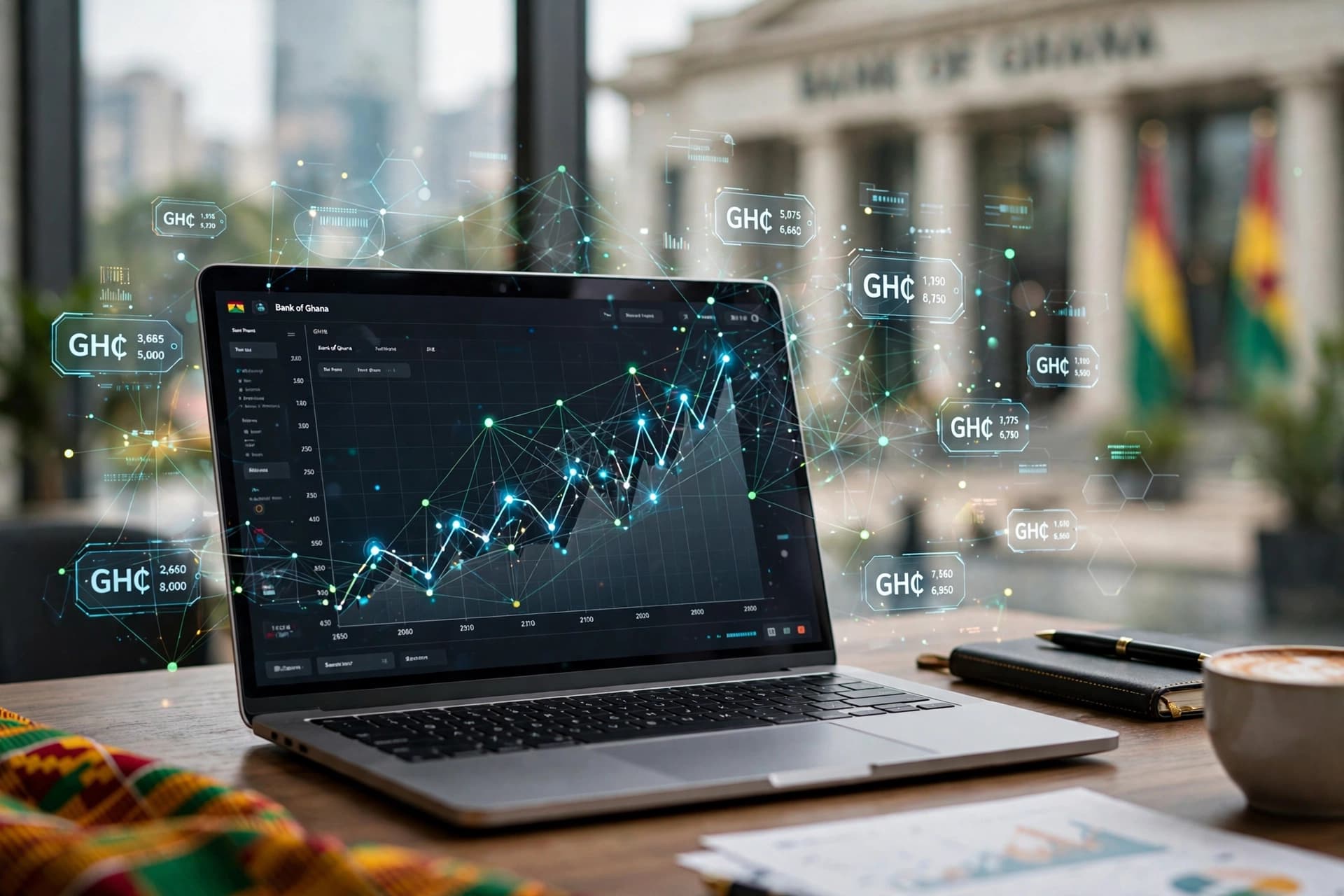
Known as e-Inflation, the framework uses big data, automated online price collection and machine-learning techniques to estimate changes in consumer prices, including headline, food and non-food inflation.
The proposal is outlined in a working paper titled Measuring Inflation in Ghana: Evidence From Big Data and Artificial Intelligence Techniques, published on the Bank of Ghana's website on October 23, 2026.
The researchers, Francis Mawuli Abude, Collins Kwesi Appiah and Julius B. Dasah, said the system could complement traditional inflation measurement methods by providing more frequent estimates to support monetary policy decisions and economic analysis.
AI tool analyses 500,000 price observations
The e-Inflation framework collects pricing information from 120 websites and analyses approximately 500,000 price observations covering the same 307-item consumer basket used by the Ghana Statistical Service (GSS).
The researchers compared its estimates with official inflation figures between May 2021 and December 2023, finding a strong correlation across headline, food and non-food inflation.
The correlation between e-Inflation estimates and official headline inflation was 0.9941. For food inflation, it was 0.9836, while non-food inflation recorded a correlation of 0.9944.
The study also reported average deviations of 0.3684 percentage points for headline inflation, 0.6909 percentage points for food inflation and 0.1375 percentage points for non-food inflation.
These findings suggest that the model closely tracked the direction and movements of official inflation figures during the period examined.
However, correlation measures how closely two sets of figures move together; it does not, by itself, establish that the model can replace the official measurement system.
Faster estimates could support monetary policy
Inflation data is a key consideration in monetary policy decisions, helping central banks assess price pressures and determine appropriate responses.
Under the conventional system, official inflation figures are published after the reference month has ended. Policymakers must therefore assess current economic conditions using available indicators and estimates while awaiting the official figures.
The researchers said e-Inflation could collect price data weekly and generate estimates as needed, potentially reducing the information gap facing policymakers.
They argued that the framework could help the central bank identify emerging price pressures sooner, strengthen market analysis and support more timely economic policy decisions.
The researchers also recommended that central banks and national statistical offices consider adopting big data and AI-based approaches to improve inflation monitoring.
Beyond inflation, they suggested exploring whether similar methods could be applied to other economic indicators, including gross domestic product and unemployment.
Online prices pose challenges
Despite the promising results, the researchers acknowledged that the reliability of e-Inflation depends on the quality and representativeness of the online data collected.
One key concern is whether prices advertised on websites accurately reflect those charged in physical shops and markets.
The study reported that a survey found online and offline prices in Ghana to be statistically identical, supporting the use of online data for estimating consumer price movements.
However, the researchers cautioned that outdated prices on websites and restrictions on automated data collection could affect the system's accuracy.
They stressed the need to ensure that digital price information remains current and representative of the goods and services purchased by Ghanaian consumers.
The study also compared the framework with conventional price collection, which it described as drawing on 47,877 price observations from 57 market centres.
These differences in data collection methods highlight the importance of validating the model against established statistical measures before it is adopted for wider policy use.
Researchers say framework should complement official statistics
The findings point to the potential of artificial intelligence and big data to improve the timeliness of economic information available to policymakers.
However, the proposed system remains a research framework, and its results do not establish that it has been formally adopted by the Bank of Ghana or approved as a replacement for the GSS's official inflation statistics.
The Bank of Ghana's publication notice states that working papers represent research in progress and the views of their authors, which do not necessarily reflect the views of the Bank, its Board or Management.
Further validation and assessment would therefore be necessary to determine how the tool could be incorporated into Ghana's existing inflation measurement and policy processes.
If successfully developed and integrated into the country's statistical systems, e-Inflation could provide an additional source of timely information to help policymakers and analysts monitor changing prices and assess emerging economic pressures.