Accra, Ghana, October 11, 2026:Women make up only 1 to 2 per cent of the people held in Ghana's prisons. Their numbers are small, so their needs rarely shape budgets, buildings or policy.
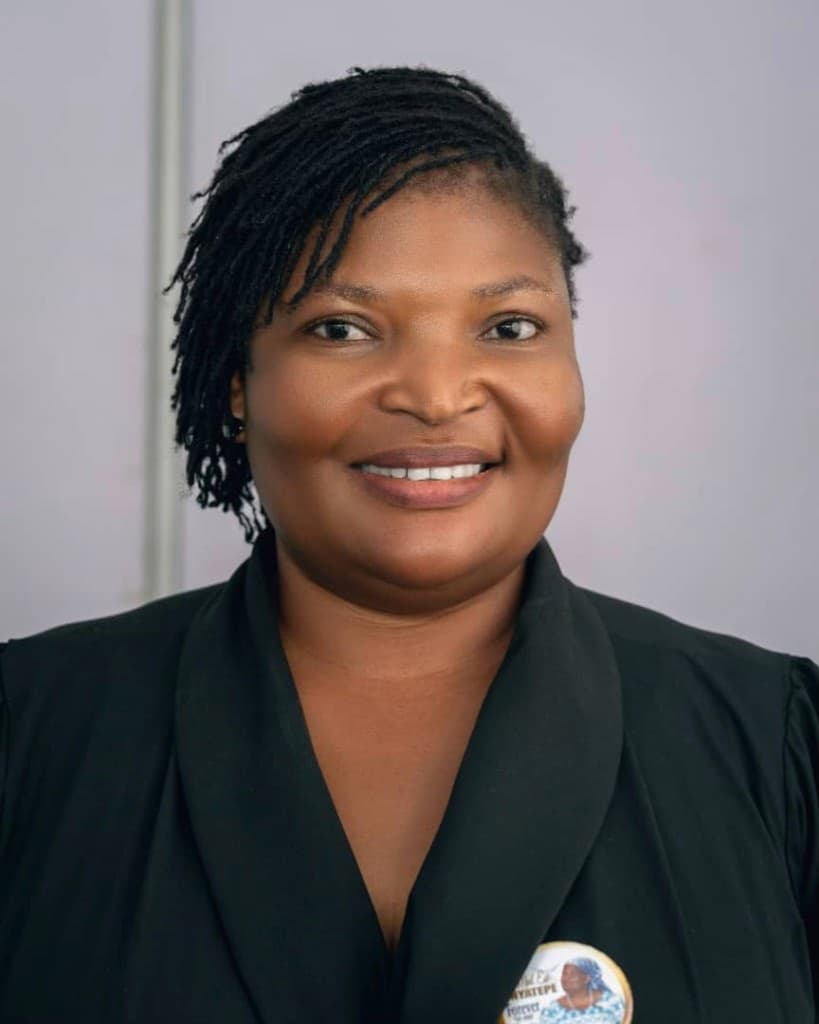
On Sunday, 4 October 2026, guests at the Mövenpick Ambassador Hotel in Accra were asked to change that. Dr. Abena Nyarkoa Asomaning, founder of the Angel-Zoe Foundation, launched three books and auctioned her original paintings to fund the Foundation's work with incarcerated women and young people. Gender Lens Africa attended the launch.
A launch with a cause
The event, titled “In Full Bloom: Art, Words & Legacy”, introduced Women's Leadership in Africa, The Shrewd You and Bloom (the links go to Amazon search results). His Royal Majesty Drolor Bosso Adamtey I, Se Mantse (Paramount King) of the Shai Traditional Area, chaired the programme. Broadcaster Frema Adunyame was master of ceremonies, and guests included representatives of the British High Commission, the French High Commission and the Bank of Ghana.
Dr. Mrs. Erika Mamley Osae reviewed Women's Leadership in Africa. “Leadership, like the elephant, looks different depending on where you are standing,” she told the audience. In her reading, the book looks at African leadership from where women stand and sets historical queens and warriors beside the women who lead in politics, business and communities today.
The keynote came from Mrs. Patience Baffoe-Bonnie (Esq.), Director-General of the Ghana Prisons Service. “Creativity and culture are important pillars of national development,” she said. She described the reintegration of former prisoners as part of the struggle for dignity and stronger communities, and she said it was “encouraging to see so many men supporting this cause.”
She ended with a plain request: “Please buy books. Kindly read them and share them.”
The reformer behind the Foundation
Dr. Asomaning set up the Angel-Zoe Foundation in 2007. It offers vocational training and support to women and juvenile prisoners and to ex-offenders, according to the Foundation's profile in the Business and Financial Times. She received the MTN Heroes of Change Award for Social Protection in 2014, and in 2018 Queen Elizabeth II named her the 62nd Commonwealth Point of Light.
At the launch, she traced her work to a needs assessment among juvenile offenders. It found long detention and limited legal support for children. That finding led her to start the Justice Civic Dialogues with the Judicial Training Institute, which brought justice institutions together to discuss their failures openly.
Years on a prison discharge board taught her something she kept returning to. “Freedom does not always feel like relief,” she said. “Sometimes, it's a rite of repair.”
The Foundation provides food, health care, skills training, counselling and employment. It also works to bring former prisoners back into families that have turned them away. It runs monthly master classes for young women, and workshops for prison officers, including female officers, on topics such as United Nations Security Council Resolution 1325. That resolution, adopted in 2000, calls for women's full participation in peace and security work.
She told one story about a young woman about to be discharged. The woman was afraid to leave. When Dr. Asomaning asked what she needed, the answer was a place to lay her head and a chance to work. The Foundation used its contacts to find her a job at a manufacturing company.
“There is so much goodness in there if you give them an opportunity,” Dr. Asomaning said. She added that some of the young people she meets in prison “didn't have to be in prison at all.” On the master classes, she said: “You do not have an idea of how desperate a woman or a young person can be when they are looking for money or they are unemployed.”
Why women in prison are easy to overlook
In a count the Ghana Prisons Service gave the Ghanaian Times in January 2024, 184 of 14,916 inmates were women. Among those women, 157 were convicted, 15 were on remand and 12 were on trial. The Service also lists six women on death row, one on a life sentence and 48 foreign women. Those are special categories that overlap with the first three, so they should not be added to them. Published summaries of Prisons Service data put women at about 2 per cent of the prison population.
The same January 2024 count showed the system holding 14,916 people in space authorised for 10,265, a congestion rate of 45.31 per cent. GLA did not find a newer national count in the sources it reviewed, so treat these as a snapshot from that date. Crowding strains every inmate. In a system built mainly around men, a small female population can slip down the priority list.
The global picture is not small. The sixth edition of the World Female Imprisonment List, published in February 2025, counts more than 733,000 women and girls in prison worldwide, or 6.8 per cent of all prisoners. Since 2000, the female prison population has grown by 57 per cent, against 22 per cent for men. Africa has the lowest rate, at about 3 women per 100,000 people.
A low rate is no reason to look away. In 2010, the United Nations adopted the Bangkok Rules, the first global standards for women prisoners. They push governments to use non-custodial alternatives, meaning punishments served outside prison, such as community service or supervised release. UN experts and Penal Reform International have linked the rise in women's imprisonment to punitive responses to low-level, non-violent offences that are often tied to poverty. They also warn that jailing women who pose no risk to society can make their return to it harder.
Dr. Asomaning's remark about desperation fits that finding. A woman pushed by hunger or joblessness into a petty offence can end up with a prison record, a lost income and a family that no longer wants her back.
What happens after the gate
Recidivism means going back to crime, and often back to prison, after release. The number depends on how it is counted. A 2015 University of Ghana PhD thesis by Alex Antwi cites a rate of about 24 per cent, taken from the Prisons Service's 2010 annual report and measured as re-incarceration: about 24 per cent of those imprisoned in 2010 were repeat offenders. The thesis warns that the figure likely understates reoffending, because it leaves out re-arrests by police and courts and because some repeat offenders enter different prisons as first-timers. It is not a current national rate. Earlier Prisons Service figures put the rate at 5.5 per cent in 2004 and 8.2 per cent in 2005.
The thesis itself is a qualitative study. Antwi interviewed recidivists, family members, service providers and prison evangelists at Nsawam Medium Security Prison. He found that many ex-prisoners get little support from the wider society because of the stigma of a prison record.
Other Ghanaian research points the same way. A study by Mavis Dako-Gyeke and Frank Baffour interviewed 20 adults and found stigma and discrimination in employment, housing and romantic relationships. A later thesis by Baffour, based on 53 participants, linked reincarceration to overcrowding and weak rehabilitation inside prisons, and to labelling outside them. Both are small qualitative studies. They show how reintegration fails, but they do not measure how often.
Dr. Asomaning described the same gap in plain terms. On the day of discharge, she said, the prison service releases people, but outside the gate many have no home, no work and no one waiting. “This is why structured reintegration should matter to us as a whole society,” she said.
GLA did not find published Ghanaian figures on reoffending or reintegration broken down by sex. That is a gap in its own right. Without those numbers, nobody can say whether women leaving prison fare better or worse than men, or which programmes work for them.
Children in the same system
Ghana's Juvenile Justice Act, 2003 (Act 653) treats anyone under 18 in conflict with the law as a juvenile and requires separate facilities for them. The old Borstal Institute in Accra was renamed the Senior Correctional Centre under that framework.
The most recent figures GLA found date from August 2018, more than eight years ago. The Centre for Democratic Development (CDD Ghana) reported that the Senior Correctional Centre, the only functional male juvenile reformatory, held 230 boys, while the Girls Correctional Centre had nine inmates. CDD called for senior correctional centres in every regional capital so that juveniles are not sent to adult prisons, and for resident doctors and clinical psychologists at the centres.
The numbers are small, but each one is a child. Dr. Asomaning's early findings on long detention and thin legal support describe what happens when a system has too few places built for them.
Women at the top, and what they can change
Mrs. Baffoe-Bonnie was appointed Director-General of Prisons in March 2025 and is the second woman to lead the Service. She joined in 1987 as a junior officer and has more than 37 years in the Service. Her stated approach leans on agriculture and creative arts as tools for reformation, which echoes Dr. Asomaning's case for creativity.
Women in senior public roles remain the exception. The Affirmative Action (Gender Equity) Act, 2024 (Act 1121) sets progressive targets for women in public appointments and decision-making positions: a minimum of 30 per cent from 2024 to 2026 and 35 per cent from 2027 to 2028, rising to 50 per cent from 2029. The Ministry of Gender, Children and Social Protection now gives 2034 as the date for reaching 50 per cent, and the Gender Minister repeated that in September 2026. Some earlier statements from advocates and ministers gave 2030. In February 2026, the Vice President said the President had directed public service agencies to reach at least 30 per cent women in leadership this year.
The 2025 Status of Women Report found Ghana already falling behind those early targets. It counted 41 of 276 Members of Parliament, or 14.9 per cent, and fewer than 20 per cent of substantive ministerial appointments. Parliamentary seats are won at the ballot box, so they depend on parties and voters rather than on the appointment targets.
A woman at the head of the Prisons Service does not, by herself, show that women's needs are being met. That depends on what the Service measures, funds and publishes, whoever holds the office. The measure to watch is action: data, budgets and programmes for women and girls in custody.
What would help
Four steps follow from the evidence. The Prisons Service and the Ministry of the Interior should publish admissions, reoffending and reintegration data split by sex and age. Ghana should put its new sentencing law to work. Parliament passed the Community Service Bill, 2026 on 8 July 2026, and President Mahama assented to it on 26 August 2026, according to the Ghanaian Times. The Act lets courts order unpaid public work instead of prison for specified offences. Advocates such as the POS Foundation have called for a legislative instrument, meaning the detailed rules that make a law work in practice. GLA did not find confirmation of whether one has been issued. The Ministry should report community service orders by sex so the public can see whether women benefit.
Pre-discharge preparation should become standard, a plan for housing, work and family contact before the release date, not after it. Fourth, employers should be asked to hire, as the manufacturing company in Dr. Asomaning's story did, and government should reward those that do.
Dr. Asomaning enters her 20th year of work with the prison service. She asked guests to keep supporting young people and incarcerated women. The books and paintings sold that evening will pay for part of that work. The larger bill belongs to a country that still treats the end of a sentence as the end of its responsibility.
Where to buy the books
The three books are avaible on Amazon