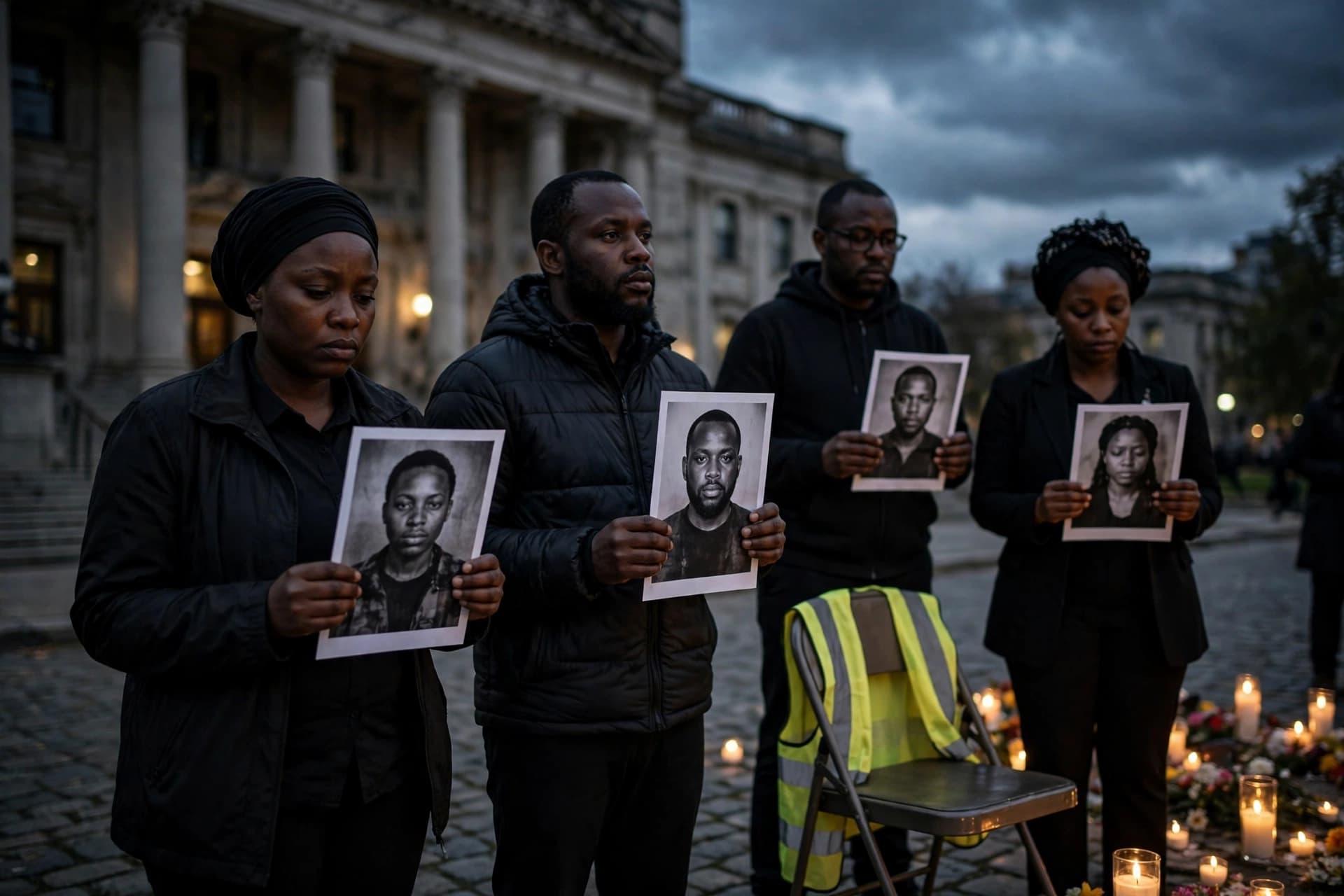
Accra, Ghana, November 3, 2026: Every 2 November, the United Nations asks the world to remember journalists killed for their work, and the killers who walked free. The International Day to End Impunity for Crimes against Journalists marks the 2013 murder of two French journalists in Mali. This year’s theme, “Threats evolve. Impunity endures”, could have been written for Africa.
What the 2026 UNESCO report says about Africa
The United Nations Educational, Scientific and Cultural Organization (UNESCO) released its 2026 safety of journalists report today. It records 189 journalists killed worldwide in 2024 and 2025, a 20 per cent rise, with 86 per cent of cases unresolved. Africa recorded six killings in that period, down from 14 in the previous two years.
That fall deserves to be said plainly. It still tells only part of the story. UNESCO’s observatory tracks killings that its Director-General has condemned. It does not count journalists who vanish, sit in secret detention or flee into exile.
Sudan shows the gap. The Committee to Protect Journalists (CPJ) has documented at least 15 journalists and media workers killed since the war began in April 2023. The Sudanese Journalists Syndicate counts at least 32 killed and more than 550 violations. Different counting rules produce different numbers. Neither number describes a safe profession.
The global trend is worse than the African headline suggests. Impunity for journalist killings has risen for the first time since 2012, and in conflict zones UN Secretary-General António Guterres puts it close to 100 per cent. Where governments investigate, however, the rate falls. In countries not at war it dropped from 94 per cent in 2012 to 77 per cent today.
In plain terms: impunity means the people who attack, abduct or kill a journalist face no consequence. No arrest, no trial, no verdict. It also covers states that never properly look. Each unpunished attack tells the next attacker that the risk is low.
Sudan, the Sahel and the Horn: press freedom in retreat
Reporters Without Borders ranks conditions as “difficult” in 24 of the 48 countries of sub-Saharan Africa and “very serious” in five, according to its 2026 World Press Freedom Index for the region. Armed conflict, military rule and the criminalisation of journalism drive the decline.
Sudan sits at 161st of 180 countries. CPJ says drones have killed at least five Sudanese journalists and that at least seven were missing by mid-April 2026. In El Fasher, fighters of the paramilitary Rapid Support Forces reportedly killed Taj al-Sir Ahmed Suleiman, the state news agency’s bureau chief, and his brother. South Sudan also slipped, from 109th to 118th.
In the Sahel, Niger recorded the steepest fall in the 2026 index, down 37 places to 120th. Mali ranks 121st and Burkina Faso 110th. Journalists in all three countries of the Alliance of Sahel States face detention for “spreading false information” and similar charges.
Burkina Faso offers the starkest case. Armed men took editor Atiana Serge Oulon from his home in Ouagadougou on 24 June 2024. The junta later said it had conscripted him. A Reporters Without Borders investigation in May 2026 found he had been secretly held and tortured, and Amnesty International, Human Rights Watch and others demanded his release in June.
In Eritrea, journalist Dawit Isaak was detained 25 years ago and never released. Time itself has become a weapon of impunity.
Trials that never finish, cases that never open
In Cameroon, radio host Martinez Zogo of Amplitude FM was found dead in Yaoundé in January 2023. His murder trial before the military court opened in March 2024 with 17 defendants. Witnesses have told the court that Zogo was under surveillance by the country’s foreign intelligence service. Hearings were still going on in late summer 2026. Nearly four years on, his family and colleagues still wait for a verdict.
In Tanzania, reporter Azory Gwanda disappeared in November 2017 after covering killings in Kibiti. A minister later said he had died, then the government said it had no confirmation either way. After 500 days of silence, journalists’ unions were still asking where he was. They are still asking.
Africa also holds the legal answer to this problem. In 1998, Burkinabè editor Norbert Zongo and three companions were murdered. In 2014, the African Court on Human and Peoples’ Rights held that Burkina Faso had failed to investigate and that failing to pursue a journalist’s killers intimidates the media and chills free expression. In 2015 it ordered the investigation reopened. Today the same state is accused of abducting a journalist and calling it conscription.
Ghana ranks high on press freedom but still owes Ahmed Hussein-Suale justice
Ghana is no Burkina Faso. Reporters Without Borders places it 39th globally, up 13 places, and it shares the top of the sub-Saharan ranking with South Africa. That makes the record on accountability harder to excuse.
Investigative journalist Ahmed Hussein-Suale was shot dead near his family home in Madina on 16 January 2019. A suspect was arrested in 2025, but the Madina District Court discontinued the case on the Attorney-General’s advice that the evidence was insufficient and discharged him. The Attorney-General, Dr Dominic Ayine, now says the state is still gathering sufficient evidence. Nearly eight years is a long time to gather.
The pattern reaches beyond one case. CPJ found 17 journalists attacked in eight incidents since January 2025, with police, soldiers and firefighters accused in several. Only one case produced any sign of justice: a court-ordered payment for damaged equipment. Most journalists said no one had contacted them again.
Africa already has the rules
The African Commission on Human and Peoples’ Rights adopted its Declaration of Principles on Freedom of Expression and Access to Information in Africa in 2019. Principle 20 tells states to protect journalists, and to investigate, prosecute and punish those who attack them. It also says armed forces must respect journalists as non-combatants.
A 2020 resolution on the safety of journalists repeats the call and asks states to take specific measures for women journalists. The United Nations reports that at least 50 countries have created national safety mechanisms. The standards exist. The enforcement does not.
Five things African governments and newsrooms should do now
Publish the status of every attack. Police and prosecutors should report each case against a journalist, from arrest to verdict, at least once a year. Ghana’s journalists told CPJ they heard nothing after filing complaints. Silence is a policy choice.
Treat disappearances as crimes. Burkina Faso must account for Atiana Serge Oulon. Tanzania must answer for Azory Gwanda. Eritrea must account for Dawit Isaak. A missing journalist is an open case, not a closed file.
Give safety mechanisms real power. A committee that meets and issues statements is not protection. Mechanisms need links to prosecutors, budgets and the authority to demand answers from security agencies.
Count women journalists properly. Globally, 73 per cent of women journalists surveyed by UNESCO reported online threats, intimidation or insults linked to their work. Africa needs its own continent-wide figures, and press councils and unions are well placed to collect them.
Keep the stories alive. Newsrooms can run the names of their dead and missing colleagues on every anniversary. Impunity relies on forgetting. The #TruthNeverDies campaign is a ready platform.
Why citizens should care
The United Nations warns that when attacks go unpunished, public-interest reporting can be suppressed, including investigations into corruption, human rights abuses and crime. In African countries where oversight is already thin, the journalist is often the only auditor the public has.
A killer who walks free harms the family first. The next harm falls on every citizen who then hears less about how public money is spent. Starting November 2, Africa’s leaders should stop honouring the dead with statements and start charging the guilty.