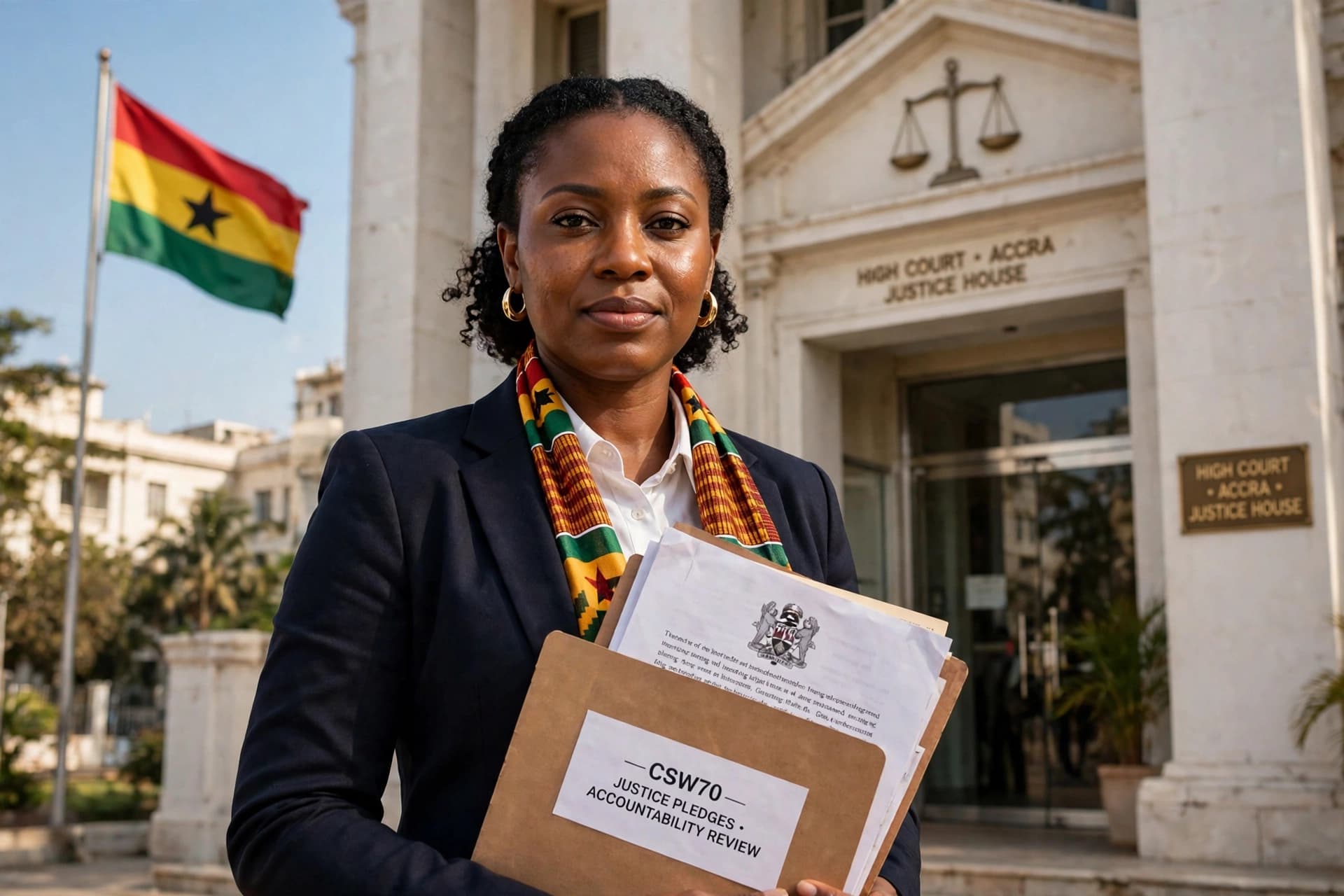
Accra, Ghana, October 5, 2026: On the 20th of January 2026, a High Court judge in Accra delivered his ruling in the divorce case between businessman Richard Nii Armah Quaye and his ex-wife, Joana Quaye.
Joana had been married to the man for sixteen years. She claimed to have helped build the business from which he built his fortune. She asked for GH₵50 million in settlement. She received GH₵300,000, one-third of a house in Dansoman, two cars, and GH₵5,000 monthly for the upkeep of three children.
The numbers alone are striking.
But it was a line buried in the written judgment that stopped people cold. Justice Justin Kofi Dorgu, in explaining his reasoning, noted that the petitioner was "physically attractive and capable of remarrying anytime she felt like." He appeared to offer this as a factor in calculating what she deserved. As if a woman's entitlement to the fruits of her own labour could be offset by her face.
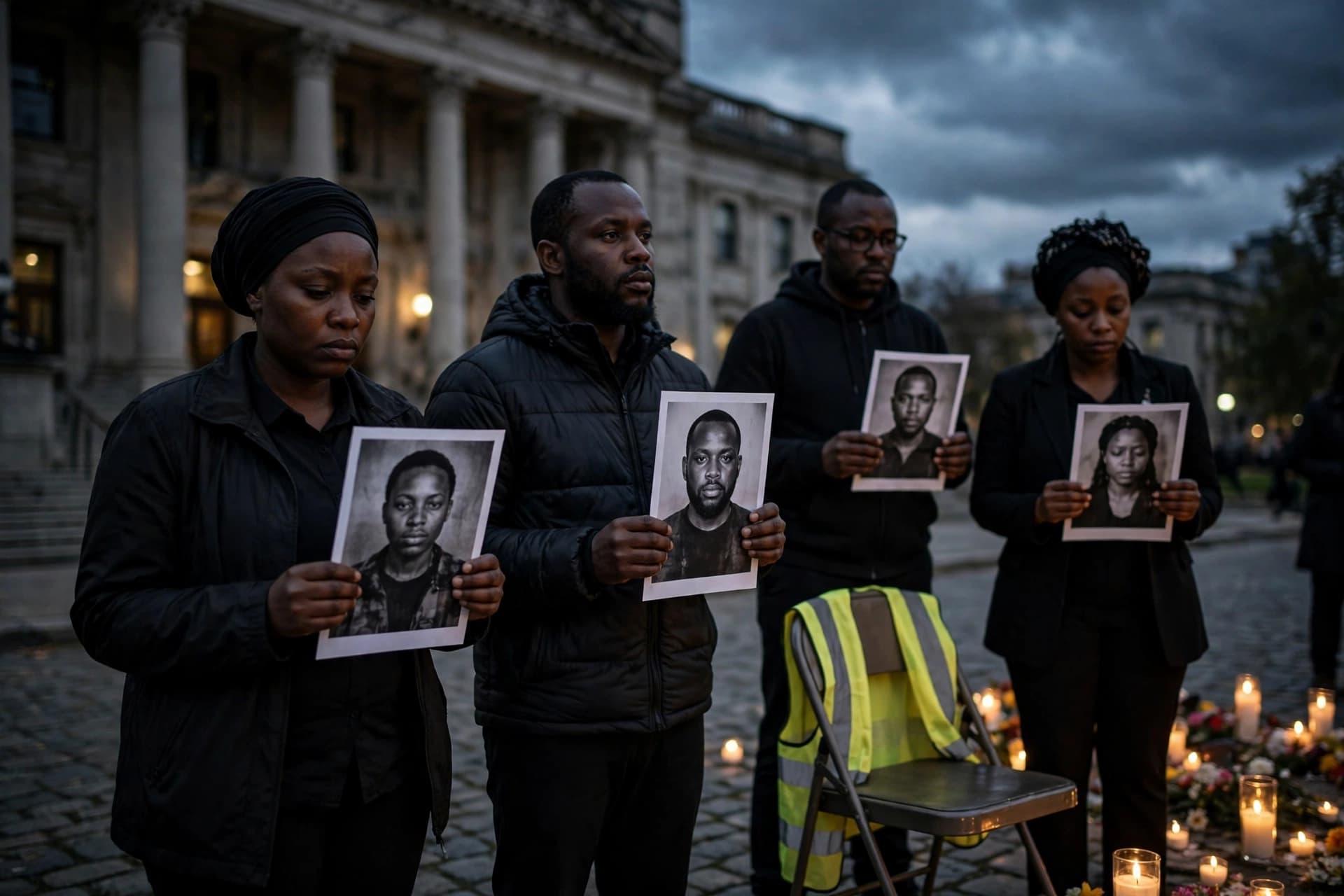
The Federation of International Women Lawyers, Ghana (FIDA-Ghana), petitioned the Chief Justice. They described the remarks as "offensive and deeply troubling," arguing that a woman's dignity cannot be weighed against her appearance or her remarriage prospects. Joana Quaye herself has since petitioned the Chief Justice over the judge's conduct.
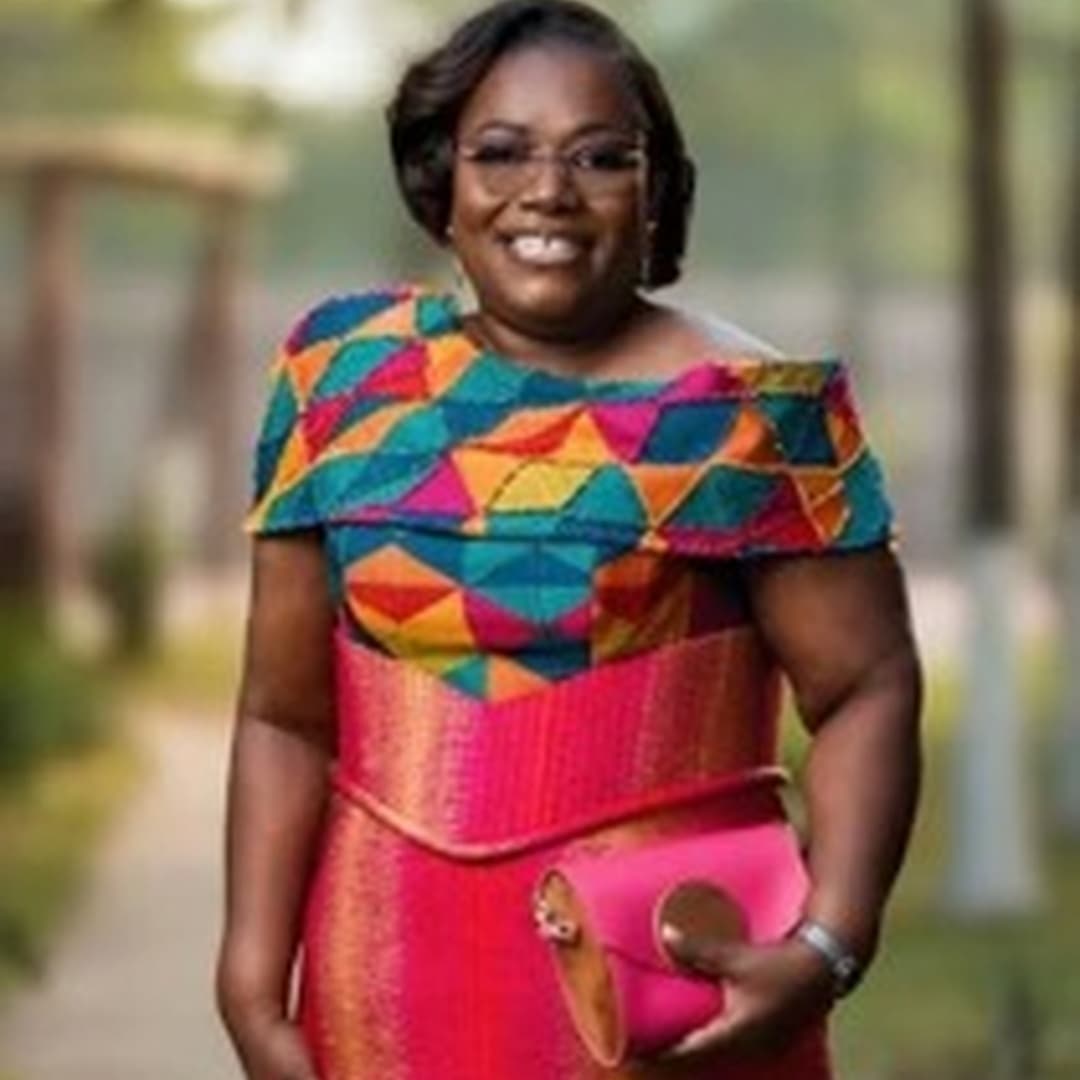
But before any of that, before the petitions were written and the lawyers briefed, Nana Oye Bampoe Addo took to Facebook and typed a simple question.
The Deputy Chief of Staff and former Minister for Gender, Children and Social Protection had read the judgment and she had something to say. "Physically, she is very much attractive and capable of remarrying anytime she felt like. Really????? From a court of the Republic of Ghana in 2026?" she wrote. "What has physical attraction and the capability of remarrying got to do with adjudicating on dissolution of a marriage?"
She was right to ask. The question was not rhetorical. It was a rebuke. And it matters enormously that she asked it in public.
It also raises a question we in Ghana are not yet comfortable asking plainly, why did it take a woman in a certain position to say it? And more precisely, why do we assume that all women in such positions will?
We have a tendency, understandable in its origins but dangerous in its consequences, to treat female representation and feminist politics as the same thing. They are not.
Representation is about presence. Feminism is about practice. One is a number on a spreadsheet. The other is a choice made, often at some cost, to use power in service of equality.
The data on Ghana should give us pause. Following the December 2024 elections, women hold 41 of 276 parliamentary seats, a mere 14.9 percent. Ghana passed the Affirmative Action (Gender Equality) Act in 2024, which targets 30 percent female representation in public decision-making bodies by 2026 and 50 percent by 2030. These are welcome and overdue milestones.
But Rwanda, which tops the world in female political representation with women holding 63.8 percent of seats in the Chamber of Deputies, does not offer a straight line to gender justice either. Representation is necessary. It is not sufficient.
Some of the most persistent barriers to women's rights in Ghana have been maintained, and in some cases erected, by women who hold positions of considerable authority. Equally, some of the most consequential advocates for women have been men.
Dr Francis-Xavier Sosu, the Member of Parliament for Madina, a human rights lawyer, has introduced legislation to criminalise witchcraft accusations, a practice that disproportionately and brutally targets elderly women. He has pushed for prison reform. He has used his position to challenge the state. His gender does not make him a feminist ally by default. His choices do.
This is the distinction that matters. Feminism is not an identity conferred by virtue of being a woman. It is a political commitment demonstrated through action. It shows up in the rulings judges write, the bills parliamentarians sponsor, the questions government officials choose to ask in public, and the ones they stay silent on.
When Nana Oye Bampoe Addo challenged that judgment, she was not performing feminism. She was practising it.
The cost of confusing the two is high. When we assume that a woman in power is automatically an ally, we stop watching. We stop holding her accountable. We mistake visibility for solidarity and presence for purpose. We celebrate the glass ceiling being cracked while the floor below remains unchanged.
We need more women in leadership. That is not in dispute.
But when they get there, we are entitled to ask what they do with the power. Do they speak when it is inconvenient? Do they challenge rulings that reduce women to their appearance and their prospects of finding a new husband? Do they push for fair divorce law, equitable inheritance, and courts that understand that sixteen years of building something together is not dissolved by the fact that one party is still young and attractive?
The standard we need is not a female face. It is a feminist commitment. And we should demand it from everyone, regardless of the gender they were born with.
This article was originally published in the Business and Financial Times (B&FT), in Bridget Mensah’s column ‘Her Space’.