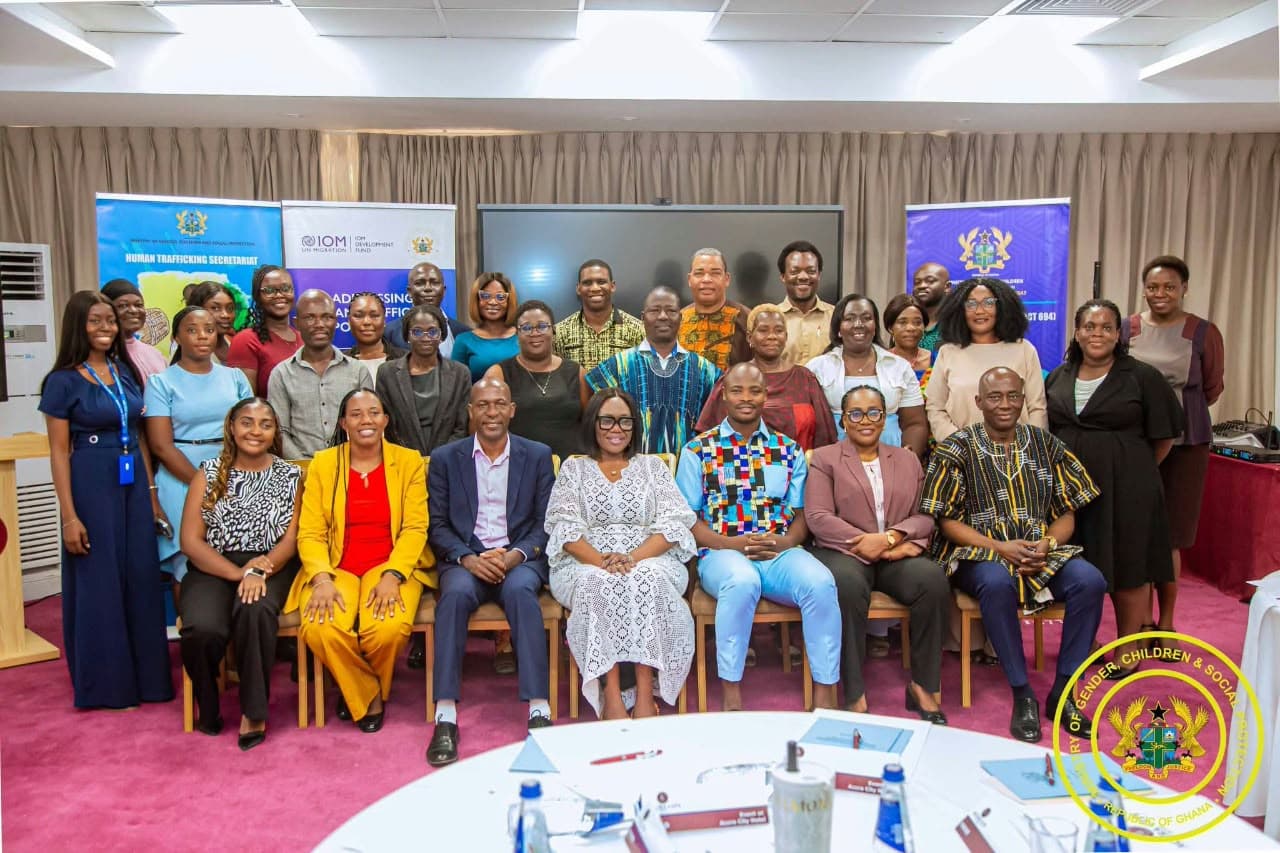
Accra, Ghana, October 11, 2026: Ghana has brought together stakeholders in tourism, travel, sports and security to strengthen efforts to identify and respond to human trafficking, including risks linked to recruitment, migration and sporting activities.
The Ministry of Gender, Children and Social Protection, through its Human Trafficking Secretariat, organised the two-day capacity-building session in collaboration with the International Organization for Migration (IOM) from 30 September to 1 October 2026.
The training examined how traffickers can exploit the movement of people, employment opportunities, tourism activities and sporting events to facilitate exploitation.
How tourism and sports can expose people to trafficking
In a keynote statement delivered on her behalf by the Ministry’s Chief Director, Dr Marian W. A. Kpakpah, the Minister for Gender, Children and Social Protection, Dr Agnes Naa Momo Lartey, warned that sectors connecting people and destinations could also be exploited by traffickers.
She called for stronger public awareness, ethical recruitment practices and effective referral mechanisms to help identify people at risk and connect them with appropriate protection and support.
The Minister also emphasised that human trafficking is not only a criminal justice concern but a violation of human dignity, freedom and fundamental human rights.
She urged organisations involved in employment, travel and sporting opportunities to provide accurate information about available opportunities and their terms and conditions.
Training covers victim identification and child protection
Representatives from the Ministry of Tourism, Culture and Creative Arts, the Ghana Tourism Authority, the Ghana Tourism Federation, travel and tour agencies and other relevant organisations participated in the engagement.
Sessions addressed the links between human trafficking, migration, tourism and child exploitation. Participants also discussed victim identification, the National Referral Mechanism, ethical recruitment, trafficking in sports, safeguarding and child protection.
Sector-specific risk-mapping exercises gave participants an opportunity to consider vulnerabilities within tourism, sports, travel and recruitment, alongside their responsibilities in prevention and response.
The National Referral Mechanism is particularly relevant because identifying a possible trafficking victim is only one part of the response. Effective protection also requires appropriate referrals and access to support services.
What happens after the training?
The Ministry said the engagement was expected to strengthen collaboration among government institutions, tourism and travel operators, sporting organisations, recruitment agencies, civil society groups and development partners.
However, the Ministry’s statement did not specify how the impact of the training would be measured or whether participating organisations would be required to introduce new safeguarding or referral procedures.
For the initiative to translate into stronger protection, stakeholders will need to apply what they have learnt when recruiting workers, arranging travel, organising sporting activities and responding to suspected exploitation.
Follow-up monitoring, clear reporting channels and effective referrals will be important in determining whether the training improves the identification of trafficking risks and the protection of people who may be vulnerable to exploitation.
Source: Ministry of Gender, Children and Social Protection.