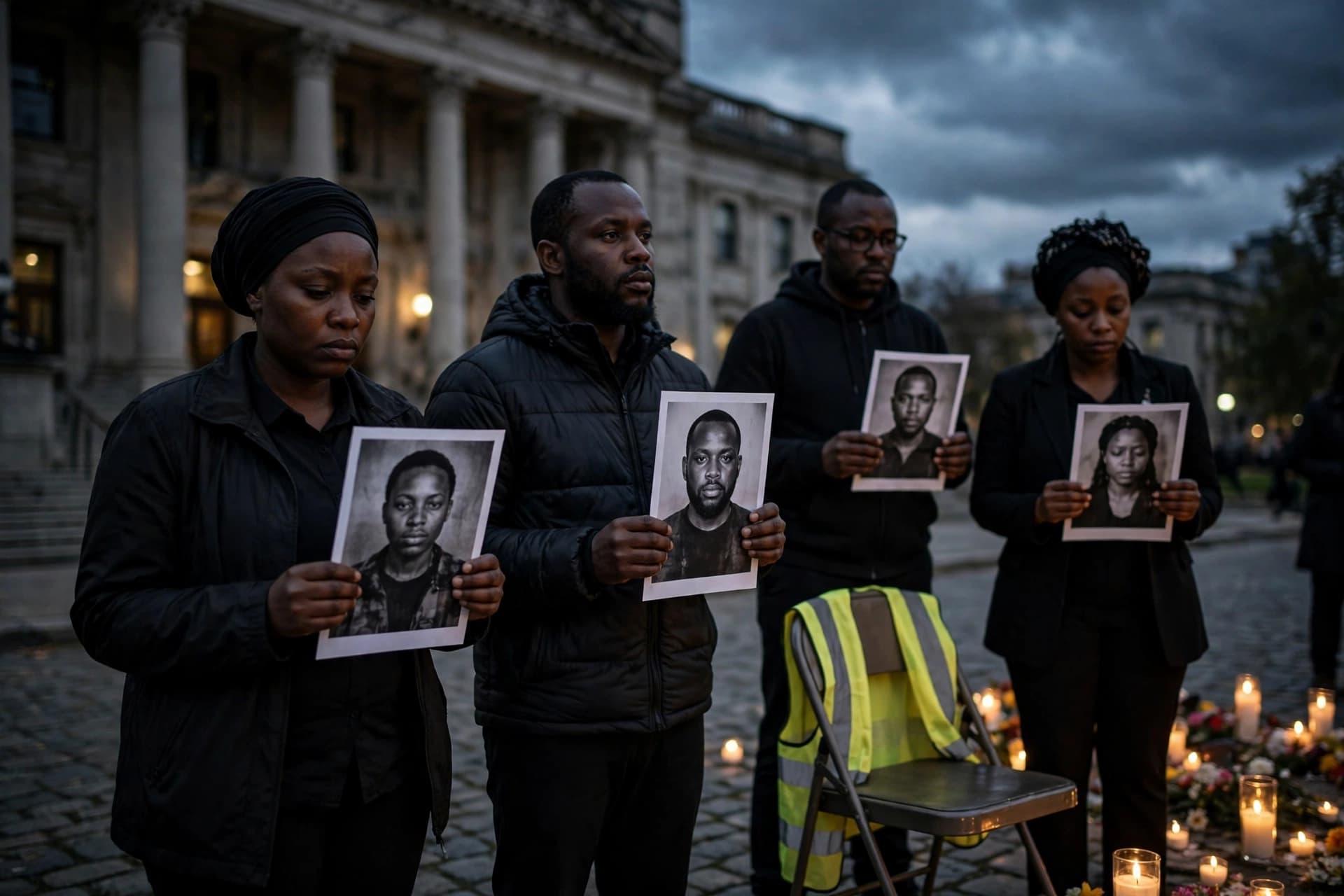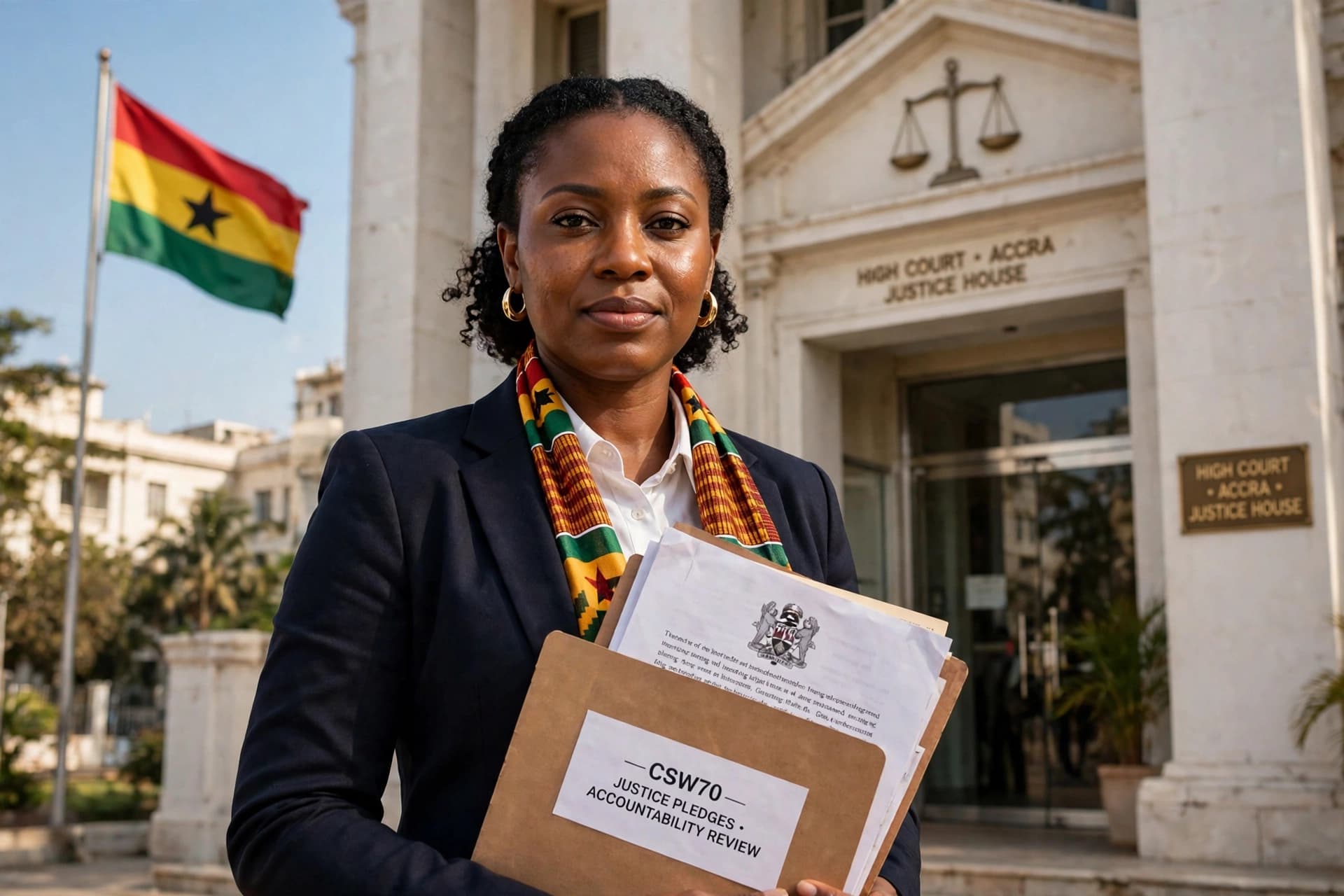
Accra, Ghana, October 31, 2026: A child reports sexual abuse. Another is being forced into marriage. Somewhere else, a child has been neglected, abandoned or exposed to violence at home.
Each situation requires more than someone willing to listen.
A social welfare officer may need to assess the child's circumstances, establish whether the child is safe, document the case, arrange counselling, coordinate with the police or health services, identify appropriate care and follow up to ensure the child is protected.
These responsibilities do not end when a report is made.
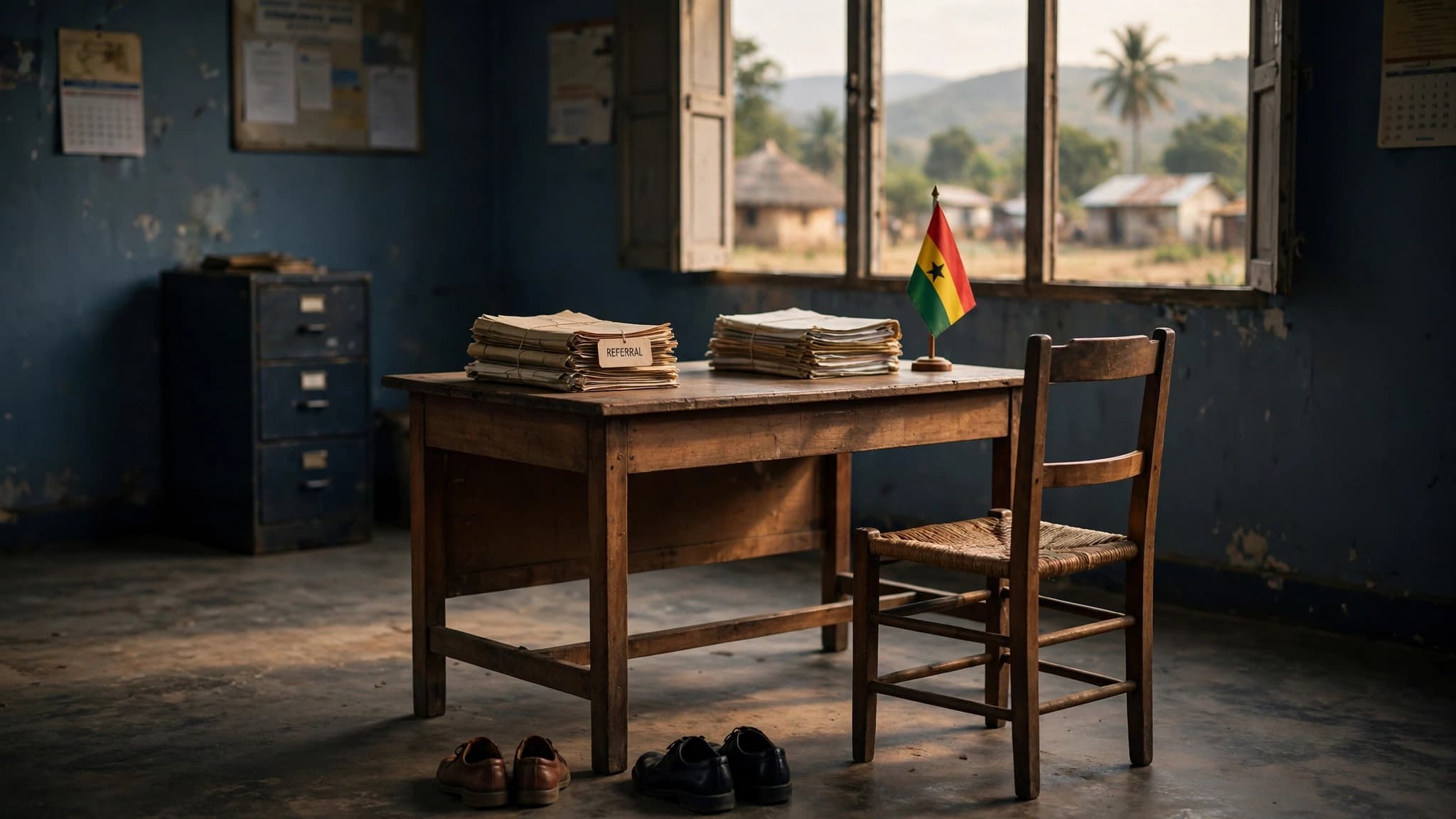
But what happens when the district responsible for protecting that child has only one social welfare officer? What happens when there is no officer at all?
This is the problem behind the Government's plan to recruit approximately 2,400 social welfare and community development personnel.
Announced by the Head of the Local Government Service, Professor Lord Mensah, the proposed recruitment is intended to address shortages that have left some districts struggling to respond to cases of abuse, neglect and exploitation.
His account of staffing conditions in the Northern, Savannah and North East regions is particularly concerning. Some districts reportedly have one officer, while others have none. In the Savannah Region, a single officer may be responsible for hundreds of communities.
The announcement is welcome. But Ghana's child protection challenge is bigger than recruitment.
The country needs a workforce that is adequately staffed, professionally trained, properly equipped and supported by predictable funding.
A protection system cannot run on policies alone
Ghana has made considerable investments in developing its child protection framework.
The Ministry of Gender, Children and Social Protection leads national efforts to protect children, while the Department of Social Welfare and Community Development at the local government level provides essential frontline services.
Community Child Protection Committees also help identify children at risk, raise awareness, make referrals and connect vulnerable families to available support.
The Integrated Social Services programme has been extended to all 261 Metropolitan, Municipal and District Assemblies.
These are important structures. But having a system on paper does not necessarily mean that a child can access help when needed.
UNICEF's 2024 Child Protection Budget Brief identified significant gaps in the availability of qualified social welfare personnel.
The brief found that only 41 per cent of the minimum required social welfare workforce positions were filled at the time of the assessment. Nationally, districts had an average of three staff members with a social welfare background, serving populations of more than 100,000.
In the northern zone, the average was just 2.3.
The same assessment found that fewer than half of staff in the Departments of Social Welfare and Community Development had formal qualifications in social work.
These findings are important because child protection is specialised work. Identifying abuse, assessing risk, supporting children who have experienced trauma and making decisions about alternative care require appropriate professional knowledge and supervision.
Recruitment must therefore address both the number and the competence of personnel.
The funding problem does not disappear when workers are recruited
There is another difficulty that deserves equal attention.
Social welfare officers need more than salaries. They need operational resources to carry out their work.
A child protection case may require transport to visit a family, money for follow-up visits, communication with other service providers, documentation, counselling referrals and coordination with health facilities, schools and the police.
Without these resources, an officer may be employed but unable to carry out the full responsibilities of the job.
UNICEF's 2024 budget analysis identified problems with inadequate and delayed funding to district social welfare departments.
It reported that actual expenditure on the central government goods and services transfer to these departments averaged just 52.7 per cent of the approved budget between 2020 and 2023. In 2022, only 21.4 per cent of the approved allocation was spent.
The report also found that child protection financing represented approximately 0.12 per cent of total government expenditure and 0.03 per cent of GDP in 2024.
These figures expose a difficult contradiction. Ghana needs more people to deliver social welfare services, but the departments responsible for providing those services have also struggled to obtain sufficient and timely operational funding.
The proposed recruitment must therefore come with a financing plan that covers salaries, training, supervision, transport, equipment and the day-to-day costs of responding to cases.
Otherwise, government risks expanding the workforce without strengthening the conditions necessary for it to function.
Girls cannot be left waiting for protection
The staffing question also has a gender dimension.
Girls facing sexual abuse, child marriage, exploitation and violence need more than general community awareness campaigns. They need accessible, confidential and timely professional support.
A girl who reports sexual abuse may require medical attention, psychosocial support, safety planning and assistance navigating the justice system.
A child at risk of forced marriage may need urgent intervention involving social welfare officers, family members, schools and other relevant authorities.
Where the response is delayed, the consequences can extend beyond the immediate abuse. Children may leave school, experience further exploitation or remain in environments where the harm continues.
Boys also experience abuse, neglect and exploitation and must receive appropriate protection. But services must recognise that children can face different risks and barriers depending on their circumstances, including gender, disability, location and family background.
A child protection system that treats every case as identical risks overlooking those differences.
The recruitment plan should therefore include appropriate training in child-sensitive and gender-responsive case management, safeguarding, trauma-informed support and referrals for specialised services.
Community committees cannot replace professional social workers
Ghana's Community Child Protection Committees are an important part of the protection system.
They can help identify children at risk, raise awareness, connect families to services and refer cases to the appropriate authorities.
But their responsibilities must be clearly understood.
During the recent stakeholder engagement, the Deputy Director of the Department of Social Welfare, Ms Abena Dufie-Atta, reminded the committees that they were not mandated to handle criminal cases.
That distinction matters.
Community volunteers cannot replace trained social welfare professionals, police investigators, health workers or other specialists responsible for responding to abuse and criminal conduct.
Their role is to help identify concerns and facilitate referrals, not to investigate allegations, confront alleged perpetrators or conduct interventions beyond their competence.
The system must ensure that when a committee identifies a child at risk, there is a functioning professional service to receive the referral and take appropriate action.
Otherwise, community members may identify children who need protection but have nowhere effective to turn.
Who will pay for child protection after donor projects end?
The financing of community-level protection services is another concern.
At the recent engagement, SOS Children's Villages Ghana Country Director, Mr Alexander Mar Kekula, warned that several community interventions depended heavily on donor-funded projects.
He explained that when projects ended, meetings, follow-up visits and other activities could stop, leaving children exposed again.
The organisation was working with five district assemblies: Ada East, Ada West, Adaklu, Ekumfi and Sene West, to develop costed child protection activity plans for their 2027 budgets.
This is an important approach because community protection should not depend entirely on whether an external organisation has an active project in a particular district.
District assemblies have a responsibility to identify local needs and allocate resources to address them.
Professor Mensah has also advocated for portions of the District Assemblies Common Fund to be earmarked for departments such as Social Welfare and Community Development.
That proposal deserves attention, particularly because these departments provide services that are essential to the protection of vulnerable children.
However, earmarking funds must translate into actual releases and expenditure. Allocations that remain on paper will not pay for transport, facilitate referrals or support a child who needs immediate intervention.
The numbers must lead to accountability
There is already a mechanism that could help government assess the performance of the child protection system.
The Social Welfare Information Management System, known as SWIMS, is designed to help professionals record cases, track services and support coordinated responses.
According to information presented by UNICEF at the stakeholder engagement, more than 62,000 cases had been entered into the system by June 2026.
More than 7,000 social service workers had also received training on referral pathways.
These figures demonstrate the scale of activity within the system, but the number of recorded cases alone cannot establish whether children received timely or effective support.
Government and relevant institutions must also examine how quickly cases are assigned, how many receive follow-up, whether referrals are completed and how many children obtain the services they need.
The proposed recruitment offers an opportunity to strengthen that accountability.
A transparent implementation plan should establish where the 2,400 personnel will be deployed, the qualifications required, the training they will receive and the resources available to support their work.
It should also provide a clear timeline for recruitment and explain how the additional workforce will be financed.
The Local Government Service, the Ministry of Gender, Children and Social Protection and the Ministry of Finance must ensure that staffing decisions are connected to the actual needs of districts.
Children cannot wait for the next budget cycle
Ghana's child protection system does not lack policies, committees or public commitments.
What it continues to struggle with is ensuring that these structures have the personnel, resources and coordination needed to protect children in practice.
Recruiting 2,400 social service workers could help address a longstanding gap. But the success of the initiative will depend on what happens after the announcement.
Will the workers be recruited and deployed where the shortages are greatest? Will they receive the professional training and supervision required? Will district assemblies have enough money to support their work? Will community referrals lead to timely intervention?
These are questions that deserve clear answers.
For a child experiencing abuse or neglect, protection is not an abstract policy objective. It is whether someone responds when help is needed, whether that response is appropriate and whether support continues until the child is safe.
Ghana must move beyond counting the number of people it intends to recruit.
It must build a child protection workforce that can reach children, respond to their needs and remain available long after public announcements and donor-funded projects have ended.
Because a child who needs protection cannot be expected to wait for the system to become ready.