Accra, Ghana, October 25, 2026: Applause is a beginning, not a development plan.
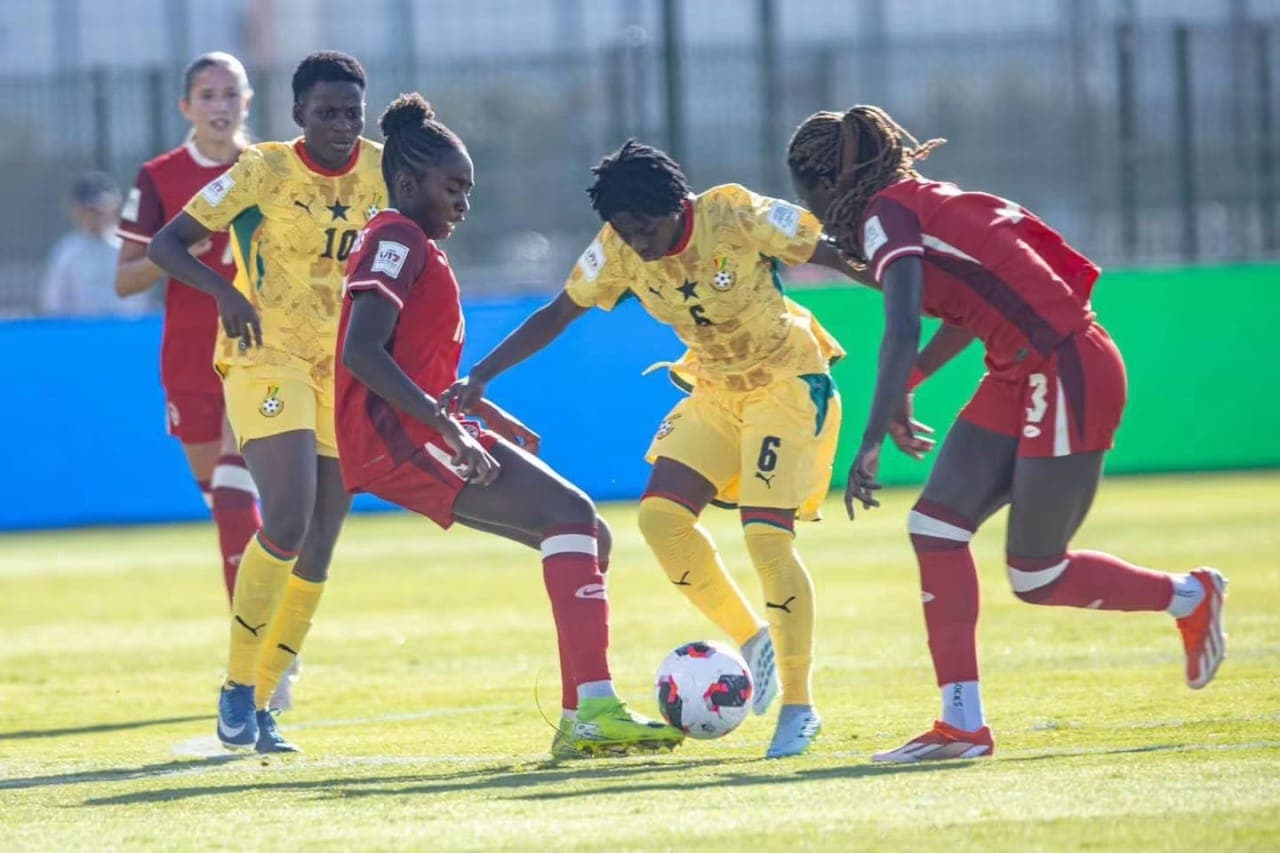
Ghana is celebrating the Black Maidens after their 2–0 victory over Canada secured a place in the Round of 16 of the 2026 FIFA U-17 Women’s World Cup in Morocco.
Substitute Linda Achiaa opened the scoring before Christiana Ashiaku sealed the win with a long-range effort in stoppage time. The result followed a 3–0 defeat to Norway and a 3–3 draw with Brazil, demonstrating the team’s ability to recover under pressure.
Vice-President Jane Naana Opoku-Agyemang congratulated the players and technical team, describing their performances as evidence of the enormous potential of women’s football in Ghana.
Her message was an important recognition of the young players’ achievement. But it also raises a question that should extend beyond this tournament: what happens to these girls when the cameras move on?
Ghana has a history of producing talented young female footballers. The challenge is to ensure that talent is not celebrated at international tournaments and then left to navigate an uncertain domestic system.
A national team is not a development pathway. It is one stage of it.
The system must work before and after the tournament
A place at a FIFA competition can open doors. It can expose players to international competition, strengthen their experience and help them attract attention from clubs and scouts.
But a tournament cannot replace the structures that make long-term development possible.
Players need regular, competitive football when they return home. They need qualified coaches, safe training facilities, access to medical care and rehabilitation, and opportunities to progress from youth teams into senior football.
They also need support to continue their education, manage their finances and understand their rights as young athletes.
These are not extras to be considered after a team has succeeded. They are part of the infrastructure required to sustain success.
The Ghana Football Association has taken steps towards strengthening the grassroots system. In January 2026, it launched FIFA-backed Under-15 Girls Regional Colts Leagues intended to provide structured competition and talent-development opportunities across the country’s ten football regions.
The initiative offers a potential foundation for identifying and nurturing young female players before they reach the national-team level. Its long-term value, however, will depend on implementation: how regularly the leagues operate, how many girls participate, whether coaching standards are maintained and whether players can progress into higher levels of competition.
The existence of a programme is not the same as proof that the pathway works.
What happens to the girls who do not make the national team?
The Black Maidens represent a small group of players who have reached the highest level of youth competition. Thousands of other girls may be playing at school, community or regional level without ever receiving a national-team call-up.
Their opportunities matter too.
A sustainable system cannot be designed only around those who are already visible. It must offer girls across different regions a reasonable chance to play, improve and progress, regardless of whether they are identified by a national-team scout at an early age.
That means examining access to pitches, equipment, qualified coaches and organised competitions. It also means asking whether girls can play without facing preventable barriers linked to transport costs, family expectations, school schedules or the availability of teams in their communities.
The GFA’s regional Under-15 leagues provide one route for expanding participation. The next question is whether the competition is accessible enough to reach girls who are currently outside established football structures.
If Ghana wants a deeper pool of talented players, it cannot rely on finding exceptional individuals and hoping they succeed. It must build a system that gives more girls the opportunity to develop.
Safeguarding must be part of the game
Young players need protection as well as opportunity.
The Black Maidens participated in a safeguarding and financial-management programme in September 2026 under the theme “Protect Your Dream”. The session covered awareness of players’ rights, personal protection and financial discipline.
Such education is valuable, particularly for young athletes who may be navigating travel, new professional relationships and growing public attention.
But safeguarding cannot rest on workshops alone. It requires clear reporting procedures, trusted safeguarding personnel, appropriate responses to complaints and accountability when rules are breached.
Football authorities and clubs should make sure young players know whom they can approach if they feel unsafe, understand how concerns will be handled and can report problems without fear of losing their place on a team.
The responsibility must not fall on girls to protect themselves from every risk. Institutions that recruit, train and manage young athletes must create environments that actively protect them.
Talent needs a future beyond the age-group team
Youth football is a development stage, not a guarantee of a professional career.
As the Black Maidens progress through the system, some players may move into senior club football or the Black Princesses, Ghana’s Under-20 women’s national team. Others may eventually pursue different careers.
Both outcomes require preparation.
For players who want to remain in football, Ghana needs a clear progression route from school and regional competitions into clubs, senior leagues and national teams. That pathway should include information about trials, contracts, injury management, player representation and the realities of professional football.
For those who do not become professional players, education and transferable skills remain essential. Football development should equip young women for life, not leave their futures dependent on a sporting career that may be brief or disrupted by injury.
The GFA’s September programme on financial management and personal development was a useful step. Such support should be sustained and accessible to players beyond the national-team camp.
Five commitments Ghana should demand
The Black Maidens’ campaign presents an opportunity to move from celebration to a more accountable approach to women’s football development.
Publish a youth women’s football pathway. The GFA should explain how players move from school and grassroots competitions to regional leagues, clubs, the Black Maidens, the Black Princesses and the senior national team. The pathway should identify responsible institutions and measurable milestones.
Report on participation and regional access. The association should publish annual figures on the number of girls participating in organised football, the number of active girls’ teams, regional league coverage and the progression of players between age groups. This would help establish whether opportunities are expanding beyond a small pool of established talent.
Protect funding for grassroots competitions. Youth leagues need reliable schedules, safe venues, equipment, qualified coaching and practical arrangements that allow girls to participate. The GFA, government, schools and sponsors should clarify their respective responsibilities and report on what has been delivered.
Make safeguarding measurable. Every programme involving young players should have clear safeguarding standards, accessible reporting channels and procedures for responding to complaints. The existence of a policy should be accompanied by information about implementation and accountability.
Track what happens after national-team tournaments. The GFA should follow players’ progression into clubs, older age groups, education and other career pathways. Such reporting would help establish whether international exposure translates into sustained opportunities.
These recommendations require more than goodwill. They require clear responsibilities, budgets, timelines and public reporting.
The real victory will be what comes next
The Black Maidens have given Ghana a reason to celebrate. Their victory over Canada reflects the players’ effort, the technical team’s work and the possibilities within women’s football.
The Vice-President’s recognition is welcome. So is the attention that international competition brings to young female athletes.
But national pride must lead somewhere.
If Ghana celebrates these players today, it should also be willing to ask whether they will have safe facilities to train in next year, competitive football to play when they return, and a credible route into senior football as they grow older.
It should ask whether girls who never make the national team will still have opportunities to play, and whether the institutions responsible for their development can demonstrate results beyond tournament appearances.
The measure of progress is not simply how far one team advances in Morocco. It is whether Ghana builds a system in which many more girls can play, improve and choose how far they want to go.
The Black Maidens have shown what young Ghanaian footballers can do. Now Ghana’s football institutions must show what they are prepared to do for them.