Accra, Ghana, November3, 2026: Ghana's government has called on media organisations to strengthen self-regulation, enforce professional standards and establish effective complaints procedures, arguing that the industry must take responsibility for its conduct to protect press freedom.
Minister for Communication, Digital Technology and Innovations Samuel Nartey George said government did not want to control editorial decisions or act as the editor of the country's newsrooms.
“Government does not want to be the editor of Ghana’s newsrooms. We will not be. We cannot be,” he said.
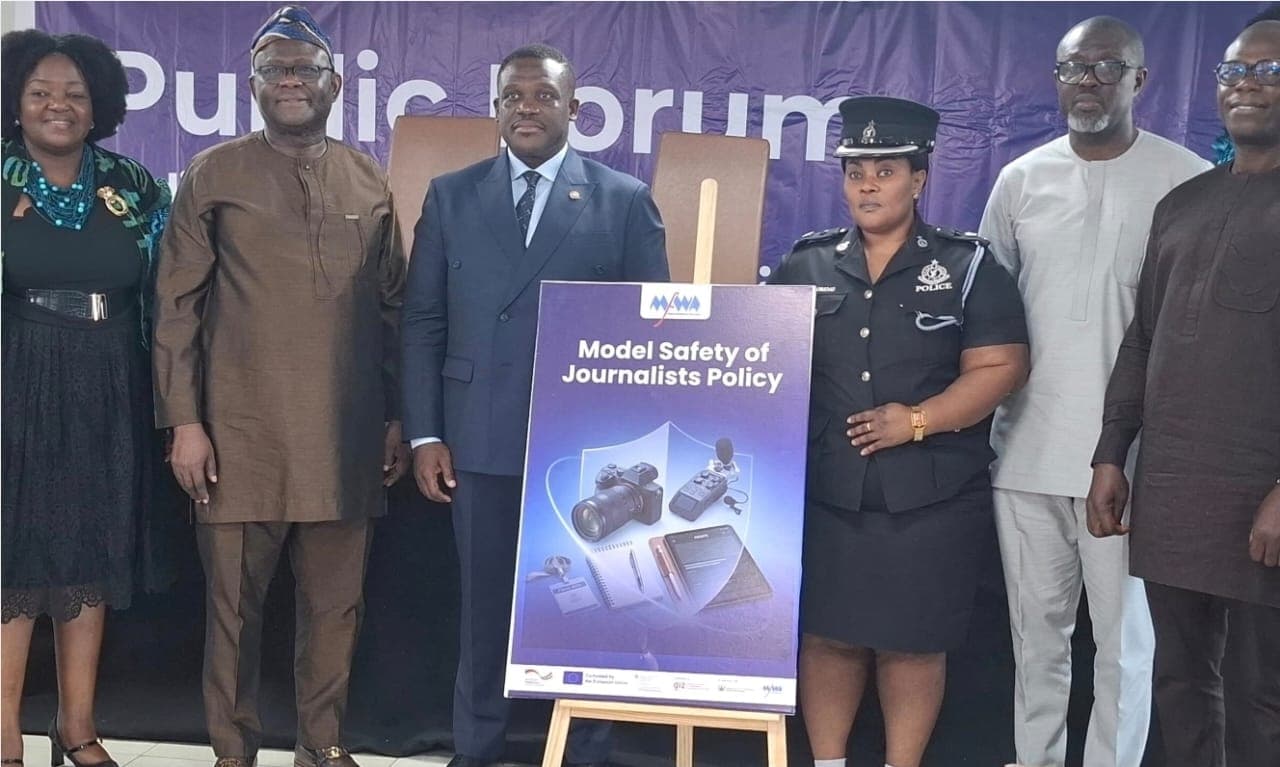
The Minister was speaking at a public forum organised by the Media Foundation for West Africa (MFWA) in Accra on Monday, 2 November. The event focused on ending impunity for crimes against journalists and strengthening safety, accountability and press freedom.
He urged media organisations and professional bodies to enforce their codes of ethics, sanction members who breach professional standards, correct errors openly and provide effective channels for complaints.
He said professional accountability should apply regardless of political affiliation and argued that strong peer regulation would help prevent excessive government intervention in the media.
Professional misconduct does not justify attacks
Mr George drew a distinction between holding journalists accountable for professional misconduct and subjecting them to violence or intimidation.
He said inaccurate reporting should be addressed through corrections, a right of reply, complaints to the appropriate regulator or legal action, rather than physical attacks or threats.
He called for prompt and impartial investigations into attacks against journalists and prosecution of offenders where evidence supports it, irrespective of their political affiliations or positions.
The Minister also welcomed MFWA's Model Safety of Journalists Policy and urged media owners to adopt measures that protect journalists during their work.
These include risk assessments before assignments, emergency contacts, secure devices and access to legal and psychological support.
Media leaders raise concerns about working conditions
MFWA Executive Director Sulemana Braimah said Ghana remained relatively safer for journalists than some countries in the sub-region, but warned against complacency.
He said more needed to be done to protect media practitioners and ensure accountability for attacks.
Director-General of the Ghana Broadcasting Corporation, Professor Amin Alhassan, said journalists' economic conditions were also part of the safety debate.
He called on the National Communications Authority to consider making payment of Social Security contributions for media workers a requirement for renewing broadcasting licences.
He said some media organisations did not maintain proper payroll systems, leaving journalists at risk of retiring without pensions.
Prof. Alhassan also called for discussions on net neutrality, warning that telecommunications operators entering content distribution could give preferential treatment to their own platforms at the expense of media organisations.
Former Ghana Journalists Association President Gifty Afenyi-Dadzie urged newsrooms to adopt and implement the Model Safety of Journalists Policy to improve protection for media workers.
Safety commitments must reach newsrooms
The forum formed part of efforts to strengthen journalist safety and promote accountability for crimes against media practitioners in Ghana.
The Model Safety of Journalists Policy is intended to give media organisations practical guidance on protecting journalists. Its effectiveness will depend on whether media owners put the recommended measures into practice, provide the resources required and ensure that staff know how to access support.
The discussions also placed responsibility on the media industry to uphold professional standards while calling on state institutions to investigate attacks and ensure that those responsible face appropriate legal consequences.