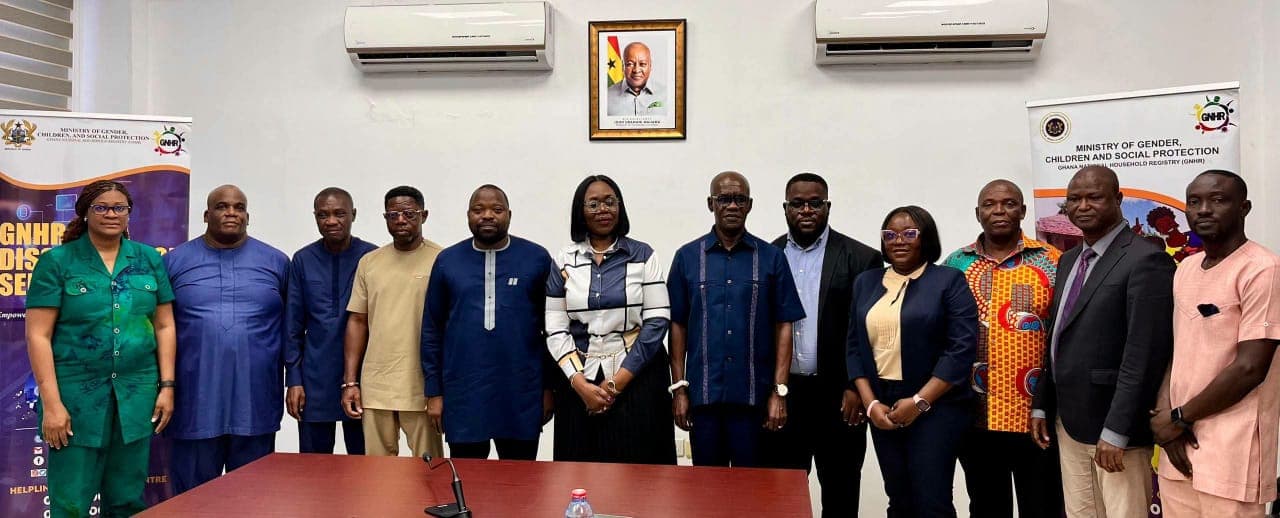
Accra, Ghana, November 3, 2026: Ghana's Ministry of Gender, Children and Social Protection has established a Data Review Committee to strengthen the accuracy and credibility of information generated by the Ghana National Household Registry (GNHR).
The committee has been sworn in and is expected to review, validate and endorse analytical reports and findings from the Registry before they are shared with government institutions, development partners and the public.
The development comes as the GNHR holds information on approximately three million enrolled households across all 16 regions of Ghana.
In her opening remarks, the Ministry's Chief Director, Dr Marian W. A. Kpakpah, said the committee would help ensure that reliable data continues to inform decision-making in the social protection sector.
She urged members to take their responsibilities seriously and apply their expertise to the work of the committee.
What the committee will review
The Head of the GNHR, Dr Richard Adjetey, explained that the committee had been established as a formal peer-review mechanism to provide additional scrutiny of the Registry's growing analytical outputs.
Its responsibilities include checking data and findings for accuracy, consistency, completeness and reliability, identifying errors and methodological gaps, and recommending corrective action.
Members will also provide technical guidance on data-sharing protocols, analytical tools and capacity-building requirements.
During the meeting, Daniel Sackey of the GNHR presented the committee's Terms of Reference and outlined its responsibilities.
He also briefed members on the Registry's data collection methodology, Proxy Means Test (PMT) indicators and model, questionnaire, statistical outputs, Registry health indicators and existing data quality concerns.
The presentation provided an overview of the systems behind the Registry and the technical issues the committee will be expected to examine.
The meeting concluded with discussions on the committee's next steps and the need for continued collaboration with the GNHR.
The committee is expected to provide technical review and guidance to strengthen the quality of information used in social protection planning and decision-making.