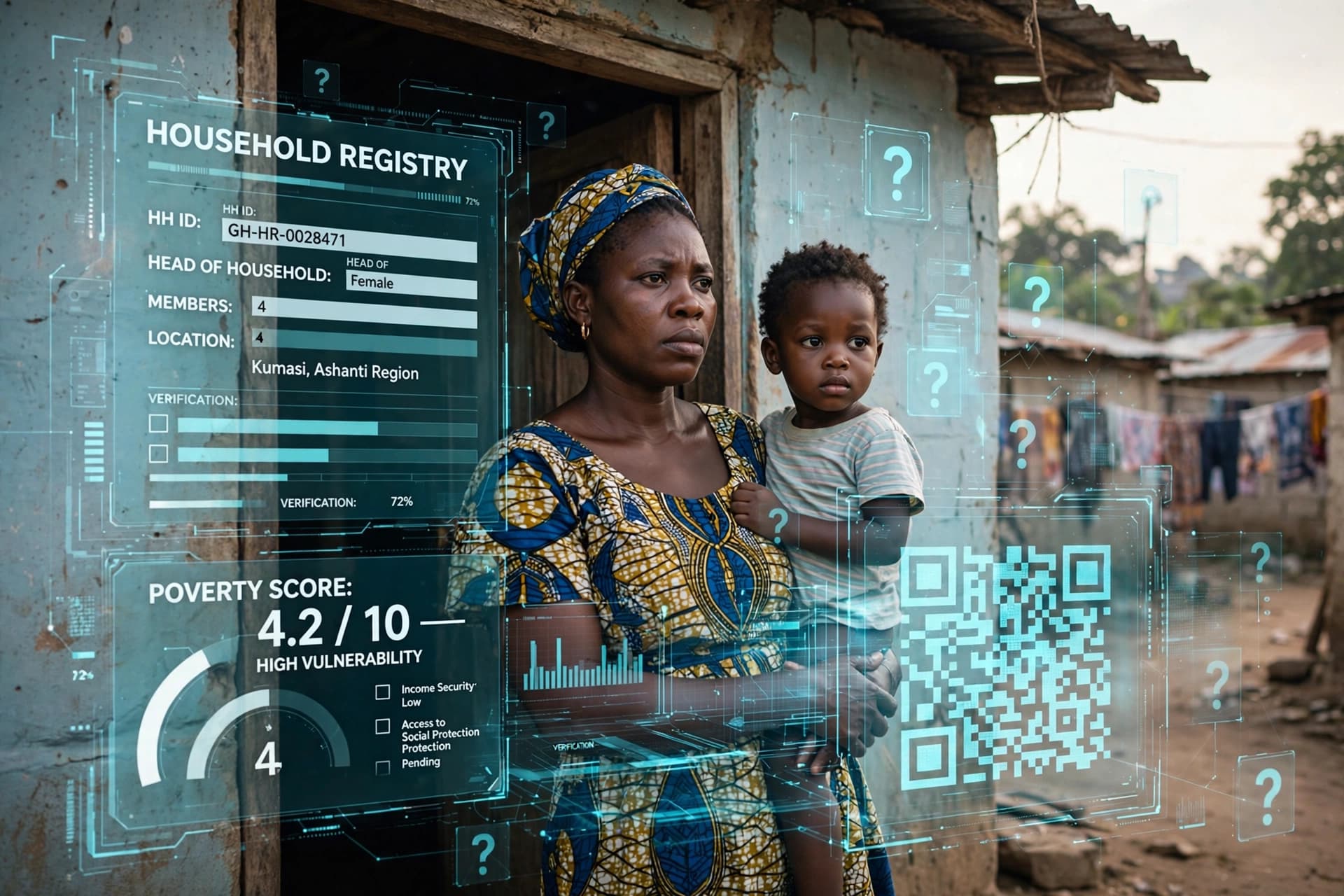
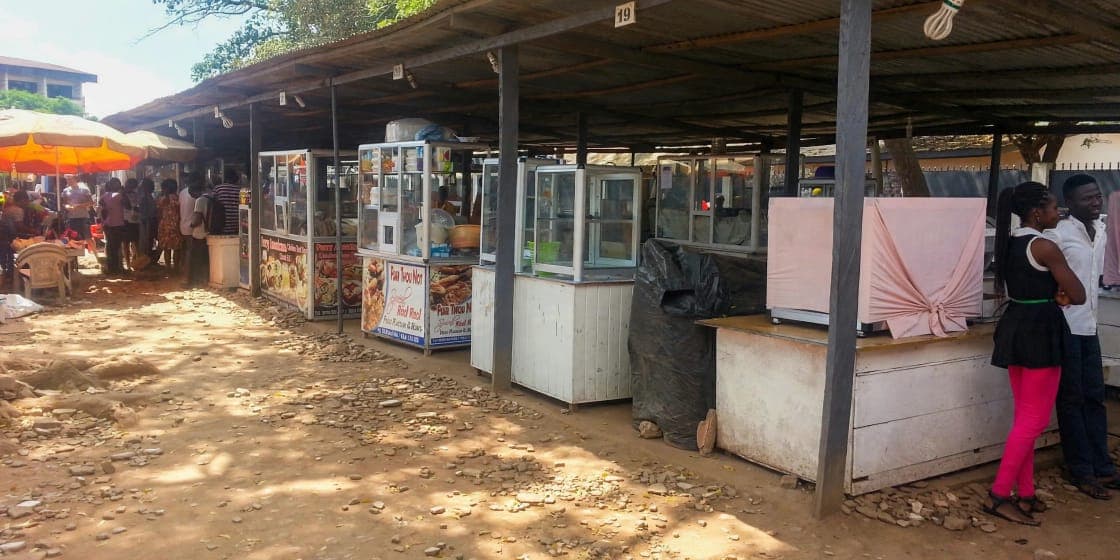
Accra, Ghana, October 16, 2026: On Thursday, 8 October, about 30 women scrubbed a cemented floor behind Republic Hall at the Kwame Nkrumah University of Science and Technology (KNUST). They swept, washed and rinsed together, getting ready for Tuesday, 13 October. The next day, KNUST postponed the reopening indefinitely.
I was on campus with my son, who had just been admitted. We were both preparing for the new academic year. The women were preparing too, for the one thing their businesses cannot do without: customers.
A man moved among them with a list, taking attendance. As I understood it, a woman who skipped the cleaning could not sell, or faced a penalty. Efia, who sells Indomie, told an elderly woman to sit down so the younger ones could do the washing.
Auntie Aggie sells provisions: Milo, Nido, milk, sugar, bread, detergent and sponges. She had cleaned her stall and the floor around it. She told me she was about to restock, the moment a trader puts her own money into goods before a single customer has paid.
What a night market is on a Ghanaian campus
On a Ghanaian campus, the night market is where student life gets fed. It is a cluster of stalls and small shops that serve students when lectures end: cooked food, bread, milk, Milo, detergent, sponges, laundry, and a small press where assignments get printed. Behind Republic Hall, I counted about 30 women trading.
The University of Ghana's Night Market is the main marketplace on campus, open from morning until midnight, with traders selling food, groceries and toiletries. KNUST has bigger versions than the one I visited. The University of Cape Coast (UCC) has its own.
These markets keep the academic calendar. When students leave for the long vacation, the customers thin out. When they return, the stalls fill. For the women who trade there, a reopening date is also a date on their income calendar.
What a strike by administrators has to do with a provisions stall
The Ghana Association of University Administrators (GAUA) represents the senior staff who run admissions, registration and accommodation. When they stop, the strike has disrupted admissions, registration and accommodation allocation, and a university cannot open properly.
GAUA first struck on 10 August, suspended the action, then returned to it on 15 September. Its complaint is a gap in the Interim Market Premium (IMP), a pay supplement, between senior members in teaching and non-teaching roles.
On 9 October, the day after I watched the women scrub, KNUST postponed its reopening indefinitely. The University of Ghana postponed too. Families who had booked transport and set aside fees were left waiting.
Then the government moved. On 13 October, the Ghana Tertiary Education Commission (GTEC) ordered public universities to reopen by 16 October and start lectures on 19 October. KNUST answered the next day: freshers on 15 October, continuing students on 17 October, lectures on 19 October.
The strike itself has not ended. GAUA's leadership says the directive will not end it until the Fair Wages and Salaries Commission deals with the market premium. The calendar has a date. Whether the money arrives on that date is another matter.
Why a market feels the university calendar first
KNUST admitted 50,895 new students for the 2024/25 year alone, from 92,975 applications. They eat, print assignments, wash clothes and buy sponges. A campus that size runs a town's worth of small businesses on one academic calendar.
When a university's reopening is delayed, the effects can reach the businesses around it. Food vendors may have fewer customers to serve, provision sellers may rethink how much stock to buy, and laundries and printing shops may have to wait for students. The scale differs from one business to another, but the delay leaves people whose income depends partly on campus activity planning in the dark. KNUST describes itself as a community with its own restaurants and business centres.
Business owners carry a second kind of exposure. Beehive Bakeshop and Kafe had prepared ingredients for Tuesday before it became clear students were not returning. Those businesses pay rent and staff wages whether or not anyone walks in.
Why women traders are exposed
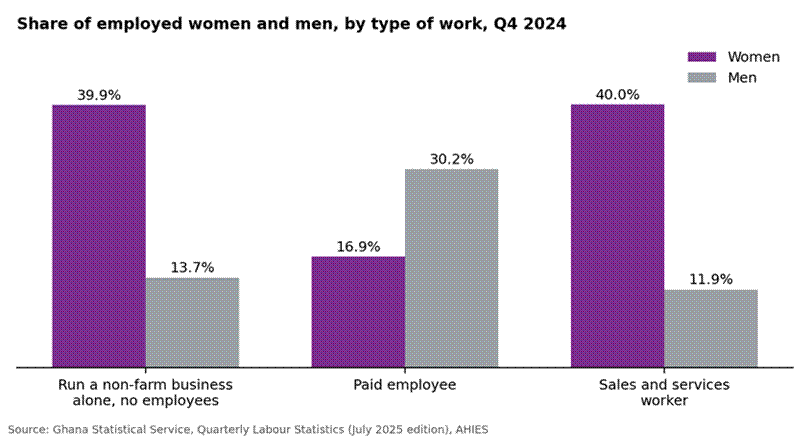
Ghana's labour data points to why women traders are exposed. In the fourth quarter of 2024, 39.9 per cent of employed women.pdf) ran non-farm businesses alone, with no employees. For employed men the figure was 13.7 per cent.
Only 16.9 per cent of employed women held paid employee jobs, against 30.2 per cent of men. Women were also far likelier to work in sales and services: 40.0 per cent, compared with 11.9 per cent of men.
GAUA members are salaried public employees, and the Education Minister has said government is their employer. They have a union and a negotiating table, and the minister has met them. A strike is a legitimate tool, and GAUA says none of its grievances had been addressed. This is not an argument against it.
The argument is about who else bears the delay. The women behind Republic Hall have no table to sit at. A woman trading alone has no employer to appeal to and no salary running through the wait.
The Ghana Statistical Service (GSS) found in 2022 that moving from informal work into unemployment was on average five times likelier than moving from formal work into it. In 2025 it described Ghana's job growth as mostly informal and insecure. The Night Market is that finding with a floor and a roll call.
The work nobody counts
The cleaning was labour too. About 30 women gave up a day to scrub a floor, under an attendance list, for sales that have now been pushed back. Whether anything compensates that time, I do not know.
I do not know who set the attendance rule, who keeps the list, or what happens to a woman who is ill or minding a child on the day. Those questions belong to the market's leaders, and the women deserve answers.
What a fairer calendar looks like
KNUST's notice asked students, parents, guardians and other stakeholders to note the new dates. The market women are stakeholders, but the word does not say so. Universities can copy market associations and campus traders on every reopening notice, with the same lead time families get.
The ministry's directive lists what a long closure puts at risk, from students' progression to international academic partnerships. Campus traders are not on that list. When the state counts the cost of a strike, it should count the informal economy that grows around its lecture halls.
Efia told an older woman to sit down so the younger ones could wash. That is a safety net woven by hand: women covering each other's work, on their knees.
Lectures are due to begin on Monday, 19 October. Auntie Aggie was preparing to restock, and the women behind Republic Hall had already done the work of getting their market ready. The university has a timetable. The women behind its night market have livelihoods to keep going. Who accounts for the cost when the two fall out of step?