
Twenty-three years ago, on 31 October 2003, Ghana signed the Maputo Protocol, the African Union treaty formally titled the Protocol to the African Charter on Human and Peoples’ Rights on the Rights of Women in Africa.
Ghana ratified it on 13 June 2007 and deposited its instrument that July, binding itself at the international level to respect, protect and fulfil the rights set out in the Protocol.
Article 13, titled “Economic and Social Welfare Rights”, sets out a broad range of protections for women at work and in economic life. It covers equal access to employment and equal remuneration for work of equal value, fair recruitment, promotion and dismissal, protection from sexual harassment, freedom to choose an occupation, support and social protection for women in the informal sector, recognition of unpaid domestic work, paid maternity leave and equal application of taxation laws.
This analysis focuses on the provisions most directly connected to women’s employment, earnings, social protection and unpaid work.
Equal pay for work of equal value
Article 13(b) requires states to guarantee women equal remuneration for work of equal value. Article 13(a) also requires equal access to employment.
Ghana’s Labour Act, 2003 (Act 651), addresses part of this. Section 68 guarantees equal pay for equal work, while Section 14 prohibits employment discrimination on grounds of gender.
But “equal work” is not the same legal standard as “work of equal value”. The Maputo standard is broader, extending beyond identical jobs to work that may be different but comparable in value based on factors such as skill, responsibility and working conditions.
That distinction matters when measuring the gender pay gap. Ghana’s available labour and earnings data do not make it easy to compare pay consistently across occupations and sectors, particularly where women are concentrated in informal work.
Fair treatment in hiring, promotion and dismissal
Article 13(c) calls for transparency in recruitment, promotion and dismissal, and requires states to combat and punish sexual harassment in the workplace.
Ghana’s Labour Act addresses part of this. Section 175 defines sexual harassment at work, while Section 63(3)(b) treats a worker’s resignation as unfair termination where an employer fails to act on repeated complaints of sexual harassment. That gives a worker a route to seek redress where an employer fails to respond.
It is a remedy for employer inaction, however, rather than a detailed framework setting out how complaints should be received, investigated and resolved.
Freedom to choose an occupation without exploitation
Article 13(d) guarantees women the freedom to choose their occupation and protects them from exploitation by employers who violate rights already recognised in law.
The provision links economic freedom to protection from abuse. Choosing an occupation is not meaningful if exercising that choice leaves a woman vulnerable to exploitation or strips her of protections available to other workers.
What about women working outside the formal economy?
Article 13(e) calls on states to create conditions that support women’s economic activity, particularly in the informal sector. Article 13(f) goes further, requiring a system of protection and social insurance for women working informally.
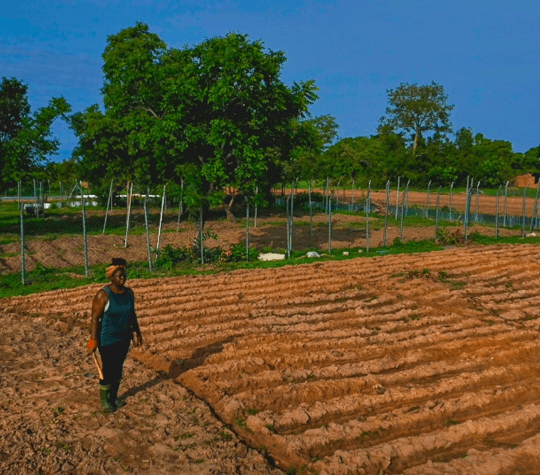
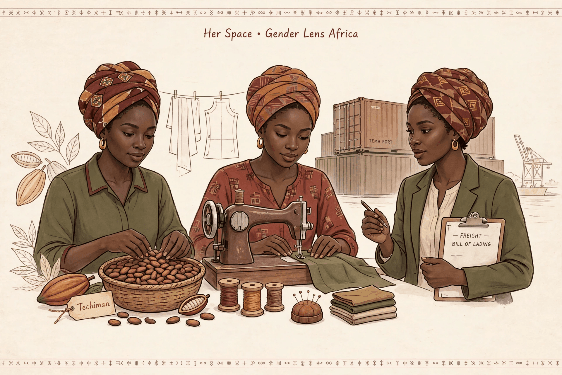
This lands squarely in Ghana, where women make up 83 percent of market traders and street vendors nationwide, while 87 percent of women’s employment in Greater Accra is informal, according to WIEGO.
Among women market traders, 86 percent are own-account workers, meaning they are self-employed rather than employees with an employer responsible for workplace benefits.
Their access to pensions, paid leave and social insurance therefore depends much more heavily on schemes designed for informal workers, as well as their own ability to contribute.
What is the economic value of unpaid care?
Article 13(h) asks states to recognise “the economic value of the work of women in the home”.
It is one of the Protocol’s less discussed provisions, but it has significant implications. Cooking, cleaning and caregiving are treated not simply as private household activities but as forms of economic contribution.
Recognising that principle, measuring the time women spend on unpaid care, assigning it a monetary value and incorporating that value into national economic measurement are four different steps.
The Ghana Statistical Service has measured unpaid care through its Time Use Survey, finding that women spend substantially more time than men on unpaid domestic and caregiving work.
Ghana does not, however, currently have a satellite account assigning a monetary value to unpaid household work within its national economic measurement. That makes it harder to reflect the scale of unpaid care in the budgets and policies that shape economic life.
What does the Protocol say about maternity leave?
Article 13(i) guarantees adequate, paid pre- and post-natal maternity leave in both the private and public sectors.
Ghana’s Labour Act, Section 57, provides women workers with at least 12 weeks of maternity leave in addition to their annual leave entitlement, with full remuneration during that period.
The difficulty is coverage.
The entitlement is tied to an employment relationship covered by the Labour Act. A woman running her own market stall, sewing business or food business does not have an employer who can be required under the Labour Act to provide paid maternity leave.
That creates a gap between the protection available to a woman in formal employment and the protection available to many women earning their livelihoods outside it.
Does Ghana’s tax system treat women and men equally?
Article 13(j) requires taxation laws to apply equally to women and men.
Ghana’s tax framework does not impose different rules simply because a taxpayer is a woman or a man. But formal equality in legislation does not necessarily mean identical effects in practice.
Women’s concentration in informal and lower-income work raises a separate question about how taxation operates for people whose earnings are irregular and who work outside standard employment arrangements.
What did Ghana promise, and what do women experience?
Ghana has laws addressing several of the commitments contained in Article 13, particularly for women in formal employment.
The harder test is what happens outside that system.
A large proportion of Ghana’s working women operate in the informal economy, where protections linked to a formal employer may not apply. Unpaid care remains difficult to measure and value. And a legal right has limited practical effect when a woman cannot access an effective way to enforce it.
The Maputo Protocol is more than a list of rights Ghana agreed to recognise. Article 13 sets out a standard against which the country’s laws, policies and economic systems can be examined.
Ghana signed that commitment in 2003 and ratified it in 2007.
More than two decades later, the question is not simply what the country promised. It is how much of that promise reaches the women whose work keeps the economy moving.