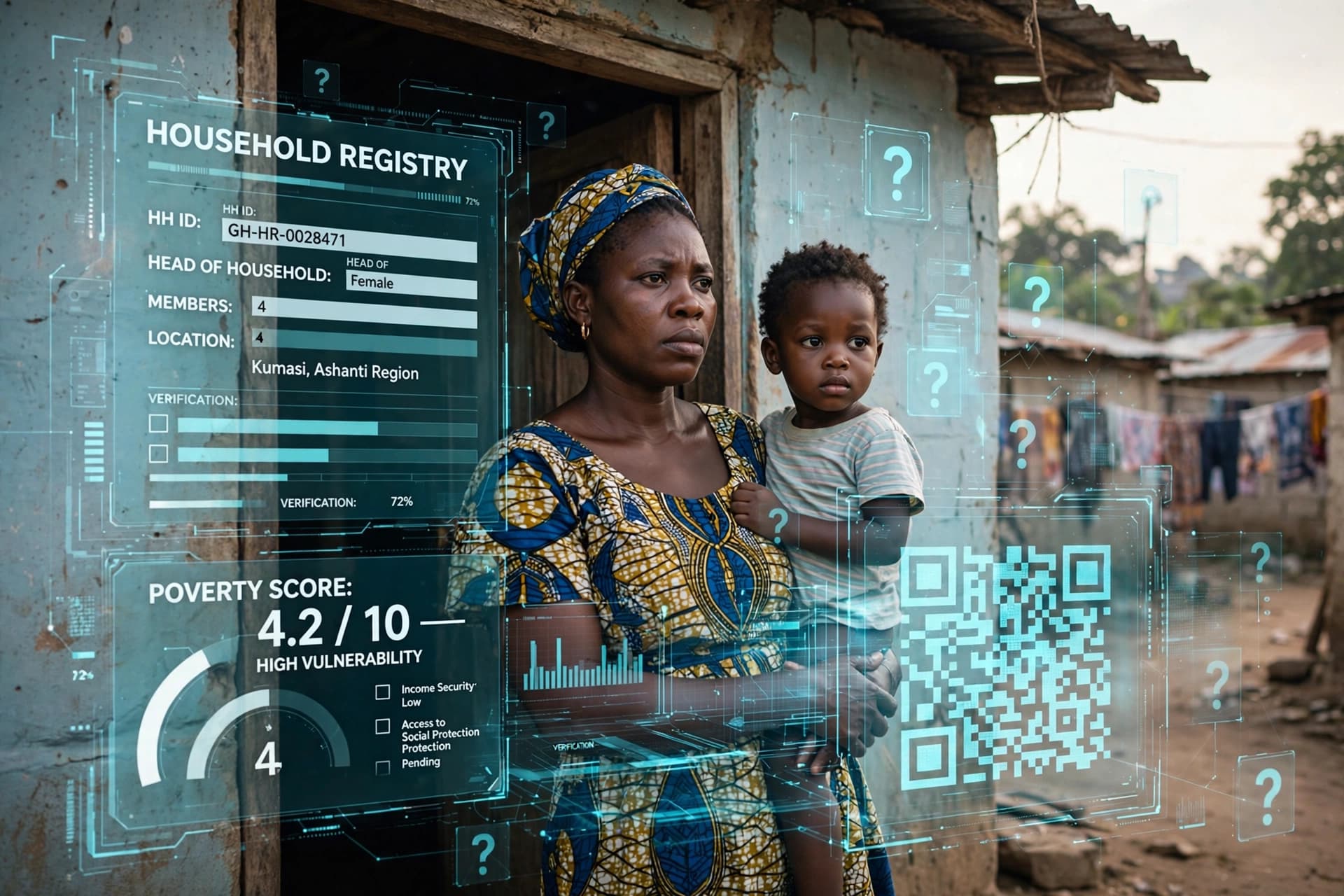
Accra, Ghana, October 31, 2026: Ghana wants to make more of its own medicines. For a country whose health programmes depend significantly on imported pharmaceutical products, the ambition makes economic and public health sense.
The Government is now exploring local and regional production of HIV medicines, diagnostics and other essential health commodities, arguing that stronger domestic manufacturing capacity could reduce exposure to disruptions in international supply chains and fluctuations in external health financing.
The announcement, made by Dr Alhaji Abubakar Wayo, Chief Director at the Office of the President, at the 15th National HIV and AIDS Partnership Forum in Accra, comes at a time when Ghana is confronting two connected challenges: sustaining its HIV response and reducing its dependence on external sources of financing and supplies.
But there is a question that deserves equal attention.
If Ghana begins producing more HIV medicines locally, will the people who need them actually find them more affordable and accessible?
The case for making medicines at home
The argument for local pharmaceutical manufacturing is not new.
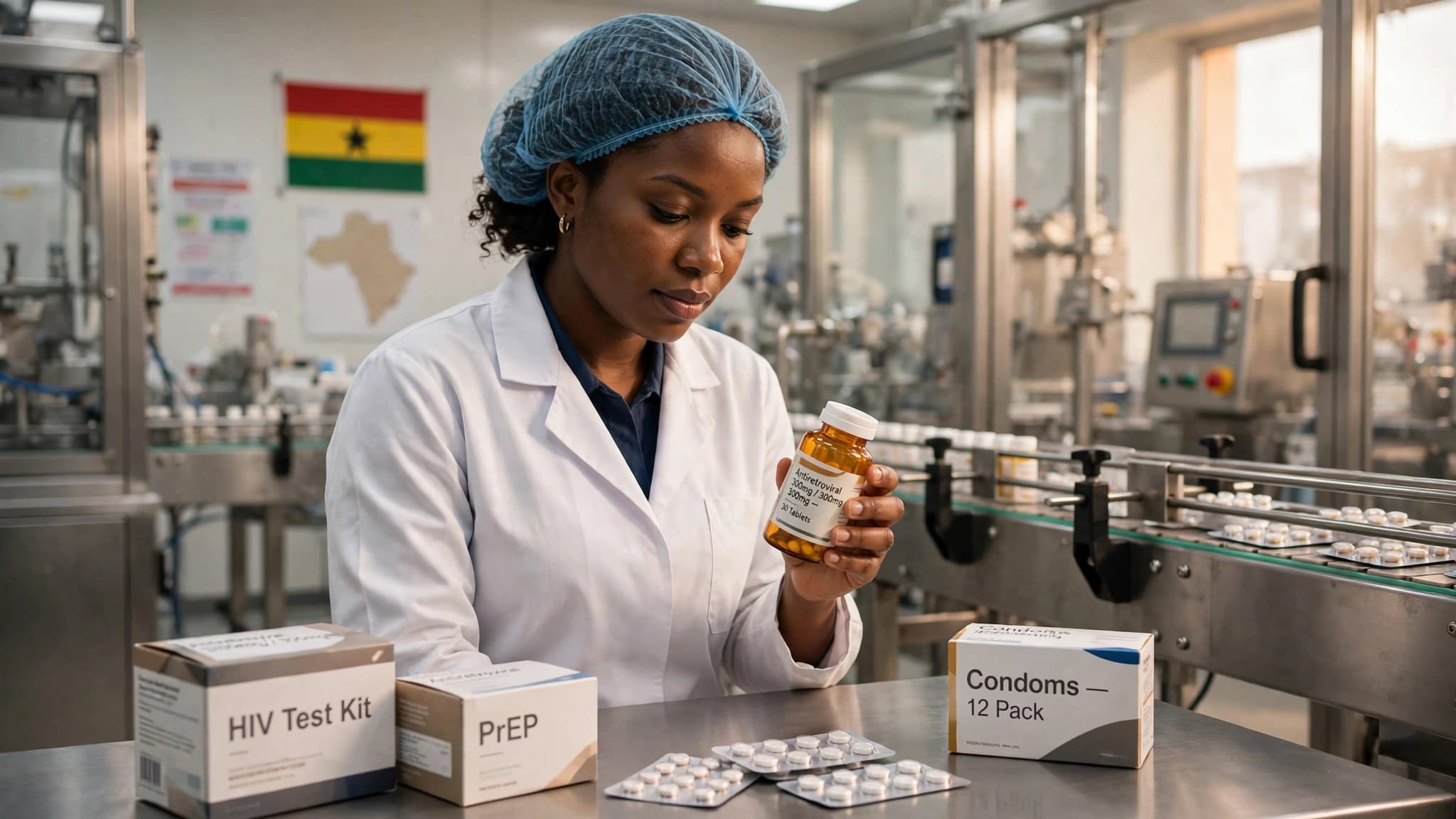
In April 2025, the Ghana AIDS Commission announced plans to work with pharmaceutical companies to manufacture HIV commodities, including condoms, test kits and antiretroviral medicines.
At the time, the Commission indicated that about 80 per cent of commodities used for HIV care services were imported. It also discussed the possibility of supporting existing pharmaceutical factories with technology to manufacture the products required.
More recently, Ghana's National Pharmaceutical Manufacturing Policy was launched in October 2026, with a target of increasing the share of locally manufactured medicines in the domestic market from 30 to 60 per cent within five years.
The policy seeks to attract investment, expand manufacturing capacity, improve market access and strengthen the domestic pharmaceutical supply chain.
The HIV manufacturing proposal therefore sits within a broader industrial and health security agenda.
There is also a clear economic argument. Heavy dependence on imported medicines exposes countries to currency fluctuations, international shipping disruptions, supplier shortages and changes in donor financing.
When essential commodities are sourced largely from outside the country, disruptions beyond the control of local health authorities can affect the availability and continuity of services.
Ghana's National HIV Prevention Roadmap 2026–2028 recognises this vulnerability. It identifies periodic shortages of HIV commodities at some health facilities and recommends better stock monitoring, demand forecasting and improvements in procurement.
The roadmap specifically proposes exploring local manufacturing of condoms and PrEP products. It also reports that a feasibility study on local production of antiretroviral medicines is underway.
This is important because local production is not simply an industrial ambition. It is increasingly being considered as part of Ghana's strategy for securing essential health commodities.
Local production is not the same as affordable access
However, establishing pharmaceutical manufacturing capacity does not automatically make medicines cheaper.
Producing medicines requires substantial investment in equipment, technology, skilled personnel, quality assurance, regulatory compliance and reliable supplies of raw materials.
Ghana's new pharmaceutical manufacturing policy acknowledges some of these difficulties. Among the challenges identified are the high cost of imported active pharmaceutical ingredients, limited production capacity, inadequate technology transfer and the difficulty manufacturers face in securing affordable long-term financing.
The dependence on imported raw materials is particularly important.
A medicine may be manufactured in Ghana, but if its active ingredients and other essential inputs still come from international suppliers, the country remains exposed to external supply and price pressures.
Local production can reduce some vulnerabilities, but it does not automatically eliminate them.
There is also the question of quality.
Antiretroviral medicines are used by people who may require treatment throughout their lives. They must meet rigorous standards for safety, efficacy, consistency and quality.
The Food and Drugs Authority and other relevant regulatory institutions will therefore have a critical role in ensuring that locally manufactured HIV medicines meet the required standards before they enter the market.
The Government must also establish procurement arrangements that give local manufacturers a viable market without compromising quality or value for money.
The challenge is not merely to produce medicines within Ghana's borders. It is to produce the right medicines, at the required quality, in sufficient quantities and at prices the health system can sustain.
What does this mean for women and girls?
The manufacturing debate also has a gender dimension.
Ghana's HIV epidemic does not affect men and women equally. National estimates for 2024 showed that women aged 15 and above accounted for 69 per cent of new HIV infections among people aged 15 and above.
Adolescent girls and young women also face particular barriers to accessing prevention information and services.
For them, access to HIV prevention cannot be reduced to the availability of antiretroviral treatment.
It includes condoms, HIV testing, pre-exposure prophylaxis (PrEP), sexual and reproductive health services, accurate information and confidential, non-judgmental healthcare.
PrEP is particularly important because it allows HIV-negative people to reduce their risk of acquiring HIV through medication.
Ghana's National HIV Prevention Roadmap identifies expanded access to PrEP as a priority. It also recommends exploring local manufacturing opportunities for PrEP products and condoms.
For women and girls, the availability of a wider range of affordable prevention options could make a meaningful difference.
But manufacturing alone will not resolve the social and structural barriers that prevent some women from accessing these services.
A woman who fears discrimination at a health facility may still avoid seeking PrEP, even if the medication is locally produced. A young girl who lacks accurate information may not know that prevention options exist. A woman in a rural community may still face difficulties accessing services if distribution systems do not reach her area.
The country's manufacturing strategy must therefore connect with its prevention strategy.
It should consider which commodities are needed, which populations face the greatest barriers, where shortages occur and how products will reach the people who need them.
The question of who benefits
There is another issue Ghana must confront: who will benefit financially and practically from local pharmaceutical manufacturing?
The National Pharmaceutical Manufacturing Policy seeks to increase local production and attract investment. It also identifies government procurement and the National Health Insurance Scheme as important sources of market opportunities for manufacturers.
This creates an opportunity for government to use its purchasing power to support local production while securing medicines at affordable prices.
But the interests of manufacturers and patients must remain aligned.
If locally manufactured medicines cost more than comparable imported products, or if procurement arrangements favour commercial interests over public health needs, the benefits of localisation could be limited.
Government must be transparent about the costs of production, procurement arrangements, quality standards and the savings expected from local manufacturing.
There must also be clear accountability for public investments and incentives offered to pharmaceutical companies.
The involvement of the private sector is necessary, but public health outcomes must remain the measure of success.
For people living with HIV, what matters is not where a medicine was manufactured. It is whether the medicine is available when needed, meets the required standards, is affordable and can be accessed without discrimination.
Local manufacturing must strengthen prevention too
One risk in the current conversation is that the focus on HIV medicines could overshadow the importance of prevention.
Treatment remains essential. People living with HIV must have uninterrupted access to antiretroviral therapy, and those who test positive must be linked promptly to care.
But Ghana cannot treat the supply of medicines as a substitute for preventing new infections.
The country's HIV Prevention Roadmap 2026–2028 identifies condom programming, PrEP, HIV self-testing, youth-friendly services and community-led interventions as priorities.
It also notes that periodic shortages of prevention commodities can interrupt services and increase vulnerability to HIV infection.
Local manufacturing should therefore not be limited to antiretroviral medicines. The feasibility of producing condoms, testing products and PrEP commodities locally also deserves attention.
Equally important is ensuring that community organisations, health facilities and local service providers have the resources to distribute these products and provide appropriate information.
A medicine sitting in a warehouse does not protect anyone. It must reach the person who needs it.
From announcement to measurable results
Ghana has announced its intention to strengthen pharmaceutical manufacturing before. The 2025 announcement by the Ghana AIDS Commission, the 2026 National Pharmaceutical Manufacturing Policy and the latest statement at the National HIV and AIDS Partnership Forum show that the issue remains on the national agenda.
The next stage must be about implementation.
Government should communicate the findings of the antiretroviral manufacturing feasibility study, identify the products suitable for local production and publish a clear implementation plan.
The plan should establish timelines, financing arrangements, manufacturing partnerships, regulatory requirements and procurement commitments.
It should also identify how local production will support the national HIV prevention roadmap, particularly its commitments to improve the availability of condoms, PrEP and other essential commodities.
Progress must be measured not only by the number of factories established or products manufactured, but also by the reliability of supplies, affordability, geographical access and the number of people who benefit.
Ghana has an opportunity to strengthen its pharmaceutical industry while improving the security of its HIV response.
But the ultimate test will not be whether the country can manufacture its own medicines.
It will be whether people living with HIV can obtain treatment without interruption, whether women and girls can access prevention products without financial or social barriers, and whether people in underserved communities receive the same protection as those in major urban centres.
Local production should serve public health, not become an end in itself.
Ghana needs more than medicines made at home. It needs a health system that ensures nobody is left without them.