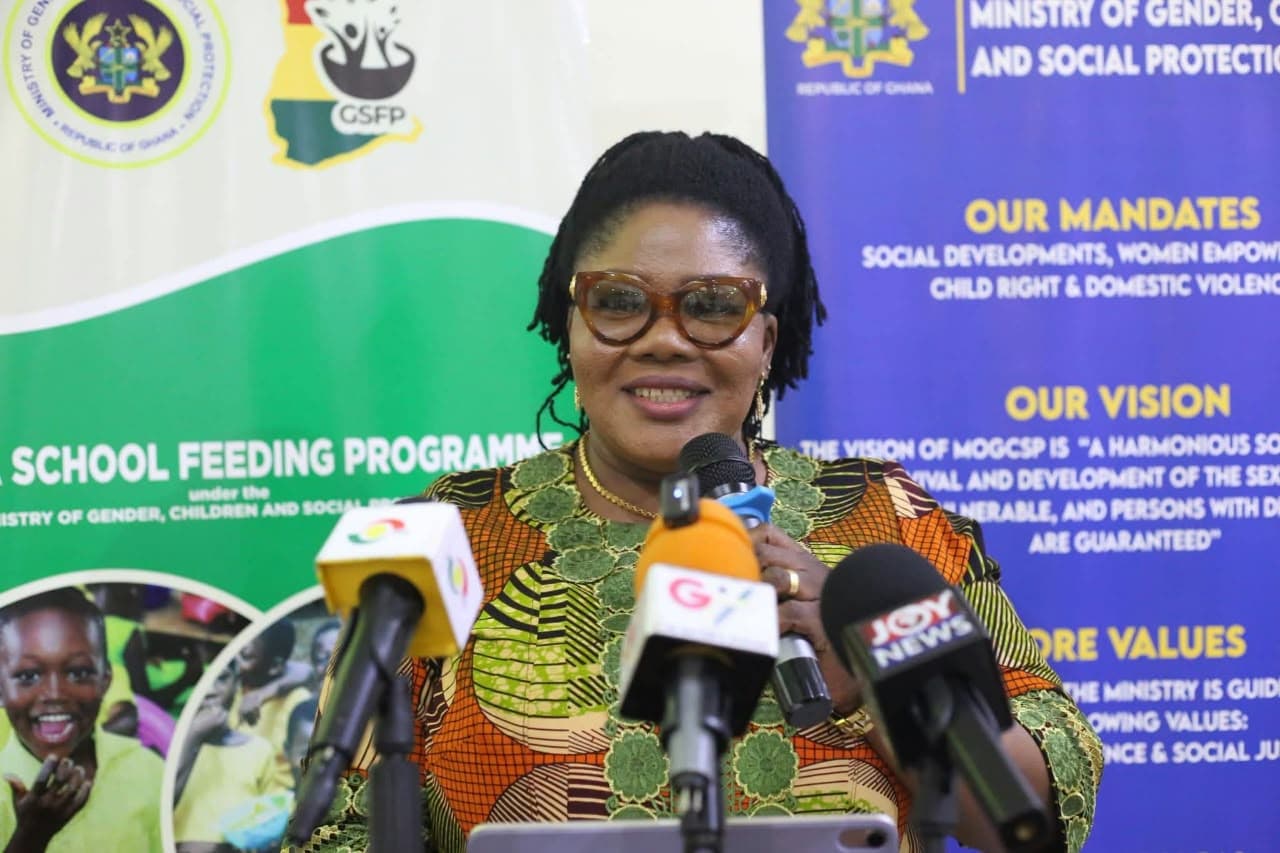
Accra, Ghana, October 11, 2026: Accurate school enrolment data is critical to ensuring that children receive the meals intended for them under Ghana’s School Feeding Programme, the Minister for Gender, Children and Social Protection, Dr Agnes Naa Momo Lartey, has said.
Speaking at a sensitisation workshop in Kumasi for Regional and District Education Directors from the Ashanti and Western North regions, the Minister called for stronger collaboration between education authorities and the Ghana School Feeding Programme Secretariat to improve data management, monitoring and accountability.
The engagement focused on how reliable school records could improve the allocation of food and other resources under the programme.
Inaccurate enrolment figures could leave schools short of food
More than 4.5 million children benefit from the programme every school day, according to the Minister. She said accurate enrolment figures were therefore necessary for effective planning, budgeting and resource allocation.
Dr Lartey warned that inaccurate figures could result in resources being allocated to children who were not present, while schools with higher actual enrolment could receive insufficient quantities of food.
She urged headteachers, class teachers and education authorities to ensure that the figures submitted for school feeding were based on reliable school records and properly verified.
The Minister said the aim was not to assign blame but to establish a dependable system that would help ensure every child enrolled in the programme received the intended meal.
School feeding grant increases to GH¢2 per child
The Minister also highlighted the government’s increased investment in the programme, noting that the feeding grant had risen from GH¢1.50 to GH¢2 per child per day.
She further said 20,171 caterers and head cooks had received training in practical nutrition standards as part of efforts to improve meal quality.
However, ensuring that children receive the intended meals also depends on accurate information about enrolment and the resources each school requires.
Reliable data can help authorities estimate food requirements, plan expenditure and assess whether allocations correspond with the number of children being served.
Stronger monitoring needed as programme expands
Speaking to the media on the sidelines of the workshop, Dr Lartey said accurate data would help the government determine the resources required to support any future expansion of the programme.
She stressed the importance of closer collaboration between the Ghana School Feeding Programme Secretariat and the Ghana Education Service, particularly at the school and district levels, to strengthen monitoring, reporting and accountability.
The call places school records at the centre of efforts to improve the delivery of a programme that provides daily meals to millions of children.
For the programme to serve children effectively, enrolment figures must be reliable, allocations must reflect schools’ actual needs, and monitoring systems must help identify and address gaps in delivery.
Source: Statement published on the Facebook page of the Ministry of Gender, Children and Social Protection.