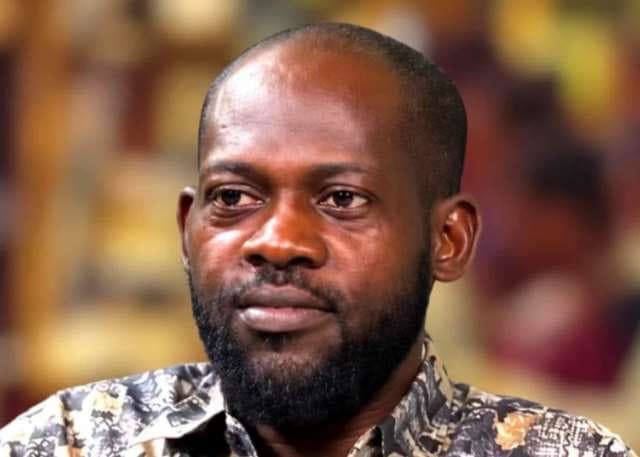
Accra, Ghana, October 22, 2026: The National Democratic Congress (NDC) has suspended Daniel Nortey from all media appearances and public engagements in the party’s name following remarks he made about rape during a televised discussion of sexual abuse allegations involving students at Obuasi Senior High Technical School (SHTS).
In a statement dated 22 October 2026, the party’s National Communication Bureau said it had noted with “serious concern and distaste” the remarks made by Nortey, the NDC Communications Officer for Amasaman.
The suspension takes immediate effect and will remain in place until further notice.
The decision followed public backlash over Nortey’s comments during a discussion on ATV about allegations against the school’s suspended headmaster, Zakaria Abdulai.
According to a report by APMediaGH published on 21 October, Nortey questioned the seriousness with which rape was being discussed and challenged another panellist during the exchange.
“He’s a rapist, and so what? Haven’t you done that before? Is today the first time someone is raping someone?” Nortey said, as quoted in the report.
He also asked the other panellist, “Haven’t you also raped someone before?”
The remarks prompted criticism because they appeared to normalise rape while the country was discussing allegations involving female students and a school authority figure.
Daniel Nortey apologises after backlash
Nortey issued an unqualified apology on 21 October, acknowledging that his remarks were senseless and had disappointed many people.
In an apology reported by AdomOnline, he addressed his constituency, Ghanaians and women, asking for forgiveness.
“I am here to deliver an unqualified apology. I apologise to my constituency, Ghanaians and females at large,” he said.
Nortey said he had not intended to support rape and acknowledged that he would not take the matter lightly if it happened to a relative.
He attributed his comments to the heat of the moment but admitted that this did not excuse what he had said.
He also referred to his affection for his mother as part of his explanation for his regard for women.
“The way I love my mum is how I love every woman. I plead for forgiveness. I know I have disappointed people, and I am sorry for that,” he said.
His apology came before the NDC announced the suspension.
What the NDC said about the suspension
In its statement, the NDC reiterated its zero-tolerance stance on sexual abuse and all forms of sexual exploitation, particularly where the safety, dignity and welfare of children are concerned.
The party condemned remarks that trivialise sexual abuse allegations or undermine the seriousness with which they must be treated.
It also acknowledged Nortey’s apology but emphasised that public commentary on sexual abuse must be responsible, sensitive and respectful of due process.
“Such matters must not be treated lightly or reduced to partisan debate,” the statement said.
The party consequently barred Nortey from making media appearances or undertaking public engagements in its name until further notice.
The statement said the NDC remained committed to the protection of women and children, accountability and the principle that allegations of sexual abuse must be handled seriously and in accordance with the law.
Why the remarks matter beyond party politics
The controversy goes beyond a political communicator’s choice of words. It raises questions about how public figures discuss sexual violence, particularly when allegations involve children and people entrusted with authority over them.
Rape is not made less serious because it occurs repeatedly, because an accused person belongs to a particular political party or because a discussion becomes heated. Nor does the prevalence of sexual violence make it normal or acceptable.
Suggesting that rape is something men routinely do risks turning sexual violence into an expected feature of male behaviour rather than an act for which individual responsibility matters.
It can also reinforce the harmful idea that men are collectively incapable of respecting consent. That assumption is neither necessary nor justified. Men can and do reject sexual violence, and responsibility for rape rests with the person who commits it.
Public figures have an additional responsibility because their words can shape how audiences understand sexual abuse and respond to people who report it.
When allegations involve students, careless commentary can divert attention from the central questions: what happened, what evidence is available, whether the investigation is credible and whether the students concerned are protected from harm.
The principle of due process must be respected. Allegations must be investigated fairly, and an accused person must not be treated as guilty before the legal process establishes guilt. But due process is not a reason to trivialise rape or imply that it is an ordinary experience shared by all men.
The Obuasi SHTS case remains separate from the political controversy
The controversy surrounding Nortey’s comments emerged amid public concern over sexual misconduct allegations involving female students at Obuasi SHTS and the school’s suspended headmaster, Zakaria Abdulai.
Abdulai has said he was cautioned by police and granted self-recognisance bail following a rape complaint. The case and the wider allegations remain distinct from the NDC’s disciplinary action against Nortey.
The suspension does not determine the truth of the allegations against Abdulai. Similarly, Nortey’s apology does not resolve the underlying concerns about student safeguarding and accountability.
Those matters require their own investigations and appropriate legal processes, with the privacy and welfare of students protected.
An apology, a suspension and the accountability question
Nortey has apologised. The NDC has acknowledged that apology and imposed a suspension from party media appearances and public engagements.
The party’s action signals that it considers his remarks incompatible with the standards expected of someone speaking in its name. Whether the apology will restore public confidence is a separate question, and the party has not announced an end date for the suspension.
For Gender Lens Africa, the episode highlights a broader challenge in the response to sexual violence: public conversations must not normalise abuse, turn allegations into partisan weapons or lose sight of the people whose safety is at stake.
The responsibility to protect women and children is not fulfilled by statements alone. It requires consistent conduct, credible investigations, safeguards for those who report abuse and public commentary that treats sexual violence with the seriousness it deserves.
Source: National Democratic Congress, National Communication Bureau, statement dated 22 October 2026;