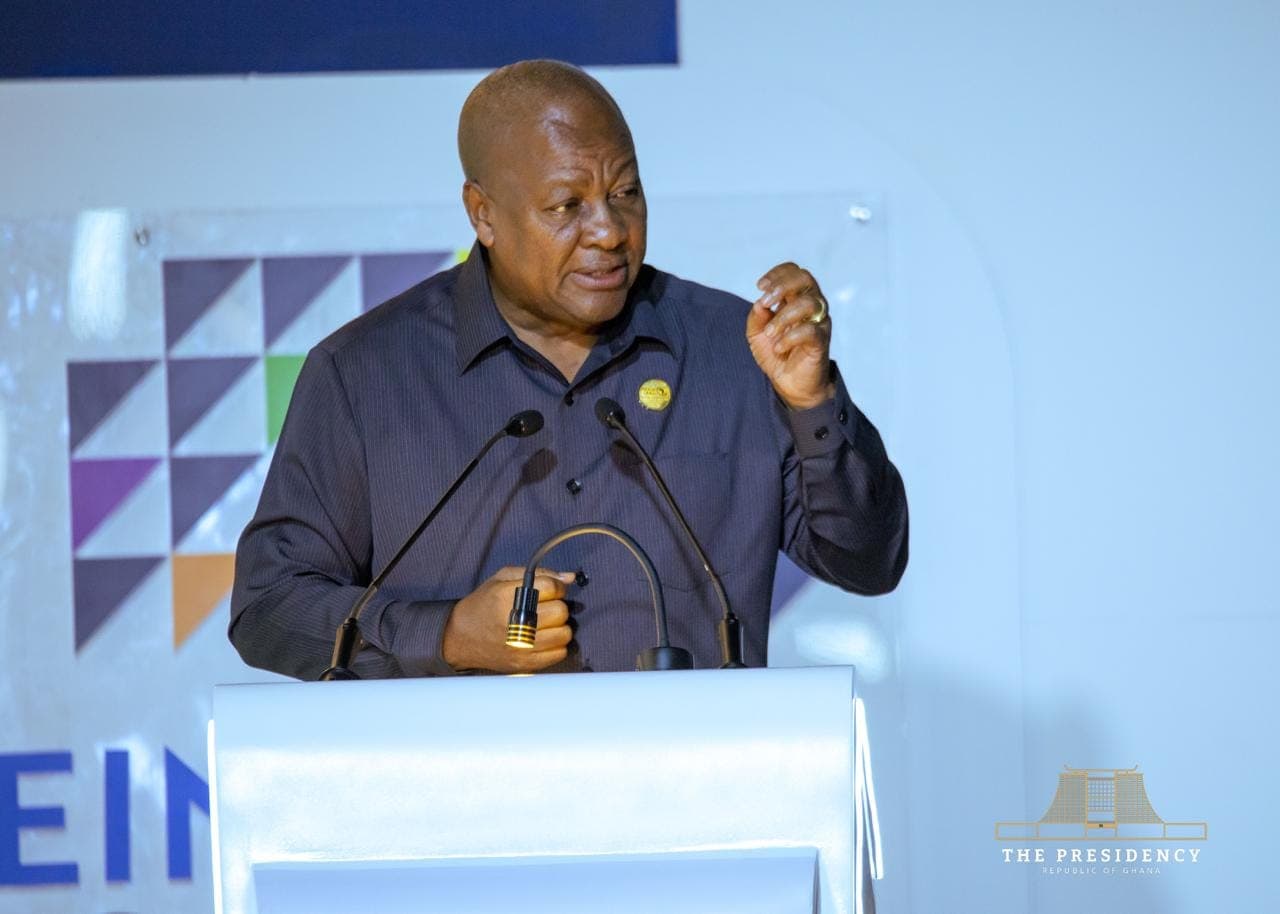
Accra, Ghana, November 1, 2026: President John Dramani Mahama has called for reparatory justice discussions between Ghana, the United Kingdom and other affected countries to move beyond a formal apology and address the lasting consequences of the transatlantic slave trade and colonialism.
In a statement issued on Sunday, November 1, 2026, the President outlined five areas he wants included in proposed structured discussions: a formal apology, action against systemic racism, targeted development investments, restitution of stolen cultural heritage and strategic partnerships to address structural economic inequalities.
Mahama, who serves as the African Union (AU) Champion on Reparations and chairs the Global Advisory Panel on Reparatory Justice, welcomed the reported openness of British Prime Minister Andy Burnham to a formal apology and structured dialogue with communities affected by the slave trade.
He described the British position as a significant development in efforts to confront the historical injustices associated with slavery and colonialism.
However, he stressed that an apology, while important, could not reverse the suffering and exploitation experienced by millions of Africans.
The President said the proposed discussions should involve the AU, the Caribbean Community (CARICOM), the African diaspora and countries that participated in the transatlantic slave trade.
Five priorities for reparatory justice
A formal apology for the transatlantic slave trade and the racialised enslavement of Africans.
A coordinated international commitment to dismantling systemic racism and Afrophobia, which continue to affect people of African descent.
Mahama called for targeted investments in education, science, youth empowerment, climate resilience and healthcare to address inequalities that have persisted across generations.
Another priority is the restitution of stolen cultural heritage, including artefacts and other cultural property removed from African societies during slavery and colonial rule.
Finally, he proposed strategic development partnerships to address structural poverty and inequalities within the global economic and debt systems that constrain developing countries.
He said these partnerships should draw on ideas contained in the Accra Reset and the Bridgetown Initiative.
A wider international reparations campaign
The proposed engagement follows the adoption of a Ghana-led United Nations General Assembly resolution in March 2026 declaring the trafficking of enslaved Africans and racialised chattel enslavement of Africans the gravest crime against humanity.
The resolution received 123 votes in favour, three against and 52 abstentions. The United Kingdom abstained.
It called for inclusive dialogue on reparatory justice, including formal apologies, restitution, compensation, rehabilitation, measures to prevent recurrence and action against systemic discrimination.
Ghana has since continued to advocate for coordinated international action through the AU and partnerships with Caribbean countries and the wider African diaspora.
In June 2026, Ghana hosted the Next Steps Consultative Conference on Reparations in Accra, bringing together African and Caribbean representatives to discuss moving the reparations agenda from advocacy towards implementation.
The discussions included the return of cultural property, compensation, debt relief and other measures addressing the long-term effects of slavery and colonialism.
The British government's position, as reported following Burnham's recent comments, is that it is open to discussing a formal apology but does not support financial reparations.
Mahama acknowledged that participating countries and communities may hold different positions on the form reparatory justice should take, but said such disagreements should not prevent meaningful engagement.
He identified the Accra Next Steps Commitments, CARICOM's Ten Point Plan and AU declarations on reparatory justice as frameworks to guide the discussions.
The President reaffirmed Ghana's readiness to work with the AU, CARICOM, the United Kingdom and other international partners towards justice, reconciliation and an end to racial discrimination.