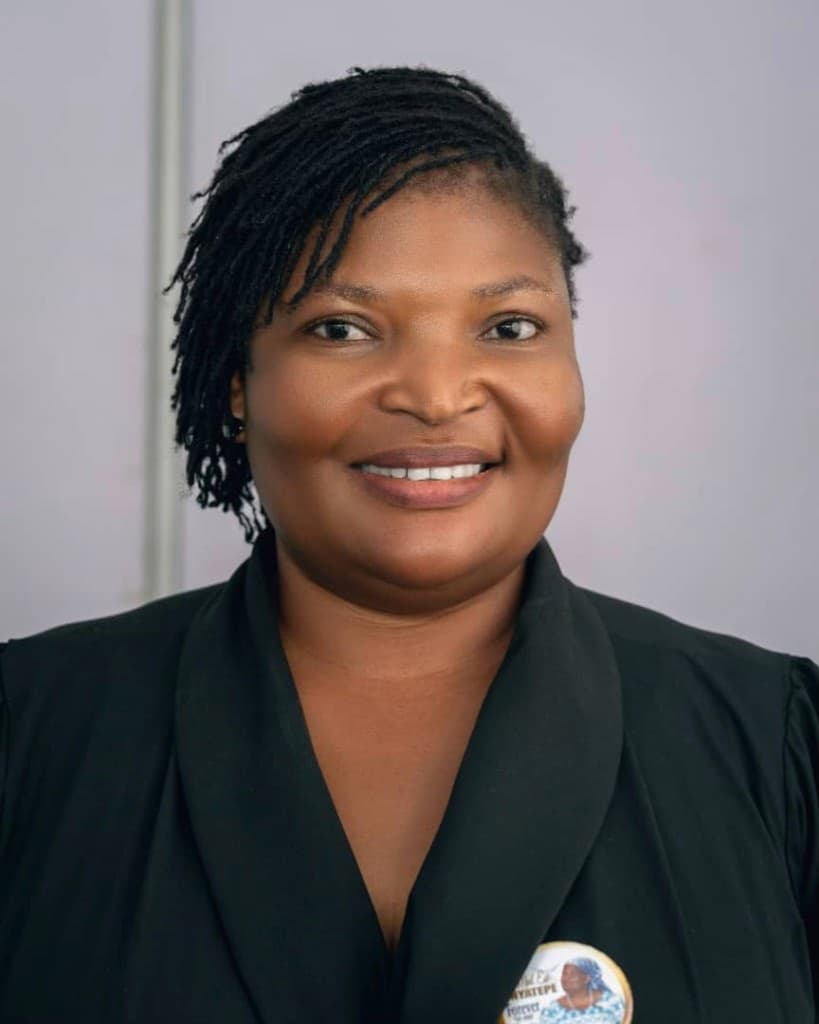
Accra, Ghana, November12, 2026: When Serena Aurora was a child, she wished a camera had been in the room. She wanted “something that could witness what I could not yet explain,” she told Gender Lens Africa.
Today she holds the camera. Her documentary Breaking the Silence begins with her own experience of childhood sexual abuse and widens into a question she says the world asks too rarely: what happens after someone speaks?
Most child protection campaigns tell children to speak up. Serena asks the adults who hear them to listen and take action. “We often tell children to speak up, yet we don’t always invest enough in teaching adults how to respond,” she said.
Serena, a British-Indian filmmaker who founded Aurora’s Eye Films, wrote to Gender Lens Africa about the film after seeing our Through Her Lens campaign, which runs from 25 November to 10 December. This is Gender Shelf #002, our space for the books, films and ideas that help us see African stories differently. It draws on her written answers to our questions, her electronic press kit and her public materials.
What is Breaking the Silence about?
The film brings together voices from eight countries to ask what life looks like after childhood sexual abuse, and how survivors find safety, trust and connection. Serena directed, edited and produced it. Aurovenkatesh shot it and Vilakshan Kandwal recorded the sound, according to the press kit.
The languages include English, Luxembourgish, Chinese, Spanish, French, Italian and Kannada, with English captions. The press kit does not name the eight countries.
Serena chose not to recreate the abuse. “I never wanted the film to depend on shocking an audience,” she said. Therapies using movement, water, sound, art, sandplay and somatic practice, which works through the body, carry the film’s sense of memory and trauma instead.
The choice protects the people on screen and those watching it. “A survivor is never simply their trauma,” she said. You can watch the trailer and her director’s introduction online.
Why does life after disclosure matter?
The scale of the problem makes the question urgent. In October 2024, the United Nations Children’s Fund (UNICEF) published its first global estimates of sexual violence in childhood. More than 370 million girls and women alive today, one in eight, experienced rape or sexual assault before the age of 18. For boys and men, the estimate is 240 to 310 million, around one in 11, drawn from a broader range of data sources than the girls’ figure.
These estimates cover rape and sexual assault. UNICEF says the number of girls and women affected rises to 650 million, or one in five, when non-contact forms such as online or verbal abuse are included.
Sub-Saharan Africa has the highest number of victims, at 79 million girls and women, or 22 per cent.
Those figures only count what happened. Serena's film asks about the next step. “We often talk about the courage it takes to disclose abuse,” she said. “But we speak far less about what follows.”
She names what can follow: a child who is not believed, a family that struggles to respond, an institution that protects itself. “Sometimes people are more concerned about protecting a family’s reputation, an institution’s image or their own sense of comfort than protecting the person who has spoken,” she said.
What does Ghana’s evidence show about the aftermath?
Serena's film is not about Ghana, but Ghanaian research describes a similar pattern. A 2025 analysis of 110 case reports of female child sexual abuse, all supported by an NGO that assists victims, found the perpetrator was mostly a relative and the abuse mostly happened at home. Children who stayed silent feared blame, their family’s reaction and the perpetrator.
A 2021 study in selected Ga communities found that almost all cases of child sexual abuse were discovered by accident, and the few children who did tell, told friends. A 2024 study of four survivors of abuse within families points to taboos on disclosure and a pull to protect the family’s image. These are small qualitative studies, and none is nationally representative. They show how silence works, not how often it happens.
Cases that reach the police meet a second wall. Child Rights International (CRI) analysed 899 child abuse cases recorded by the Domestic Violence and Victim Support Unit (DOVVSU) of the Ghana Police Service across 10 regions, and presented its findings at a press conference in Accra. Defilement, the legal term for sex with a child under 16, made up 534 of them, or 59.4 per cent.
Then the cases stalled. Of the 899, 51 per cent remained under investigation. Only 32 per cent had been referred to court. The other 16 per cent had no traceable status.
Some court cases had waited between two and 10 years. CRI estimated that one case can cost a family between GH¢4,000 and GH¢10,500.
Families also step back. At a regional review meeting in April 2026, a DOVVSU officer in the Upper East Region said cases stall when complainants stop cooperating, and the Department of Gender urged community leaders and families to stop interfering.
What does a survivor-centred response look like?
Serena says a survivor-centred response starts with listening and cannot end there. “A supportive response should be calm, respectful and focused on the child’s immediate safety,” she said. A child should be listened to without being blamed, interrogated or promised confidentiality that cannot responsibly be maintained.
She separates children from adult survivors. For a child, protective action is essential, and safety cannot depend on whether the child feels ready to explain everything. Adult survivors should not be pressured to speak publicly, repeat their story, forgive or prove they have recovered. “Healing is not a performance, and it is not a deadline,” she said.
The World Health Organization (WHO) reached similar ground in its 2017 clinical guidelines for responding to children and adolescents who have been sexually abused. They tell health workers to put safety first, protect privacy, offer choices and respect the child’s wishes. They also set time limits for some care: HIV post-exposure medicine for those who have been raped and arrive within 72 hours, and emergency contraception for girls within 120 hours. A health worker decides what each child needs.
If a child tells you
• Stay calm and take what the child says seriously.
• Listen without blaming or interrogating the child.
• Do not promise to keep it secret. You may need to bring in others to protect the child.
• Put the child’s immediate safety first.
• Report to DOVVSU or the helplines below, and get medical care quickly. Time limits apply for some treatment.
Drawn from Serena's interview and the WHO guidelines.
How does the November 2027 campaign work?
Serena's campaign has an African anchor. On 7 November 2022, the United Nations General Assembly adopted resolution A/RES/77/8 and proclaimed 18 November the World Day for the Prevention of and Healing from Child Sexual Exploitation, Abuse and Violence.
Sierra Leone’s First Lady, Fatima Maada Bio, introduced the draft in the Assembly. Sierra Leone and Nigeria sponsored it, more than 120 countries co-sponsored it, and it passed by consensus.
Serena's international campaign, Break the Silence, Start the Change, opens on that day in 2027 and runs from 18 to 24 November. Local partners will lead screenings with facilitated discussions, safeguarding guidance and information on local support. She names educators, child-protection professionals, parents, university students and policymakers as audiences.
She is also developing a Global Screening and Discussion Toolkit that partners can adapt. She plans to measure success by new partnerships, professional learning, better safeguarding conversations and referrals to support. “I don’t want it to become simply a week in which people watch a film, feel moved and then return to their everyday lives,” she said.
There are limits. Public screenings need festival and licensing clearance, the press kit states, and Serena is protecting the film’s festival release plans. No African screening has been announced yet.
How can African organisations take part?
Serena asked us not to treat the continent as one story. “I would be cautious about suggesting that Africa is one context with one set of challenges or solutions,” she said. She calls her approach “mutual learning rather than bringing answers from elsewhere,” and adds that “the answers must be developed locally.”
Her press kit lists more than 50 support, partnership, referral and review relationships, which Gender Lens Africa has not independently verified. Its international pathways include South Africa, Uganda, Kenya, Botswana, Malawi and South Sudan. Named relationships include Makerere University and Moi Teaching and Referral Hospital.
Gender Lens Africa has asked Serena for the safeguarding framework that will govern screenings. Any organisation that wants to become a 2027 partner should ask to see it before committing. A film about trauma will reach survivors in the room, and the support around the screening matters as much as the film.
What can Ghana ask of this film?
Partnership starts with safeguarding. Accountability starts at home. Whatever Ghana decides about screenings, the film’s central question has a local test, and three questions follow for schools, places of worship, clinics and police stations.
Who does a child tell here, and what happens in the first hour? Serena says institutions need “clear safeguarding policies, trained personnel, independent reporting processes and genuine accountability.”
Does the case move? CRI called for mandatory timelines for case resolution, specialised courts and a national digital case tracking system. Without them, a child’s report can sit for years.
Who pays when a family chooses justice? CRI also called for more psychosocial and legal support for victims and their families. A cost of up to GH¢10,500 puts justice out of reach for many households.
“A safeguarding policy means very little if people are afraid to report concerns or if those in positions of power are protected from accountability,” Serena said.
She says the burden does not belong to children. “The fundamental message is that protecting children is an adult responsibility.” Her film asks adults to act on it. “Breaking the silence matters,” she said. “But what we do after the silence is broken matters just as much.”
When a child tells, the responsibility shifts to the adults who hear them. Breaking the Silence asks whether those adults are ready.
Where to watch, partner and get help
• Watch the trailer and the director’s introduction.
• Read about the film and the 2027 campaign at Aurora’s Eye Films.
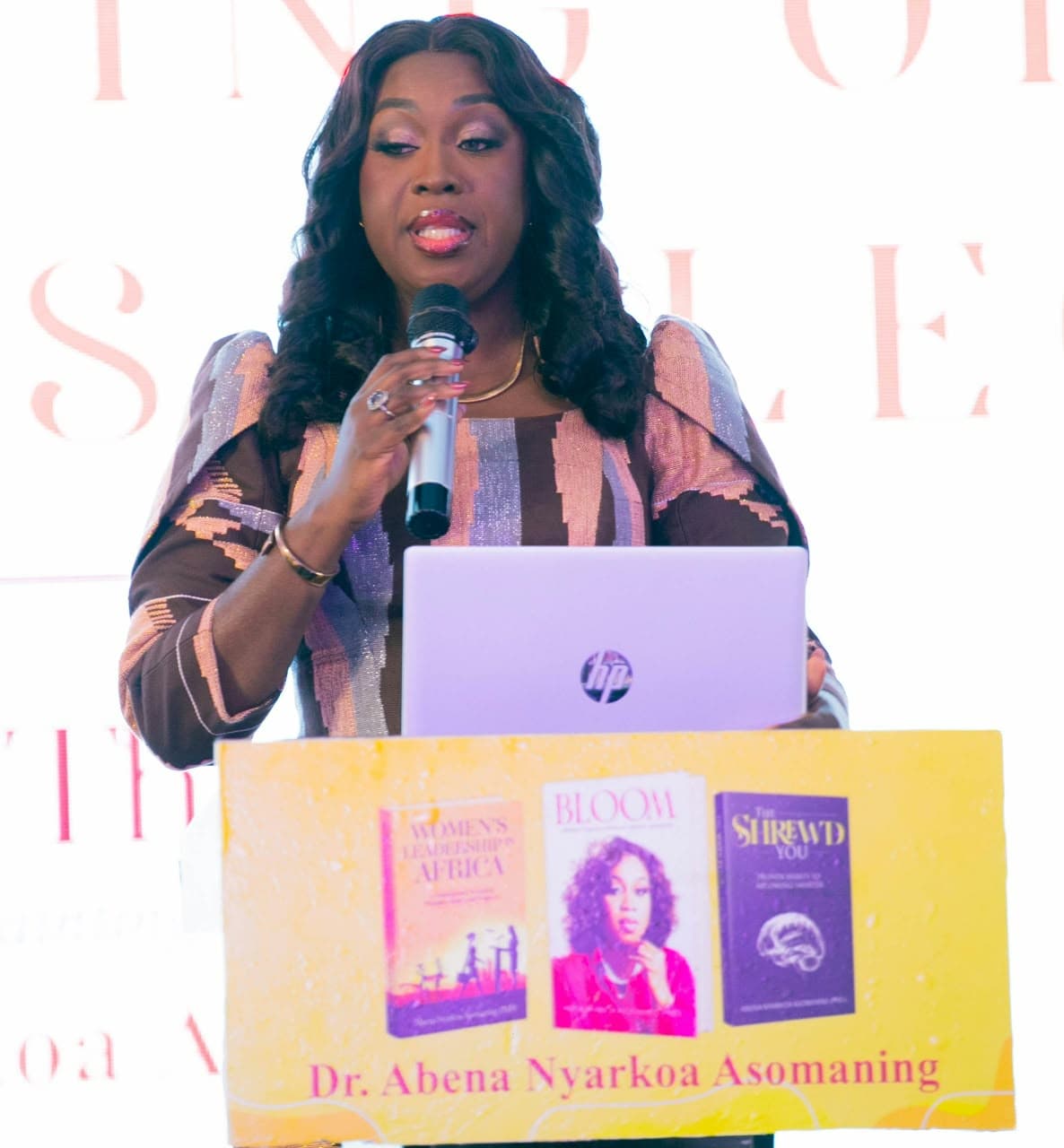
• Read Gender Shelf #001, our first feature, on Dr Abena Nyarkoa Asomaning’s three books.
If you or a child you know needs help in Ghana
• Ministry of Gender, Children and Social Protection Helpline of Hope: 0800 800 800 or 0800 900 900 (toll-free).
• Domestic Violence call centre: 0800 111 222 (toll-free).
• DOVVSU hotline: 055 100 0900.
Gender Shelf is where we explore the books, writers, films and ideas that help us see African stories differently. Through Her Lens welcomes contributions from journalists, advocates, researchers and people with lived experience: genderlensafrica@gmail.com.