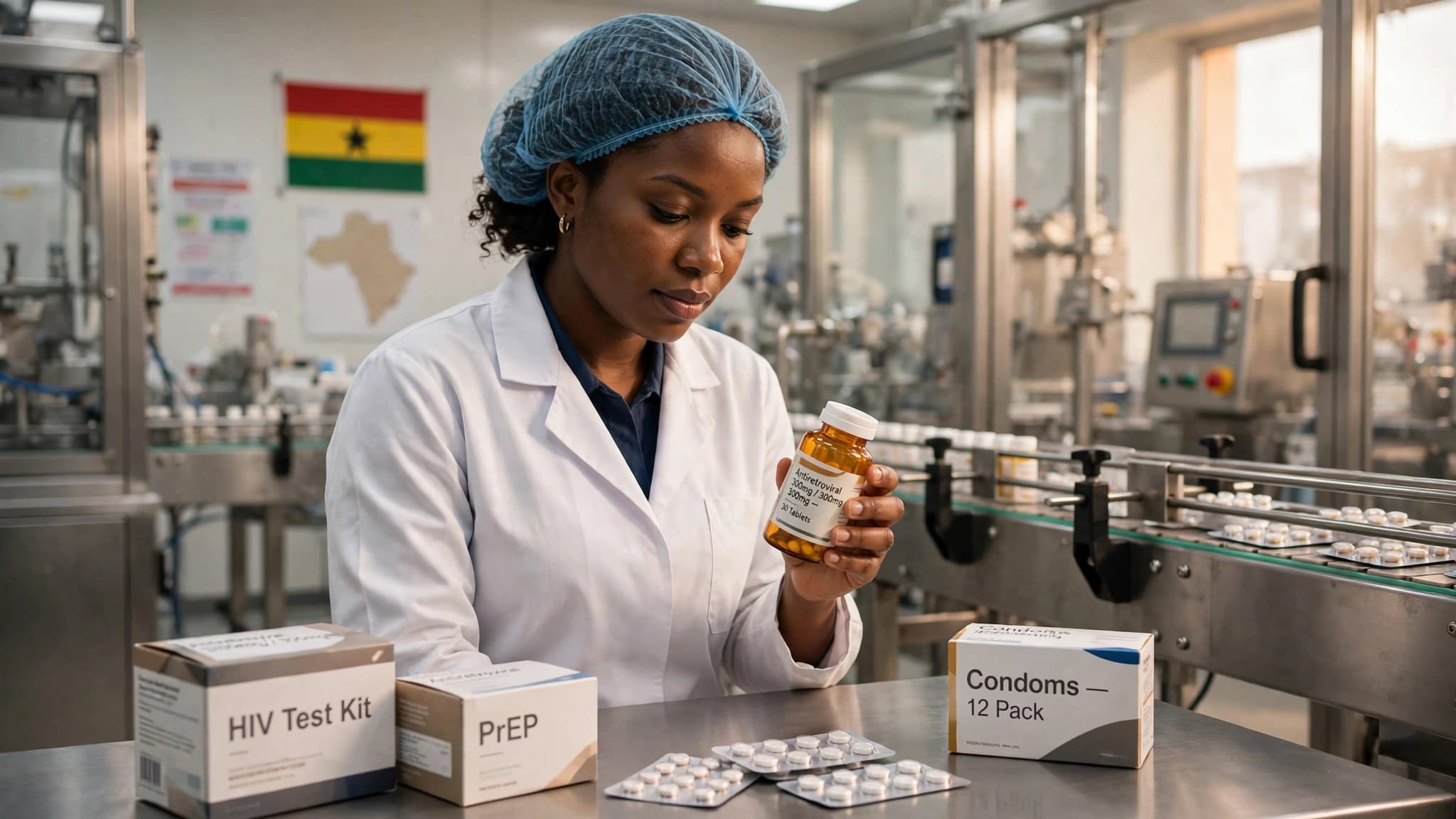
Accra, Ghana, October 31, 2026: Ghana is exploring local and regional production of HIV medicines, diagnostics and other essential health commodities as part of efforts to strengthen national health security and reduce dependence on international supply chains.
Dr Alhaji Abubakar Wayo, Chief Director at the Office of the President, announced the initiative at the 15th National HIV and AIDS Partnership Forum in Accra on Thursday, 29 October 2026.
He said the COVID-19 pandemic and growing pressures on global health financing had exposed the risks associated with relying heavily on international sources for essential health commodities.
Dr Wayo said the Government would consider evidence-based proposals for domestic and regional production, calling on government agencies, research institutions, pharmaceutical manufacturers, regulators and development partners to identify viable manufacturing opportunities.
He stressed that local production should complement, rather than disrupt, access to quality-assured commodities available through established procurement arrangements.
He said stronger domestic manufacturing capacity, alongside increased government investment, would help Ghana sustain HIV prevention, testing, treatment and care services.
National estimates indicate that Ghana recorded 13,951 new HIV infections and 12,051 AIDS-related deaths in 2025, while an estimated 337,435 people were living with HIV.
Dr Wayo said the figures highlighted the need to maintain reliable supplies of HIV medicines while expanding prevention programmes to reduce new infections.
He called for wider access to voluntary HIV testing, self-testing, pre-exposure prophylaxis (PrEP) and accurate health information, particularly for young people.
He also emphasised the importance of preventing mother-to-child transmission, noting that pregnant women living with HIV must receive timely treatment and support. People who test positive should also be linked promptly to appropriate care and supported to remain on treatment.
On financing, he advocated innovative funding mechanisms, responsible private-sector contributions and increased government budgetary allocations for HIV prevention, testing, treatment and care.
He further urged ministries, departments and agencies to incorporate relevant HIV interventions into their policies, programmes and budgets, while metropolitan, municipal and district assemblies should include appropriate interventions in their local development plans.
The private sector, traditional authorities, religious leaders, educational institutions and civil society organisations were also encouraged to support HIV awareness, prevention and access to services.
The 15th National HIV and AIDS Partnership Forum, held under the theme, 40 Years of HIV Response in Ghana: Celebrating Partnerships, Transforming Lives, Sustaining the Future, brought together stakeholders to assess progress and explore strategies for sustaining the national response.
Dr Wayo reaffirmed the Government's commitment to strengthening national ownership of the HIV response and working with stakeholders towards ending AIDS as a public health threat by 2030.