Accra, Ghana, November 13, 2026: Gender Lens Africa (GLA) and the International Relations and Diplomacy Network Ghana (IRDN Ghana) have partnered to spotlight African women shaping diplomacy, foreign policy, peacebuilding and global affairs through Through Her Lens, a six-part editorial series running during the 2026 16 Days of Activism against Gender-Based Violence.
The series will run from 25 November to 10 December 2026 under the theme Women. Diplomacy. Power. Accountability.
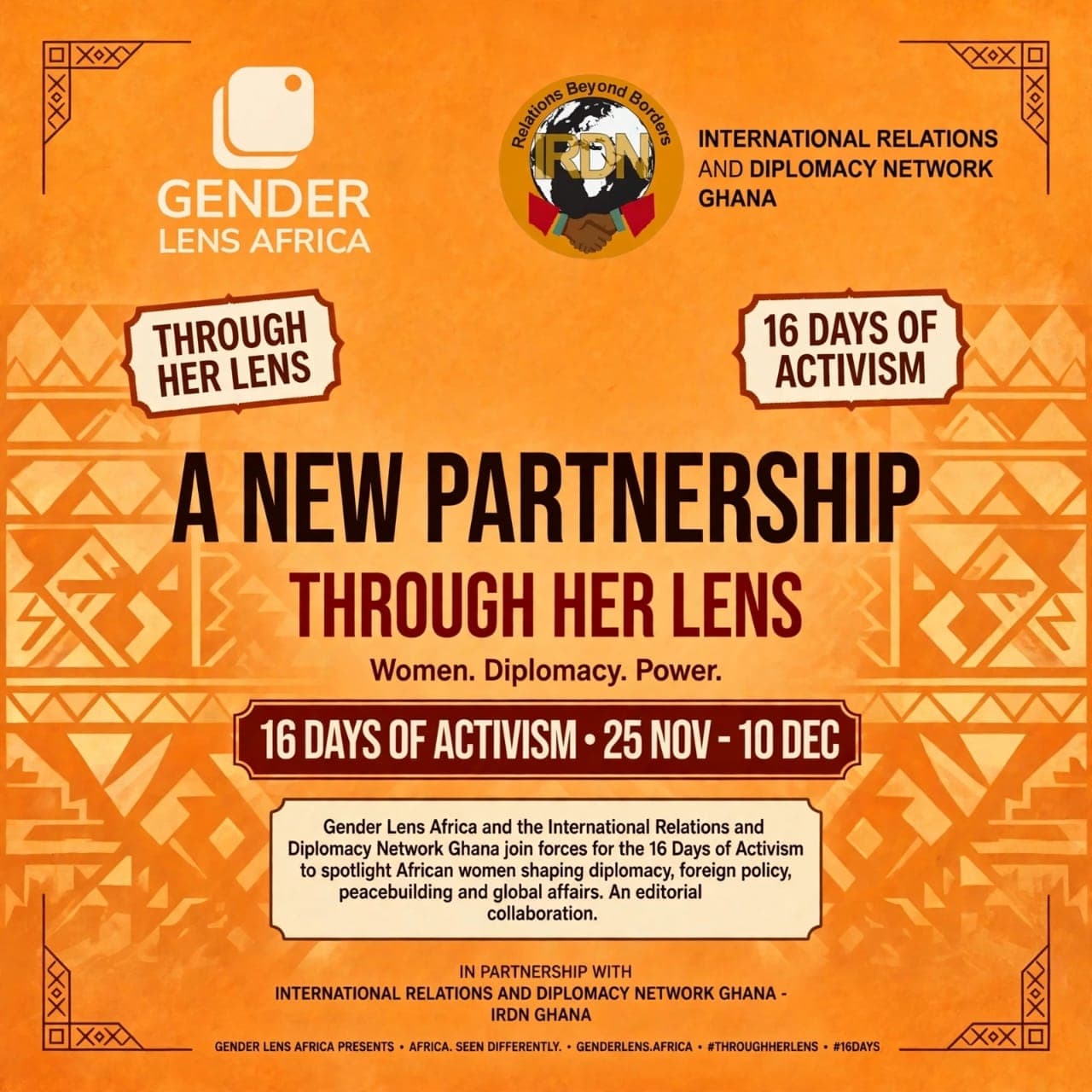
Each edition will feature an African woman working in diplomacy, international relations or related fields through an interview, profile or first-person contribution. The stories will explore women's experiences in international decision-making, the influence they bring to diplomatic spaces and the extent to which their leadership is advancing commitments to gender equality and the protection of women and girls.
Bridget Mensah, Founder and Editor-in-Chief of Gender Lens Africa, said the series would create space for African women in diplomacy to share their experiences and examine the influence they bring to international decision-making.
“Representation matters, but it cannot be the end of the conversation. We must also ask what changes when women have a voice in the rooms where decisions are made, whose interests are reflected in those decisions and who is held accountable when commitments are not fulfilled. Through Her Lens brings these questions into focus through the experiences and perspectives of African women working in diplomacy. Their stories are part of a much bigger conversation about power, whose voices shape global affairs and what meaningful leadership should deliver for women and girls.”
For IRDN Ghana, the partnership also creates an opportunity to connect diplomacy with the broader responsibility to protect human rights and advance gender equality.
Eunice Dede Tornyi, President of the International Relations and Diplomacy Network Ghana, said:
“Diplomacy begins with human dignity. It is not measured solely by the agreements we negotiate or the relationships we build between nations, but also by how effectively we protect the rights, safety and dignity of people within our societies.
We cannot genuinely advocate for peace, justice and international cooperation while women and girls continue to experience violence, discrimination and fear. Ending gender-based violence must therefore be central to our pursuit of human security, equality and sustainable development.
The protection of women and girls is not a favour; it is a fundamental human right and a collective responsibility.”
Why diplomacy belongs in the conversation on gender-based violence
Diplomacy is not separate from the struggle to end gender-based violence. International agreements, human rights commitments and regional frameworks on women's rights are negotiated, adopted and monitored through diplomatic and multilateral processes.
The women involved in this work help shape the policies, negotiations and relationships that influence how governments respond to violence and discrimination. Their experiences also offer insight into the opportunities and barriers women encounter in spaces where international priorities are determined.
Through Her Lens will explore these connections while bringing greater public visibility to African women working in diplomacy and international relations. The series will also introduce young African women to career opportunities in diplomacy, foreign policy and peacebuilding.
The six editions of Through Her Lens
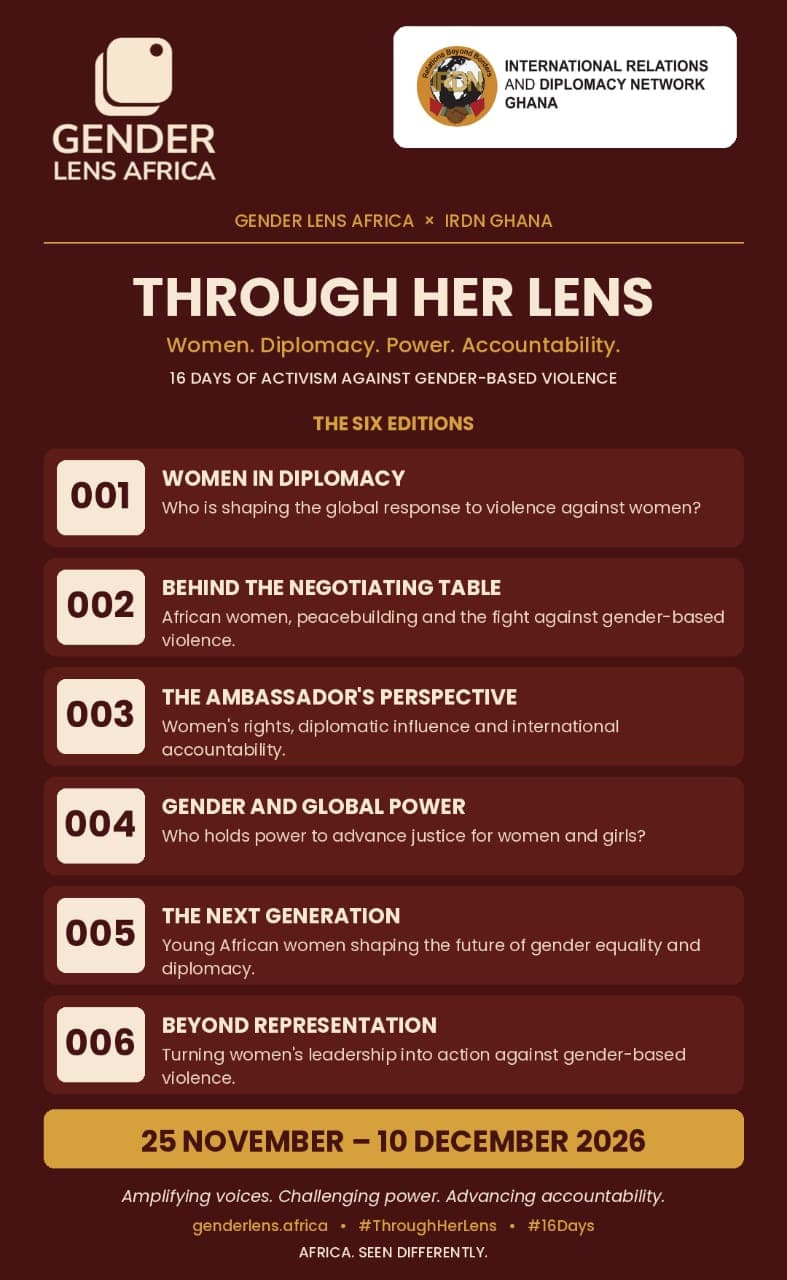
The six-part series will explore different dimensions of women's participation and influence in international affairs, moving from representation in diplomatic spaces to the role of women in shaping foreign policy, peacebuilding and accountability.
Follow Through Her Lens
The six editions will be published on genderlens.africa and across Gender Lens Africa's social media channels from 25 November to 10 December 2026.
Readers are invited to join the conversation using #ThroughHerLens and #16Days.