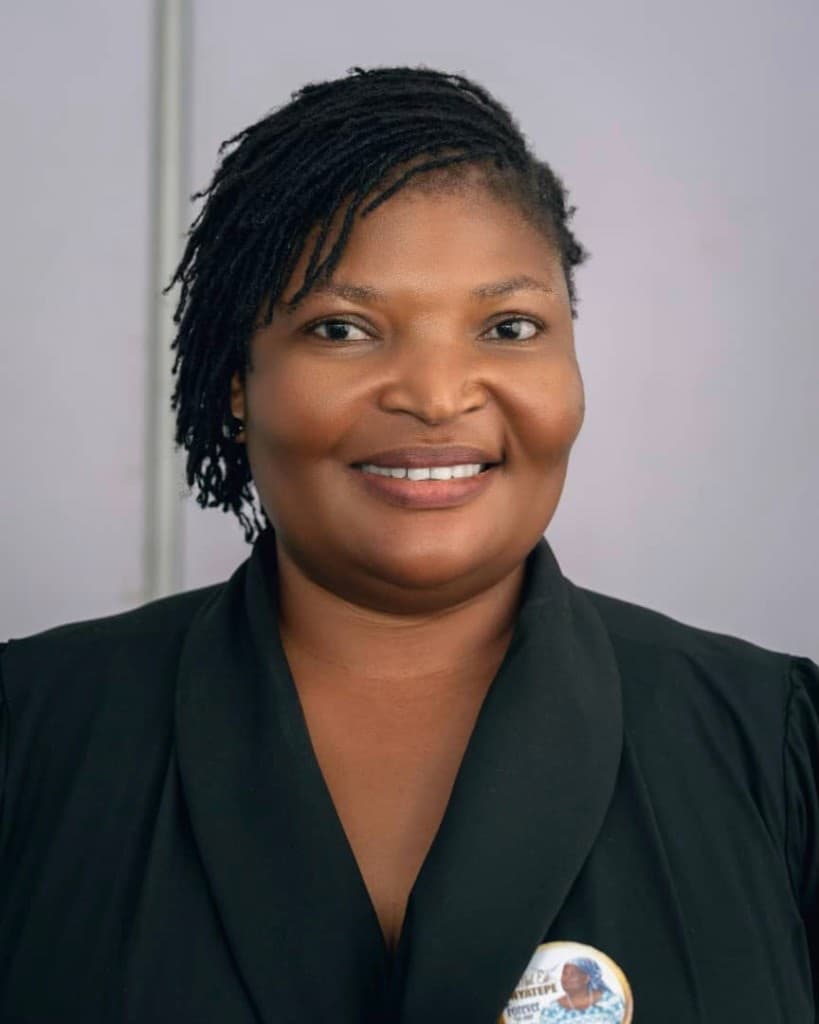
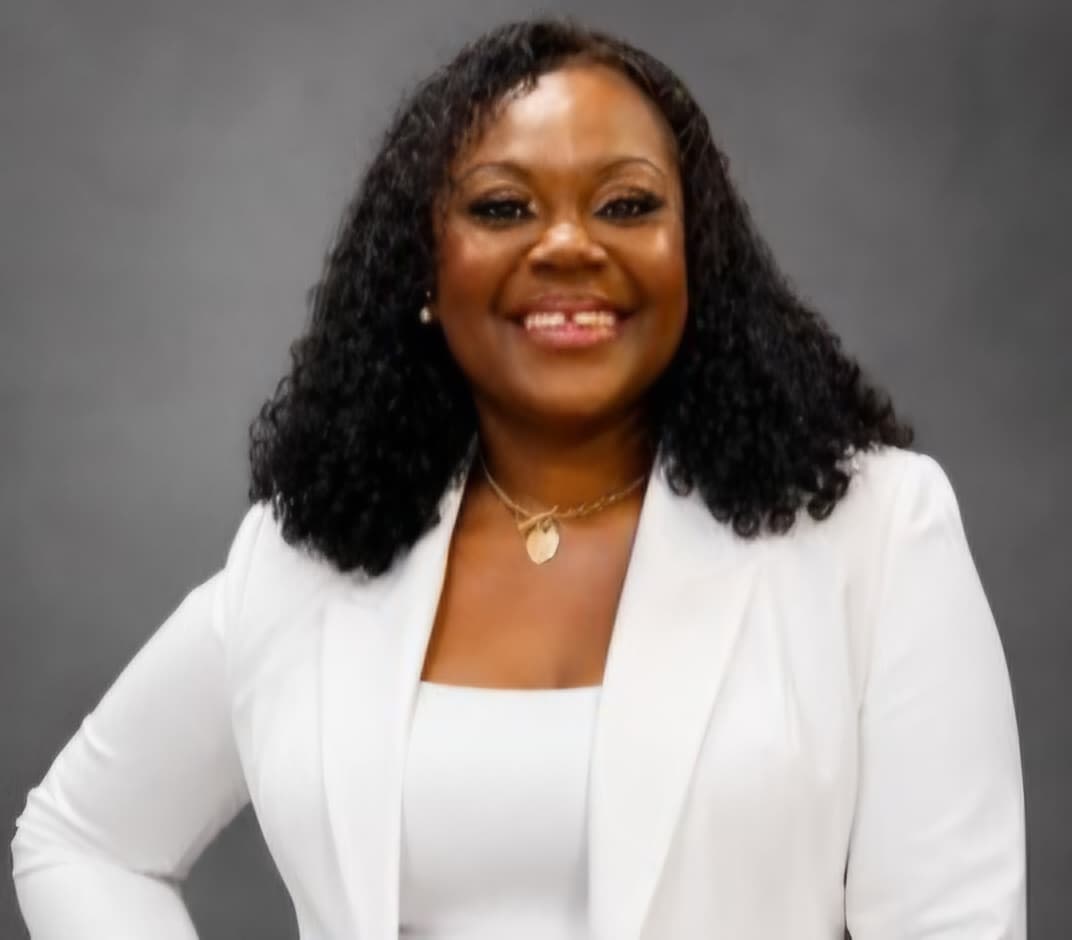
Accra, Ghana, September 5, 2026: When asked what Ghana had taught her about power, Dr Jemima Nunoo stopped the question in its tracks.
“That's kind of the wrong question to ask me,” she says. “I didn't really learn anything about power from here. I was 29 when I moved here.”
It is an answer that says something about Nunoo herself. She is not particularly interested in accepting the premise simply because it has been handed to her.
Ask her about leadership and she talks about influence rather than titles. Ask her about ambition and she talks about being called “too much”. Mention confidence and she goes straight to the PhD years when she felt like an imposter.
And ask her what Ghana tells women about power, and her answer is blunt.
“It's that you are not worthy, or you are not designed for it,” she says.
From academia to Ghana's Presidency
Dr. Jemima Nunoo, née Agyare, served as Technical Director for Media and Strategic Communications at Ghana's Office of the President under the previous administration. Before that, she headed the Centre for Management Development, GIMPA's executive education and training wing, where she worked with senior Ghanaian executives on leadership.
She holds master's degrees in International Studies and Diplomacy and International Relations, and a PhD in Politics and International Relations.
She still remembers the weight of walking into that role. “There were many thoughts running through my head that day... the enormity of the work I had to do and how important it was for me to do it and excel,” she says. The title was one thing. What she was being asked to carry was another.
Dr. Jemima Nunoo's appointment sat against a wider picture of women's underrepresentation in Ghanaian public life. Women hold 14.5 percent of seats in Ghana's Parliament, according to the Inter-Parliamentary Union. Ghana's Affirmative Action (Gender Equity) Act 2024 sets a target of 30 per cent representation of women in decision-making from 2024 to 2026, rising to 35 per cent from 2027 to 2028.
What makes a leader influential?
Teaching top executives about leadership left her with one recurring lesson: influence, not position, is what makes people want to follow. “The most effective leaders, the ones that people actually want to do what they ask, are the ones that have this almost like magnetic influence,” she says. “We have many leaders who are just leaders due to the position they hold, but they don't really have that influence.”
She also pushes back on the idea that political leadership only happens on a stage. “Political leadership isn't always public-facing,” she says. “There's those powerhouses in the back room, strategising, doing a lot of brain work.” Nunoo counts herself comfortable in both worlds, from strategy sessions behind closed doors to keynote addresses aimed at young political activists.
Why are ambitious women in Ghana called “too much”?
“Having a career or being a person who openly loves their career is deemed like a character flaw,” Dr. Jemima Nunoo says. “Don't you think you're going out of your depth?” She has been called too extroverted, sometimes by other women. “We've been conditioned to see other women as our competitors, unfortunately,” she says. “I've never let that stop me before.”
Women, power and the price of being taken seriously
Dr. Jemima Nunoo describes walking into rooms of powerful men and being mistaken for the secretary. She recalls one meeting where every delegate was addressed by full name and title, except her. “Everything about you will be scrutinised, everything about you will be amplified, insulted,” she says of political life.
She sees the same pattern in academia. “We are not taken seriously,” she says. “They'll probably think you've engaged in sex for grades, and that's why you've even qualified to be at that point.” In politics, she says, the accusation shifts but the function is the same: “Everybody in the political realm has been accused of sleeping with somebody.” She calls the unspoken exchange behind some leadership appointments “a big elephant in the room. We don't often discuss it.”
Her comments sit within a broader pattern documented across African political institutions. A 2021 study by the Inter-Parliamentary Union and the African Parliamentary Union found that 39 per cent of women parliamentarians surveyed across Africa had experienced sexual violence in the course of their work, and 18 per cent had received requests for sexual favours from colleagues in exchange for political support. The study found that most such incidents took place on the premises of parliament itself.
Motherhood changed how she thinks about control
As a trained education consultant, Nunoo expected to understand parenting on paper. Motherhood, she says, “has taught me that sometimes the theories don't match up, and no matter what you do or how you try, children are going to defy it.”
She did not slow down. Five months pregnant, she was on an executive course at Oxford. By the time her daughter turned one, she was on another at Harvard. “The acceleration has not been what I would have expected it to be, and it's fine,” she says. “Do I have any regrets over that? No, not yet.” She and her husband split the school run between them. “We try and balance it,” she says, “but it isn't easy. It's not a walk in the park.”
She once authorised a crèche as a board member at the Petroleum Commission, long before she needed one herself. Years later, she was the one bringing her daughter to board meetings, leaving the room in the breaks between agenda items to breastfeed, then going back in. “I ended up having to go home, breastfeed, and then come back to the office at some ungodly hour,” she says.
She lost her own mother shortly before her daughter turned two. “There are times I'd love to ask my mum how did you do this,” she says. “I'm not able to do that.”
You do not have to fit the mould to wield power
Her own confidence, she says, was not a given. Towards the end of her PhD, in her twenties, she describes what she calls a crisis of confidence. “I felt I had imposter syndrome,” she says. Her fix was almost embarrassingly simple: she wrote down affirmations and repeated them to herself until she grew into them.
She reaches for the story of David and Goliath to explain what changed. “They gave him this really heavy armour, and he took it off and got what he was used to,” she says. “A lot of us need to do the same. Be yourself.” For her, that includes the parts of herself some might expect her to downplay. “I love my nails, I love my bags,” she says. “That doesn't make me any less intellectual.”
Her advice starts with self-knowledge, not personality. “Know thyself,” she says. “Whether you're an introvert or an extrovert... you can be an introvert and still have influence, still exert power.” She points to Pauline Anaman, once a young intern at the Africa Centre for Energy Policy and now an energy and natural resources lawyer, as an example of what mentorship can compound into over time. Anaman is also one of her daughter's two godmothers.
What Ghana tells women about power
Pressed further on what Ghana tells women more broadly, Nunoo points to how religion and culture are both used to reinforce the message that power is not theirs. She counters it with her own household: market women at Kejetia and Idun who ran their own stalls, and a great-aunt who became a full professor at KNUST. “We distort facts, history, culture, and use it to try and put women down,” she says.
She resists making the picture entirely bleak. “We've come some way,” she says. “Certain mindsets are being challenged, which is right.” Whether that challenge holds, she suggests, is still being decided.
Dr. Jemima Nunoo traces her comfort in spaces dominated by men, including football, academia and party politics, to growing up in Manchester, working canteen shifts at both Manchester City and Manchester United, and having a grandfather who played for Kotoko.
“I didn't grow up with that baggage,” she says. “Maybe the skill is being fearless, because I didn't see those barriers.”