Accra, Ghana, September 17, 2026: A viral video from Bole Senior High School, in the Savannah Region, triggered a now-familiar sequence in June 2026: outrage, a statement from the Ghana Education Service confirming the teacher had been interdicted, pending investigations. What followed the statement, however, revealed far more about Ghana than the video itself.
Within days, the conversation shifted away from the adult in the video and settled on the schoolgirl. Commentators debated whether she had invited it, speculated about her sexual experience, and in some corners of social media, treated the teacher's anatomy as a subject for admiration rather than the crime scene it represented. An analysis of thousands of comments across major platforms, published by Modern Ghana, found that public interpretation of the incident consistently shifted accountability away from the adult and toward moral judgement of the child. This is not a fringe reaction. It is the default script Ghanaian media and social media reach for whenever a minor is involved in an abuse allegation, whether the adult is a teacher, a pastor, a relative or a stranger: examine her conduct first, his conduct second.
Around the same period, UN Women ran a campaign defining consent as free and voluntary agreement, given without coercion, manipulation or fear, and grounded in respect for a person's autonomy and dignity. Held up against the Bole commentary, the gap is stark. Ghanaian public discourse on this case was not asking whether the relationship was voluntary or coerced. It was asking whether the girl was too experienced, too willing or too "spoilt" to deserve protection. That is a purity question, not a consent question. The difference matters enormously once a conversation moves from Facebook comments to a police docket.
Ghanaian law has, in fact, already settled the question that social media keeps relitigating. Under section 101 of Ghana's Criminal Offences Act, sexual intercourse with a child under sixteen is defilement, regardless of whether the child appeared willing, with conviction carrying a minimum of seven years in prison.
Where the complainant is sixteen or older, a prosecution would generally turn to offences such as rape under section 98, which require proof that consent was absent. It is here that age, power and relationship come sharply back into focus.
That threshold, sixteen, is also where public conversation tends to relax its guard, as though a birthday resolves the power imbalance between a teacher and a student. It does not. A teacher holds authority over grades, discipline, references and, in boarding schools, physical access that a student cannot easily refuse without consequence. Ghana's Deputy Minister of Education made this point plainly after the Bole case, telling a television panel that a teacher is culpable "regardless of the age of the student involved". In other words, the professional and ethical bar is meant to sit above the criminal one. Genuine consent requires more than reaching sixteen. It requires the freedom to say no without cost, and a student rarely has that freedom with a teacher.
Some countries already criminalise this gap directly, through a separate "abuse of a position of trust" offence covering teachers and students regardless of age. Ghana currently treats such conduct primarily as a professional disciplinary matter, as the Bole case shows. Parliament could usefully consider whether a distinct criminal offence for abuse of a position of trust is needed.
Ghana's own data suggests how rarely a student's freedom to refuse actually exists. Girls aged fifteen to nineteen report experiencing sexual violence at more than double the rate of women aged fifty to sixty, according to a UNICEF-backed budget brief on ending violence against children. Defilement cases have consistently outnumbered rape cases in the Domestic Violence and Victim Support Unit's own statistics, and many are quietly withdrawn before they reach court, reflecting the same shame and community pressure that shape how the public talks about a case like Bole's long before any charge is filed.
Ghana is not unusual here, which is precisely why the international picture matters. UN Women found that 54 percent of the world's countries still have no consent-based legal definition of rape at all, so Ghana is ahead of that curve on paper. It has also ratified the Maputo Protocol, the African Union's binding treaty on women's rights. But Equality Now's own review of the protocol notes that ratification across the continent has consistently outpaced domestication. Ghana's defilement law is strong. Its social interpretation of that law, visible in every "she's spoilt" comment beneath a viral video, is not.
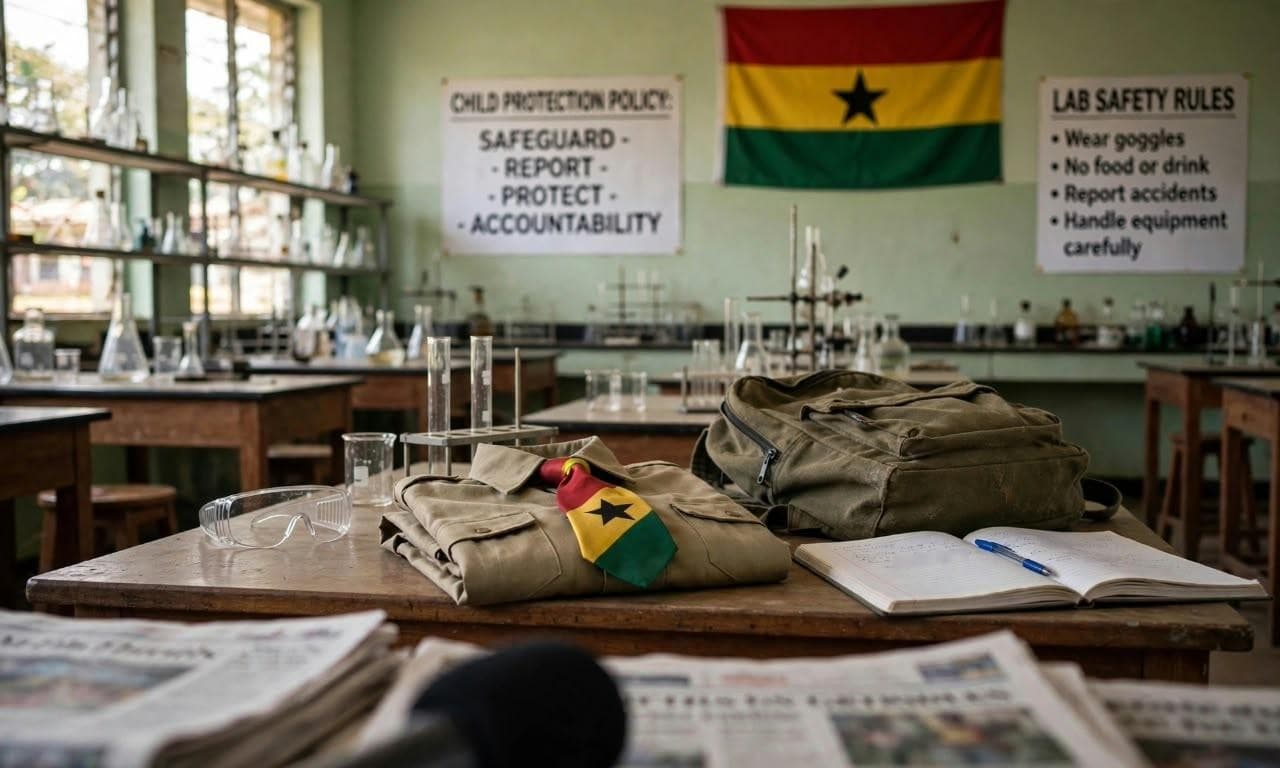
This is where Ghanaian newsrooms carry real responsibility, because journalists sit between the courtroom and the comment section, and their framing choices shape which one the public trusts. The way journalists frame these cases can deepen the harm long after the abuse itself has ended. Language that hints a survivor invited or enjoyed abuse does not just offend, it retraumatises the victim and minimises the perpetrator's crime, and research consistently shows that victim-blaming narratives discourage reporting, deepen stigma, and shape how survivors are treated by families, investigators and courts. International guidance developed by RAINN and the Gender-Based Violence Area of Responsibility is explicit that coverage should avoid such language and never publish identifying detail that exposes a minor to further harm. Trauma-informed reporting, now taught in newsrooms across the world, asks journalists to understand what a survivor has already endured before deciding how a story is told. Very little of that training currently reaches Ghanaian newsrooms, and it shows in headlines that linger on the science laboratory setting or the drama of a leaked video rather than the failure of a safeguarding system.
Ghana does not need new legislation to protect the child in this particular case. Section 101 already exists, it is already strict, and it already removes the girl's consent from the conversation entirely. What Ghana needs is a coordinated push, ideally led by the Ghana Journalists Association and the National Media Commission, working with DOVVSU, the Network of Women in Broadcasting Ghana (NOWIB), and organisations such as Equality Now and UN Women, to train editors and reporters to read a defilement case the way the law already reads it: as a crime with one accountable adult, not a morality tale about two flawed teenagers and a distracted teacher.
The real scandal at Bole Senior High School was never a schoolgirl's supposed character. It was that an adult entrusted with her education used that trust for his own gratification, inside the very laboratory where she was meant to be learning something else entirely. Ghana's newsrooms should start telling that story, because that is the story the law has recognised all along.
Originally published in B&FT Weekend as part of Bridget Mensah's Her Space column.